


Table of Contents
- What Is Moonlight Crystal Charging?
- The Difference Between Cleansing and Charging Crystals
- How Long to Charge Crystals in Moonlight
- Crystals That Fade in Sunlight: Why Moonlight Is Safer
- Full Moon Crystal Cleansing Ritual: Step-by-Step
- Setting Intentions During Moonlight Charging
- Signs Your Crystals Need Recharging
- Frequently Asked Questions
Last Updated: October 1, 2026
What Is Moonlight Crystal Charging?
Moonlight crystal charging is the practice of placing crystals under the moon's light to restore their vibrational frequency and energetic potency. Unlike artificial methods, this ancient ritual harnesses the moon's natural cycles to help crystals realign with their healing properties.
At Spill The Tea Sis Apothecary, we believe the moon is nature's most powerful energy source. When you place a crystal under moonlight, you're tapping into lunar energy that has guided spiritual seekers for centuries.
The process is simple but intentional. You set your crystals where moonlight can reach them, a windowsill, outdoor space, or garden, and let them absorb the moon's gentle rays overnight. Many practitioners report feeling a shift in the crystal's energy the next morning, though the experience is deeply personal.
Moonlight charging works differently than sunlight. The moon's softer rays don't fade delicate stones, and the lunar cycle itself becomes part of your ritual. Full moons amplify the effect, but any night works for basic recharging.
The Difference Between Cleansing and Charging Crystals
Cleansing and charging serve different purposes, though many people use these terms interchangeably.
Cleansing removes accumulated negativity and stale energy from a crystal. Think of it as clearing away what no longer serves you. You cleanse a crystal when it feels heavy, after someone else has handled it, or when you first bring it home.
Charging restores the crystal's natural vibrational frequency and energetic potency after cleansing. It's the step that reactivates the stone's healing properties and prepares it for intentional work.
Here's the practical difference: A crystal can feel "tired" even without picking up negativity. Moonlight charging refreshes that tired energy. A full moon cleansing ritual combines both, you clear away what's stuck while simultaneously restoring alignment.
Most practitioners cleanse first, then charge. This two-step approach ensures your crystal starts fresh and ready to support your intentions.
How Long to Charge Crystals in Moonlight
The ideal timeframe for charging crystals in moonlight is 4-12 hours, though overnight charging (8 hours) is most common and effective.
You don't need a full night. Even 4-6 hours under direct moonlight provides meaningful restoration. Many people place crystals on a windowsill at sunset and bring them in by morning, capturing the moon's strongest hours.
Longer isn't always better. After 12 hours, the benefit plateaus. The crystal has absorbed what it needs, and extended exposure offers no additional advantage.
Timing by Moon Phase
Different lunar phases carry different energetic signatures, so charging duration shifts accordingly:
- Full moon: 4-8 hours (most potent; even brief exposure is powerful)
- Waxing moon: 6-10 hours (building energy; longer sessions amplify manifestation work)
- Waning moon: 8-12 hours (slower restoration; ideal for release and clearing intentions)
- New moon: 10-12 hours (gentlest recharge; use for sensitive stones or subtle energy work)
- Crescent phases: 6-8 hours (moderate potency; effective for maintenance charging)
Troubleshooting Environmental Factors
Cloudy nights: The moon's energy penetrates cloud cover. Your crystal will charge, though slightly slower than under clear skies. Extend the session by 2-4 hours on overcast nights to compensate.
Light pollution or urban settings: If you live in an apartment without direct outdoor access or in a high-pollution area, windowsill charging still works. Position crystals as close to the window as possible, ideally on an unobstructed sill facing the moon's direction. The effect is gentler but measurable; add 2-3 hours to your standard timeframe.
Rain or moisture: Crystals are safe in light rain, but avoid prolonged wet conditions. If rain is forecast, bring stones inside before precipitation begins. For water-sensitive stones (selenite, halite, or any crystal with perfect cleavage), charge indoors on a windowsill instead.
Seasonal variation: Winter moons sit lower on the horizon and may be blocked by buildings or trees. Summer moons arc higher and reach more locations. Adjust your placement seasonally to maximize direct moonlight exposure.
Multiple stones: Place crystals together during charging. They amplify each other's alignment during the ritual. Arrange them in a grid or circle to strengthen the energetic field.
Frequency of Recharging
Most practitioners recharge their main stones monthly, aligned with the full moon. High-use stones (those carried daily or used in active healing work) benefit from bi-weekly charging. Decorative or display crystals can be charged quarterly.
Crystals That Fade in Sunlight: Why Moonlight Is Safer
Certain crystals lose color and vibrational potency when exposed to direct sunlight. Moonlight charging solves this problem entirely while introducing its own set of care considerations for jewelry and metal settings.
Light-Sensitive Crystals
Amethyst, citrine, rose quartz, and fluorite are the most light-sensitive. Their color fades noticeably after weeks of sun exposure. The mineral composition that gives these stones their beauty also makes them vulnerable to UV rays. Other vulnerable stones include:
- Kunzite (fades to colorless within months of sun exposure)
- Tourmaline (pink and watermelon varieties lose saturation)
- Lepidolite (purple hues become pale)
- Celestite (blue tones bleach to white)
- Ametrine (the citrine portion fades first)
Moonlight offers the same energetic restoration without the risk. The moon's gentle rays won't bleach or weaken these delicate stones. This makes moonlight charging the preferred method for your most precious pieces.
Even crystals that tolerate sunlight benefit from moonlight's softer touch. There's no downside to choosing moon charging, only advantages.
The Moon Tarot Candle | Intuition & Mystery Manifestation Candle →
Metal Settings and Jewelry Considerations
When charging crystals set in jewelry, metal type matters significantly:
Silver settings: Silver oxidizes when exposed to moisture and air, especially overnight. If you're charging a silver-set ring, pendant, or bracelet outdoors, place it on a dry surface and bring it inside promptly in the morning. Alternatively, charge it indoors on a windowsill to avoid dew and oxidation. Polish silver gently after charging if a light tarnish appears.
Gold settings: Gold is more stable than silver and tolerates outdoor moonlight charging well. Yellow gold, white gold, and rose gold all resist oxidation. However, delicate prongs holding the stone can weaken if exposed to temperature fluctuations between night and morning. Avoid placing gold jewelry directly on cold stone or metal surfaces; use a soft cloth or cushion instead.
Copper settings: Copper oxidizes readily and develops a green patina when exposed to moisture overnight. If your crystal is set in copper, charge it indoors on a windowsill or bring it inside within 2-3 hours of moonrise to minimize oxidation.
Stainless steel and surgical steel: These metals are durable and safe for outdoor overnight charging. They resist oxidation and temperature stress.
Raw Stones vs. Jewelry
Raw, unset crystals are ideal for outdoor moonlight charging. They have no metal components to oxidize and no prongs to stress. If you own both raw and jewelry versions of the same stone, prioritize charging the raw crystal outdoors and the jewelry piece indoors on a windowsill.
Moisture and Delicate Stones
Some crystals are hygroscopic (they absorb moisture) or have perfect cleavage planes that weaken when wet:
- Selenite, gypsum, and halite: Charge indoors only; outdoor moisture dissolves these stones.
- Calcite: Sensitive to humidity; charge on a windowsill rather than outdoors.
- Tourmaline and tourmalinated quartz: Safe outdoors, but dry them gently if dew settles on them.
For any crystal you're uncertain about, the safest approach is indoor windowsill charging. You'll still receive full lunar benefits without environmental risk.
Seasonal Moisture Patterns
Spring and fall bring higher humidity and dew. Summer nights are often drier. Winter can bring frost. If you live in a humid climate, consider charging jewelry and delicate stones indoors year-round and reserving outdoor charging for hardy, raw specimens like black tourmaline, hematite, and quartz points.
Full Moon Crystal Cleansing Ritual: Step-by-Step
A full moon ritual combines cleansing and charging into one powerful practice. The full moon amplifies intention-setting and energetic restoration.
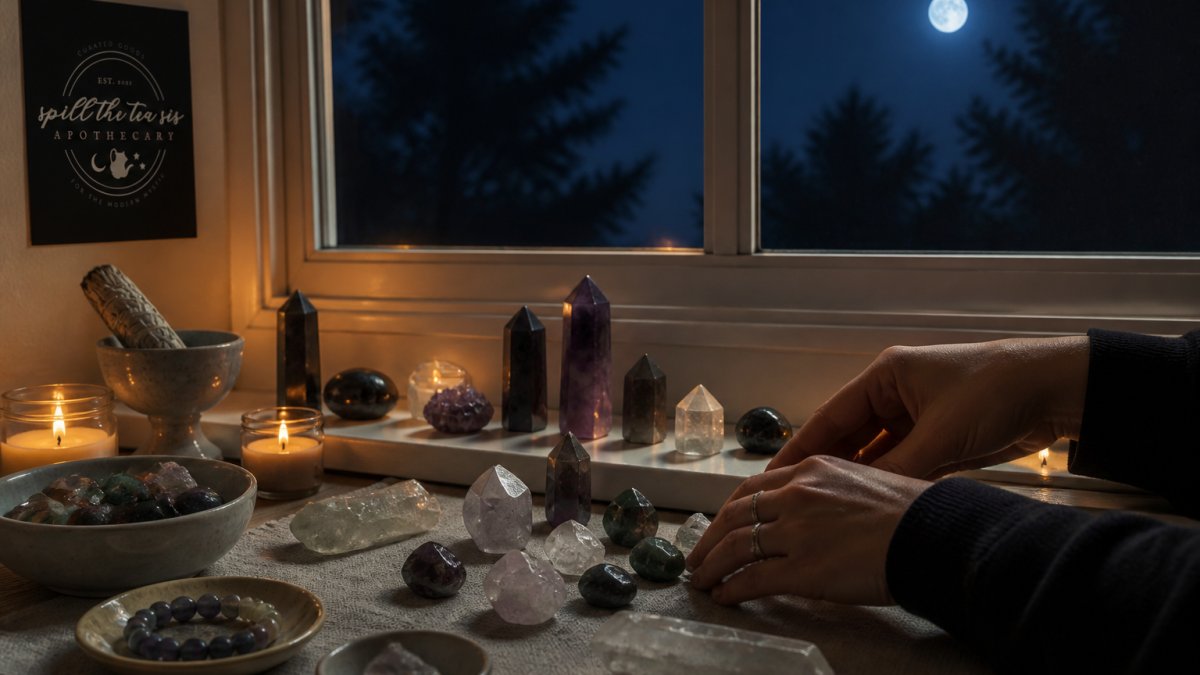
Step 1: Gather your crystals Collect the stones you want to cleanse and charge. Include any that feel heavy or haven't been worked with recently. You can charge one stone or a dozen, the process is the same.
Step 2: Set your intention Hold each crystal and state your intention aloud or silently. This might be "restore clarity," "amplify healing," or simply "realign with your natural purpose." Intention directs the moon's energy toward your specific need.
Step 3: Create a sacred space Place your crystals on a clean surface where moonlight will reach them directly. A windowsill, outdoor table, or garden works perfectly. Some practitioners arrange stones in a crystal grid pattern to amplify the ritual.
Step 4: Light a candle (optional but powerful) A manifestation candle like the Stay Wild Moon Child Lunar Intention Candle ($29.99) from Spill The Tea Sis Apothecary deepens the ritual's potency. The candle's energy aligns with lunar cycles and supports your intention-setting practice.

Step 5: Leave crystals under the moon Let them sit for 4-12 hours, ideally overnight. You can meditate nearby, journal, or simply trust the process.
Step 6: Retrieve and ground Bring your crystals inside in the morning. Hold them and feel the shift in their energy. Thank the moon and your stones for this restoration.
Setting Intentions During Moonlight Charging
Intention-setting transforms moonlight charging from a passive practice into active manifestation work.
Signs Your Crystals Need Recharging
Your crystals communicate when they need restoration. Learning to recognize these signals keeps your collection vibrant and potent.
Frequently Asked Questions
How long should you charge your crystals in the moonlight?
Most crystals benefit from 4-8 hours of direct moonlight exposure, though overnight charging (8-12 hours) is ideal during a full moon. Sensitive stones may need less time. The lunar cycle's phase matters: full moons deliver the strongest energetic potency, while waxing moons build energy gradually. Start with one full night and adjust based on how your crystals feel to you.
What crystals should not be charged in the moonlight?
Crystals that fade in sunlight, like amethyst, citrine, rose quartz, and fluorite, are generally safe under moonlight since lunar energy is gentler. However, extremely delicate or water-soluble stones (like selenite or halite) should be placed indoors near a window rather than exposed to moisture or dew. Always check individual stone properties before leaving them outside.
Why charge crystals in moonlight instead of sunlight?
Moonlight charging aligns with lunar cycles and metaphysical traditions that honor the moon's connection to intuition, rest, and inner reflection. Unlike direct sunlight, which can fade certain crystals' color over time, moonlight provides gentle, restorative energy without risk of damage. Many practitioners believe lunar energy supports emotional healing and intention-setting more deeply than solar energy.
Can you charge crystals during any moon phase?
Full moons are most potent for charging and manifestation work, offering peak energetic potency. Waxing moons build energy gradually, making them ideal for growth intentions. Waning moons support release and cleansing. New moons are powerful for fresh starts. While full moons are traditional, you can charge crystals during any phase, the intention and your connection to the lunar cycle matter most.