


Table of Contents
- What a Personal Altar Actually Is (And What It Isn't)
- Choosing the Right Location for Your Personal Altar
- Essential Items for a Spiritual Altar
- Setting a Theme, Intention, and Sacred Purpose
- How to Cleanse Your Altar Space
- Daily Altar Rituals for Manifestation
- Altar Maintenance, Seasonal Updates, and Decommissioning
- Conclusion
Last Updated: August 19, 2026
What a Personal Altar Actually Is (And What It Isn't)
A personal altar is a dedicated physical space you create to anchor your spiritual practice, set intentions, and cultivate a consistent connection to what matters most to you. At Spill The Tea Sis Apothecary, we think of it as the most honest corner of your home: a place that holds your prayers, your grief, your gratitude, and your wildest manifestations all at once.
Here's what it isn't: a shrine built to impress anyone, a perfectly curated Instagram flat lay, or a collection of expensive objects you feel obligated to buy. A personal altar is functional first. Its power comes from your intention, not its aesthetic.
The concept of sacred space appears across virtually every human culture and spiritual tradition. As noted by the Smithsonian Institution's research on ritual and sacred objects, people have used dedicated objects and physical spaces to mark the boundary between ordinary and sacred life for thousands of years. What makes a personal altar different from a decorative shelf is the act of consecration: you choose it, you tend it, and you return to it with purpose. That repetition transforms a surface into a sanctuary.
A common mistake beginners make is waiting until everything feels "right" before they start. You don't need a perfect space or a full collection of altar tools. You need a surface, an intention, and the willingness to show up.
Choosing the Right Location for Your Personal Altar
The best location for your altar is wherever you will actually use it. Choose a spot that offers some degree of privacy and quiet, even if it's just a corner of your bedroom or a shelf above your desk. Avoid high-traffic areas if you can, especially if you share your home with people who don't understand or respect your practice.
Orientation matters to some practitioners. Many traditions favor placing an altar facing east, toward the direction of the rising sun and new beginnings. These are meaningful choices, but they are not requirements. Trust your instincts.

Keep your altar away from the television, your work desk, or anywhere associated with stress or distraction. Your nervous system learns to associate spaces with certain states. A dedicated altar space trains your body to shift into a more grounded, receptive state the moment you approach it.
Small-Space and Accessibility Solutions
A personal altar does not require a room, a table, or even a dedicated shelf. Many practitioners build beautiful, functional altars in genuinely tiny spaces:
- A windowsill: Natural light, connection to the outdoors, and a built-in ledge for a candle, crystal, and small plant.
- A floating shelf: Mounts directly to the wall, takes up zero floor space, and keeps your altar out of reach of children or pets.
- A shadow box or deep picture frame: Hang it on the wall and arrange small sacred objects inside.
- A portable altar box: A wooden box, small tray, or cloth that you unfold when ready to practice and fold away when done. This works especially well for renters or people who share spaces.
For practitioners with mobility considerations, altar height matters. Placing your altar at seated height makes it accessible for meditation without strain.
Essential Items for a Spiritual Altar
The essential items for a spiritual altar are the ones that hold meaning for you. But for those just starting out, certain categories of objects create a strong foundation.
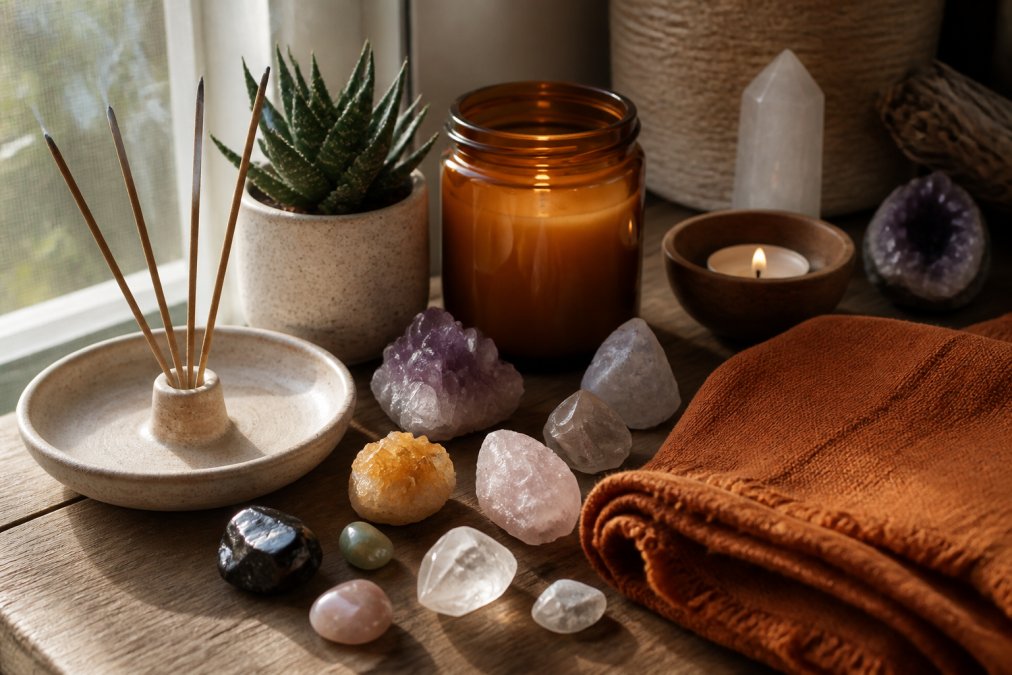
Altar cloth: A piece of fabric that defines the space and protects your surface. It signals to your mind that this area is set apart from everyday life.
Candles: Fire is one of the oldest ritual tools in human history. An intention candle marks the beginning and end of your practice, and the act of lighting it is itself a ritual. The Ritual Divination Candle from Spill The Tea Sis Apothecary is specifically crafted to anchor, cleanse, and support your divination or manifestation practice.

Crystals: Choose stones that correspond to your intention. Grounding stones like black tourmaline or smoky quartz work well for stability. Rose quartz supports emotional healing. Clear quartz amplifies any intention.
Sacred objects: Photographs of ancestors, heirlooms, feathers, shells, dried herbs, or any object that carries personal significance.
Incense: Smoke has been used across traditions for cleansing and consecration. Incense sticks are a practical, accessible way to mark the start of your ritual and clear the energy of your space.
| Altar Item | Purpose | Priority Level |
|---|---|---|
| Altar cloth | Defines and consecrates the space | High |
| Intention candle | Marks ritual start/end, focuses energy | High |
| Crystals | Amplifies intention, grounds energy | Medium |
| Sacred personal objects | Personal meaning, ancestral connection | Medium |
| Incense | Cleansing, consecration, sensory cue | Medium |
| Plants or flowers | Living energy, renewal, seasonal alignment | Optional |
Budget-Friendly and Zero-Waste Altar Building
The most powerful altars are often the simplest. You do not need to spend a lot to build a meaningful personal altar. Nature provides many of the most potent altar items for free: stones from a walk, fallen leaves, a pinecone, water from a river, soil from your garden.
Thrift stores are underrated for altar supplies. Candle holders, small dishes, fabric, and decorative boxes are often available affordably. Repurposing items you already own, a favorite mug as a water vessel, a scarf as an altar cloth, a childhood photograph as a sacred object, is not a compromise. It's alignment. connecting with spirit guides.
For incense, Incense Sticks from Spill The Tea Sis Apothecary bring ritual-grade cleansing into your practice. Zero-waste altar building means being thoughtful about what you bring in. Avoid single-use items. When you decommission your altar, compostable items like dried herbs and flowers can return to the earth.
Setting a Theme, Intention, and Sacred Purpose
The most powerful altars are built around a clear intention. Before you place a single object, ask yourself: what am I calling in? What am I releasing? What do I want to remember every time I sit here?
Common altar themes include:
- Manifestation: Focused on drawing in what you desire. Typically includes symbols of abundance, gold or green tones, citrine or pyrite, and written affirmations.
- Healing: Centered on emotional or physical restoration. Soft colors, rose quartz, photographs of loved ones, water, and comfort herbs.
- Ancestral connection: Honoring those who came before. Photographs, heirlooms, offerings of food or drink, and candles lit in their memory. The We Are The Granddaughters of the Witches Candle was made for exactly this kind of devotion, carrying the energy of ancestral magic and intuition.
- Seasonal alignment: Updated with the turning of the year. Spring altars might include seeds and fresh flowers; winter altars, bare branches and deep-toned candles.
Symbolism is a language. The more intentional you are about what each object represents, the more your altar functions as a living map of your inner world.
How to Cleanse Your Altar Space
Cleansing your altar space is one of the most important and most skipped steps in altar building. Before you place your sacred objects, the space needs to be cleared of residual energy, both physical and energetic. According to research on environmental psychology and ritual behavior, the physical act of cleaning and organizing a space meaningfully reduces stress and increases a sense of personal control.
Here's how to cleanse your altar space before building:
- Physical cleaning first. Dust the surface, wipe it down, and remove anything that doesn't belong. A physically clean surface is the foundation of an energetically clear space.
- Smoke cleansing. Light incense or a cleansing herb bundle and allow the smoke to move through the space. Set the intention that you are clearing what was there before and opening the space for what is coming.
- Sound cleansing. A bell, a singing bowl, or even clapping your hands sharply over the surface disrupts stagnant energy.
- Salt or water. Placing a small dish of salt or consecrated water at the corners of your altar draws out heavy energy. Leave it for a few hours, then dispose of it outside or down the drain with intention.
- Spoken blessing. Speak aloud what you are dedicating this space to. Your voice carries intention.
Repeat this cleansing process whenever your altar feels "heavy," after a significant life event, or at the start of each new season.
Daily Altar Rituals for Manifestation
Daily altar rituals for manifestation don't need to be elaborate. The power is in the consistency, not the complexity.
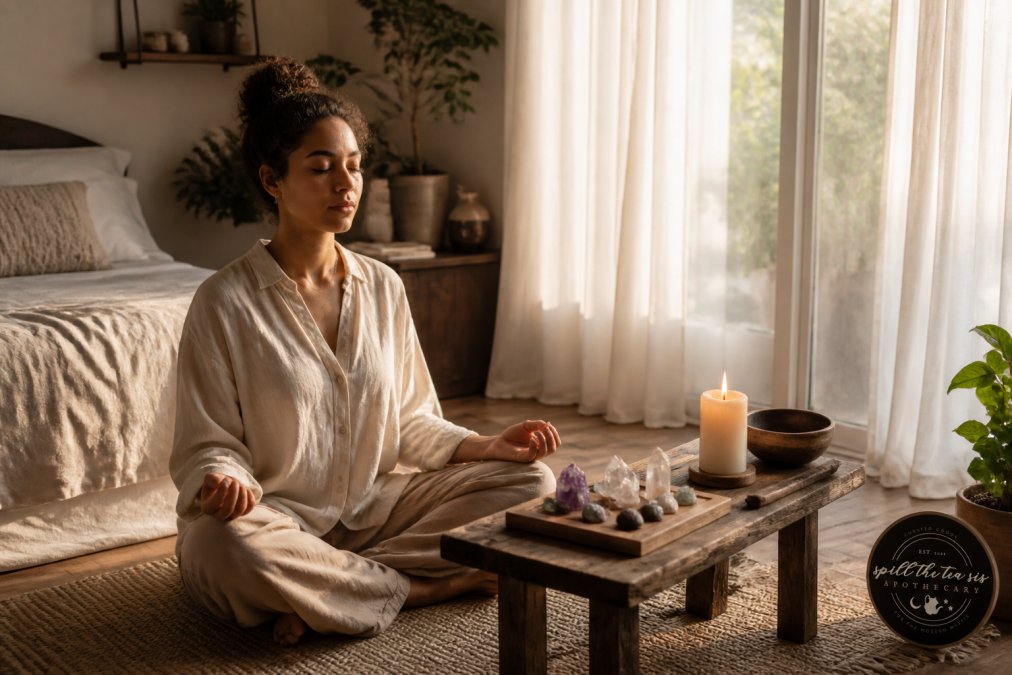
A simple daily practice might look like this:
- Arrive. Approach your altar with intention. Take three slow breaths before you do anything else.
- Light your candle. This marks the beginning of your ritual time. Say your intention aloud or silently as you light it.
- Connect. Hold a crystal, read an affirmation, pull a tarot card, or simply sit in silence for a few minutes.
- Speak or write. State what you are calling in. Gratitude for what is already present, clarity on what you are working toward. Many practitioners keep a small journal beside their altar for this.
- Close with intention. Extinguish your candle mindfully. The closing of the ritual is as important as the opening.
A Rose of Jericho placed in a small dish of water on your altar is a beautiful living addition to this practice. Known as the Resurrection Plant, it embodies renewal and cyclical return, which supports a consistent manifestation practice.

The Psychological Benefits of a Dedicated Ritual Space
The benefits of a dedicated ritual space are well-documented. As noted in Harvard Medical School's coverage of mindfulness and stress reduction, regular mindfulness practices reduce cortisol levels and improve emotional regulation over time. A personal altar functions as a physical anchor for that practice.
What the research confirms, and what practitioners have known intuitively for centuries, is that dedicated spaces reduce the cognitive load of beginning a practice. When your altar is set up and waiting, the barrier to showing up drops dramatically. You don't have to decide to meditate. You just have to walk to the corner of your room where you always meditate.
Ritual creates a sense of continuity and self-authorship. People who maintain consistent spiritual practices tend to report stronger feelings of groundedness, clarity, and purpose. A personal altar makes the abstract concrete. It gives your inner life a physical address.
Altar Maintenance, Seasonal Updates, and Decommissioning
Altar maintenance is an ongoing practice. Dust your altar regularly. Replace wilted flowers and spent candles. Refresh the water in any vessels. Remove objects that no longer feel aligned. Your altar should feel alive, not like a museum exhibit.
Seasonal updates keep your practice connected to natural rhythms. A simple seasonal update might involve swapping the altar cloth color to match the season's energy, replacing crystals or objects to reflect your current intention, and adding seasonal natural items: acorns in autumn, fresh flowers in spring, a bowl of water in summer, bare branches in winter.
Decommissioning an altar is something almost no guide addresses, and it deserves a moment. Altars are not permanent. Life changes, intentions shift, and sometimes a practice needs to end or transform. Decommissioning an altar is not abandonment. It's completion.
To decommission with intention:
- Thank the space for what it held.
- Cleanse the surface one final time.
- Return natural items to the earth: bury them, compost them, or release them in moving water.
- Store or repurpose meaningful objects with care.
- Clear the surface fully and allow it to return to ordinary use.
This closing ritual honors the work you did there and frees you to begin again, in a new space, with a new intention, when the time is right.
Frequently Asked Questions
What items should I put on my personal altar?
Your altar should reflect your intentions, not a strict checklist. Common essential items for a spiritual altar include a candle (such as an intention candle), crystals, a meaningful cloth to define the space, incense for cleansing, and any sacred objects that hold personal symbolism, photographs, dried herbs, or a small plant like a Rose of Jericho. Start with a few items that genuinely resonate with you and build from there as your practice grows.
How do I cleanse and maintain my altar space?
Cleansing your altar space regularly keeps the energy clear and aligned with your intentions. Burn incense or use sound, a bell or singing bowl works well, to move stagnant energy. Wipe surfaces with a clean cloth, remove wilted flowers or spent candles, and reset your sacred objects with fresh intention. Many practitioners cleanse with each new moon cycle or whenever the space feels heavy. Consistency matters more than any specific method.
Can I have an altar if I have limited space?
Absolutely. A personal altar does not require a dedicated room or large surface. A windowsill, a small tray on a nightstand, a shelf, or even a decorative box that opens when you're ready to practice all work beautifully. The sacred space is defined by your intention, not its square footage. Many practitioners find that a compact, intentional altar is easier to maintain consistently than a large one.
Is a personal altar connected to a specific religion?
Personal altars appear across many spiritual traditions, from ancestral folk practices and Wicca to Buddhism, Santería, and secular mindfulness. A home altar is not exclusive to any one faith. Many people build altars as a grounding, non-religious ritual space for meditation, manifestation, and daily intention-setting. Your altar belongs to your practice, whatever form that takes. The most important element is that it holds meaning for you.
Building a personal altar is one of the most grounding things you can do for your spiritual practice, but finding the right tools to fill it can feel overwhelming. Spill The Tea Sis Apothecary exists to make that part easier. From intention candles crafted for manifestation and ancestral connection to ethically sourced crystals and ritual incense, every item is chosen to support a practice that is genuinely yours. Shop with intention and find the sacred objects your altar has been waiting for.
This article was written using GrandRanker