


Last Updated: November 4, 2026
Quick Summary
Choosing herbs for intention candle spells starts with writing your goal in one clear sentence, then selecting one primary herb and one supporting herb that serve that same purpose. Match the herb to your intention, pair it with a candle color, and dress the wax rather than piling loose herbs near the flame.
- Write your intention in one specific, present-tense sentence before choosing any herb.
- One primary herb and one supporting herb is plenty for most spells.
- Green is the standard money-drawing candle color; white substitutes for any color.
- Rosemary, sage, and bay leaf are the three protection herbs used most.
- Dress the wax with oil and herbs, keeping loose plant material off the wick.
Table of Contents
- Start With a Clear Purpose Before You Pick a Single Herb
- A List of Herbs and Their Magical Uses for Candle Work
- Herbs for Money Spells and How to Pair Them With Candle Colors
- Protection Herbs and the Candle Colors That Carry Them
- How to Dress a Candle With Herbs Without Muddling Your Intention
- Herb and Candle Safety, Substitutions, and Responsible Sourcing
- Build Your First Intention Candle at Spill The Tea Sis Apothecary
- Frequently Asked Questions
Start With a Clear Purpose Before You Pick a Single Herb
Choosing herbs for specific intention candle spells starts with one question: what exactly are you trying to change? An intention candle spell is a ritual in which a dressed, anointed candle is burned as a physical anchor for one clearly stated goal. The herb you reach for should serve that goal, not the other way around.
A common mistake is buying a beautiful blend of rose, cinnamon, and lavender, then trying to make it mean something. It rarely works, because the purpose came last.
So before you open a single jar, write your intention down in one sentence. Keep it specific and present tense:
- "I welcome steady, honest income."
- "My home feels calm and protected."
- "I release what no longer belongs to me."
One sentence. One goal. That is your filter for every herb that follows.
A List of Herbs and Their Magical Uses for Candle Work
Herb correspondences are traditions, not rules. Different lineages, regions, and families assign different meanings to the same plant, and broadly shared folk associations sit alongside practices specific to particular cultures. Use this list as a starting point, then trust what feels right in your own practice.
Love, Romance, and Passion Herbs
Rose petals carry the clearest love correspondence and suit self-love work as much as romantic work. Lavender softens and soothes, which makes it a gentle choice for attracting calm affection. Cinnamon adds warmth and draws attention, so a pinch goes a long way.
If rose petals are unavailable, lavender is a close substitute for gentle affection, and a small pinch of cinnamon can stand in when you want warmth and drawing energy.
How to manifest love with candles walks you through turning these herbs into a full love ritual, step by step.
Prosperity and Money Drawing Herbs
Bay leaf is the classic money-drawing herb, often written on and burned. Cinnamon draws quick, warm abundance. Basil supports steady prosperity and household luck. Thyme builds slowly and steadily, which suits long-term financial goals better than fast windfalls.
No bay leaf? Rosemary covers both protection and clearing and is a common stand-in for drawing work in a pinch. If you are avoiding cinnamon because of scent sensitivity, basil is a gentler alternative for steady prosperity.
Protection and Cleansing Herbs
Rosemary doubles as a protective herb and a cleansing one, which makes it one of the most versatile plants on any altar. Bay leaf wards as well as draws.
Rosemary is a common accessible alternative for clearing work.
A cleansing intention candle lets you put this section into practice without smoke or loose herbs.

Peace, Calm, and Courage Herbs
Chamomile settles the nervous system and suits peace work. Lavender calms. For courage, reach for thyme, rosemary, or a pinch of cinnamon to warm the will before something difficult.
If you have allergies to chamomile or lavender, a plain white candle dressed with a single drop of diluted oil, or no herb at all, still carries the intention. Scent sensitivity is common, and a candle can be dressed with oil alone.
How to Combine Herbs Without Muddling an Intention
Treat correspondences as a small, coherent set rather than an interchangeable list. One primary herb and one supporting herb is plenty for most spells. A love candle of rose with a pinch of lavender reads clearly; rose, cinnamon, lavender, basil, and rosemary together does not. Ask whether each herb serves the same goal, and drop anything that pulls in a different direction. If you are unsure, choose the single herb most associated with your intention and let the candle color carry the rest.
Herbs for Money Spells and How to Pair Them With Candle Colors
Color sets the tone; the herb carries the detail. Pair them on purpose and the spell reads clearly to your own mind, which is the whole point.
Intention Stirring Crystal Spoon | Manifestation & Ritual Tool →
| Intention | Herb | Candle Color |
|---|---|---|
| Fast money | Cinnamon | Green |
| Long-term prosperity | Thyme, basil | Green or gold |
| Clearing blocks | Sage | White |
| Love and self-love | Rose petals | Pink or red |
| Protection | Rosemary | White or black |
| Courage | Bay leaf | Red or gold |
Green is the standard money-drawing color. White substitutes for any color in a pinch, which makes it the most forgiving choice for beginners. If you want a candle that already carries prosperity energy, our abundance intention candle pairs money-drawing intention with the right color out of the box.
Protection Herbs and the Candle Colors That Carry Them
White carries cleansing and protection. Black absorbs and banishes. A protection spell usually wants one or the other, not both, unless you are deliberately clearing first and sealing second.
Rosemary, sage, and bay leaf are the three protection herbs we reach for most. Combine rosemary with white for a gentle boundary. Pair sage with black when you want to clear something out completely.
Watch out: protection work aimed at a specific person can turn obsessive fast. Aim the spell at your own space and peace instead, and the ritual stays clean.
How to Dress a Candle With Herbs Without Muddling Your Intention
Dressing a candle means coating it in oil and rolling it in herbs so the plant material feeds the flame. Keep the process slow and the intention single.
- Carve your one-sentence intention into the wax with a pin.
- Rub a thin layer of anointing or essential oil along the candle. Dilute essential oils in a carrier oil first; concentrated oils can irritate skin and overwhelm a small room.
- Roll the candle through your chosen herbs, working from the middle outward.
- Tap off loose herbs so the wick and the top of the wax stay clear.
- State your intention aloud once, clearly.
- Set the candle in a fire-safe holder and light it.
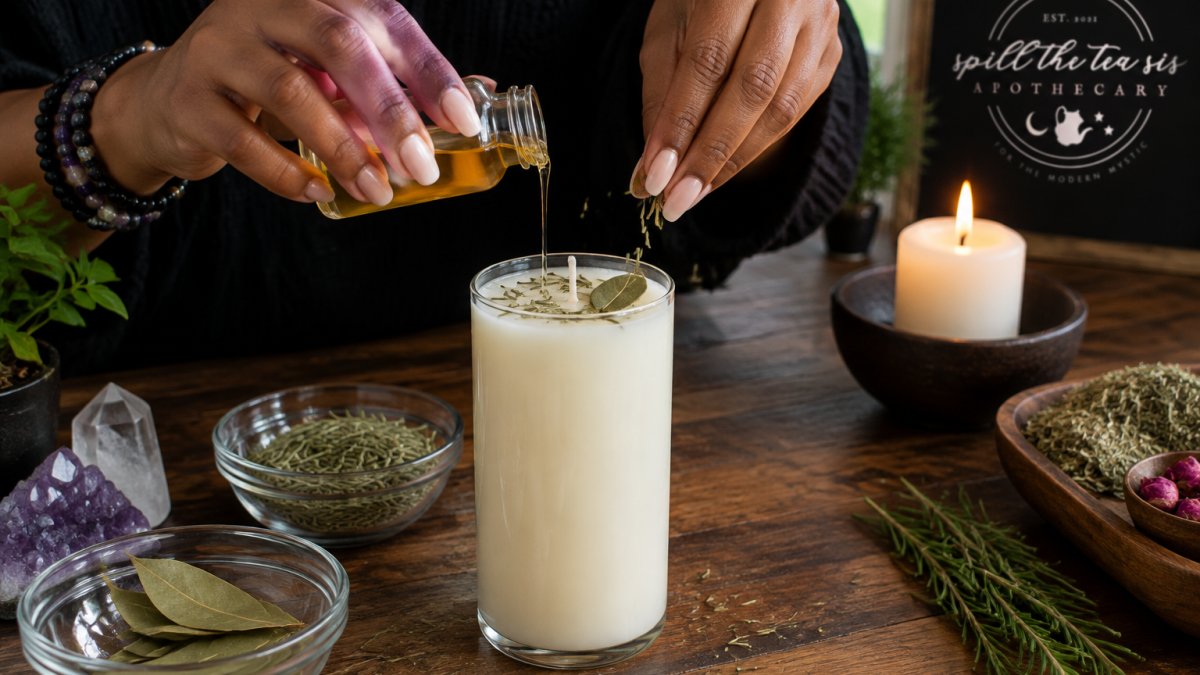
A common mistake is mixing five herbs "for power." That muddles the signal. One primary herb and one supporting herb is plenty. If you want to stir intention into the oil first, a crystal stirring spoon is made for exactly that step.

Fire Safety With Loose Herbs
Dried plant material can flare, and loose herbs near a flame are a real fire risk. Most practitioners find that dressing the wax and keeping herbs off the wick is safer than piling loose herbs on top. Never leave a burning candle unattended, keep it away from drafts and anything flammable, and check the National Candle Association's safety guidance for burn-time and holder basics. Ventilate the room when burning botanicals, and keep herbs and candles away from pets and children. Check ASPCA's toxic plant list before burning anything new around animals.
Low-Risk and Non-Burning Application Methods
You do not have to burn herbs to use them. Place a small dish of your chosen herb beside the candle rather than on it, or sew a sachet of herbs and set it near the candle as a separate anchor. A candle dressed with oil alone, with no loose plant material, avoids the flare risk of loose herbs. If you want smoke-free cleansing, a cleansing intention candle is designed for that.
Substitutions and Sourcing
Substitutions keep the practice accessible. No rose petals? Use lavender. No bay leaf? Rosemary covers both protection and clearing. The American Botanical Council is a solid reference for plant identification and sourcing questions. Buy herbs you can identify, store them dry and labeled, and discard anything moldy or musty.
Herb and Candle Safety, Substitutions, and Responsible Sourcing
Never leave a burning candle unattended, and keep loose herbs away from the flame itself. Dried plant material can flare, so dress the wax and keep the herbs off the wick. Check the National Candle Association's safety guidance for burn-time and holder basics.
Essential oils are concentrated, so ventilate the room when burning botanicals. Keep herbs away from pets and children, and check ASPCA's toxic plant list before burning anything new around animals.
Substitutions keep the practice accessible. No rose petals? Use lavender. No bay leaf? Rosemary covers both protection and clearing. The American Botanical Council is a solid reference for plant identification and sourcing questions.
Build Your First Intention Candle at Spill The Tea Sis Apothecary
Start with one purpose, one herb, and one color. That is a complete spell. Everything else is refinement.
Our candles are hand-poured in small batches on Main Street. Our guide to choosing intention candles for home rituals helps you match one to your goal before you buy.
Frequently Asked Questions
Can you put dried herbs directly on a candle?
You can, but keep it light. Press a small pinch into the wax after anointing so the herbs sit close to the surface, and trim the wick to about 1/4 inch before every burn. Large clumps of dried plant matter can catch fire and throw sparks, so many practitioners prefer to dress the candle with oil only and place loose herbs in a dish beside it. If you want the visual of herbs on wax, keep them sparse and never leave the candle unattended.
Which herbs are commonly used for protection spells?
Rosemary, sage, bay leaf, and thyme show up most often in protection work, and black pepper or garlic are traditional additions in some folk practices. Rosemary is the easiest starting point because it is widely available, inexpensive, and carries protection associations across several traditions. Pair it with a white or black candle for clearing, or a red candle when you want the boundary to feel firm. Use protection herbs sparingly in blends so the scent does not overwhelm the room.
What herbs are used for money spells?
Cinnamon, bay leaf, basil, and mint are the most common choices for herbs for money spells, with chamomile sometimes added for calm persistence. Cinnamon brings warmth and momentum, bay leaf is written on and burned for specific requests, and basil is a steady, everyday prosperity herb. Green candles are the usual pairing. Write your intention on a bay leaf, tuck it under the candle holder, and let the candle burn through while you focus on the outcome you want.
How do you choose herbs that match your spell's intention?
Name the outcome in one sentence first, then pick one or two herbs whose traditional associations match that outcome. If your goal is calm, lavender and chamomile fit; if it is courage, thyme and cinnamon work. Resist adding every herb that seems related, because a muddled blend scatters your focus. Check that the scent combination makes sense to you, since your personal reaction to a smell affects how well you can concentrate during intention candle spells.
Your first intention candle spell does not need to be complicated. It needs to be clear. Visit Spill The Tea Sis Apothecary to shop with intention and find hand-poured candles, crystals, and ritual tools chosen to support your practice.
