


Table of Contents
- Understanding the Difference Between Real and Fake Crystals
- Visual Inspection: What to Look For When Examining Crystals
- How to Tell If a Crystal Is Dyed or Treated
- Synthetic Crystals vs Natural Crystals: What's the Difference
- How to Tell If Quartz Is Real
- Simple Tests You Can Do at Home
- Ethical Crystal Sourcing and Seller Transparency
- When to Seek Professional Verification
- Frequently Asked Questions
Last Updated: October 13, 2026
Understanding the Difference Between Real and Fake Crystals
Knowing how to identify fake crystals vs real crystals saves you time, money, and disappointment. At Spill The Tea Sis Apothecary, we help spiritual seekers and collectors understand what they're bringing into their practice. Real crystals form through natural geological processes; fakes are manufactured in labs or made from glass and plastic.

A real crystal carries the energy of the earth's formation; a fake is just a pretty object.
What Makes a Crystal Real
A real crystal is a solid mineral with a repeating atomic structure that forms naturally in the earth. This structure creates its color, hardness, and how light passes through it.
Real crystals develop over geological time through heat, pressure, and chemical processes, giving each one its own character, variations in color, clarity, and size even within the same mineral type.
Natural crystals include clear quartz, amethyst, citrine, and countless others, each with mineral content that determines its appearance and feel.
Common Types of Fake and Imitation Crystals
Fake crystals fall into a few categories.
Glass imitations are the most common fake, molded colored glass made to look like amethyst or emerald.
Plastic imitations are cheaper and lighter, often used in bulk sets or toys. Plastic feels warmer and less substantial in your hand.
Dyed crystals start as real stones but are artificially colored, some sellers dye clear quartz to look like amethyst. Technically real material, but altered.
Synthetic crystals are lab-created minerals with the same chemical structure as natural ones. Some accept them; others prefer natural formation.
Visual Inspection: What to Look For When Examining Crystals
The first step in learning how to identify fake crystals vs real crystals is visual examination. You can spot many fakes without any special tools.

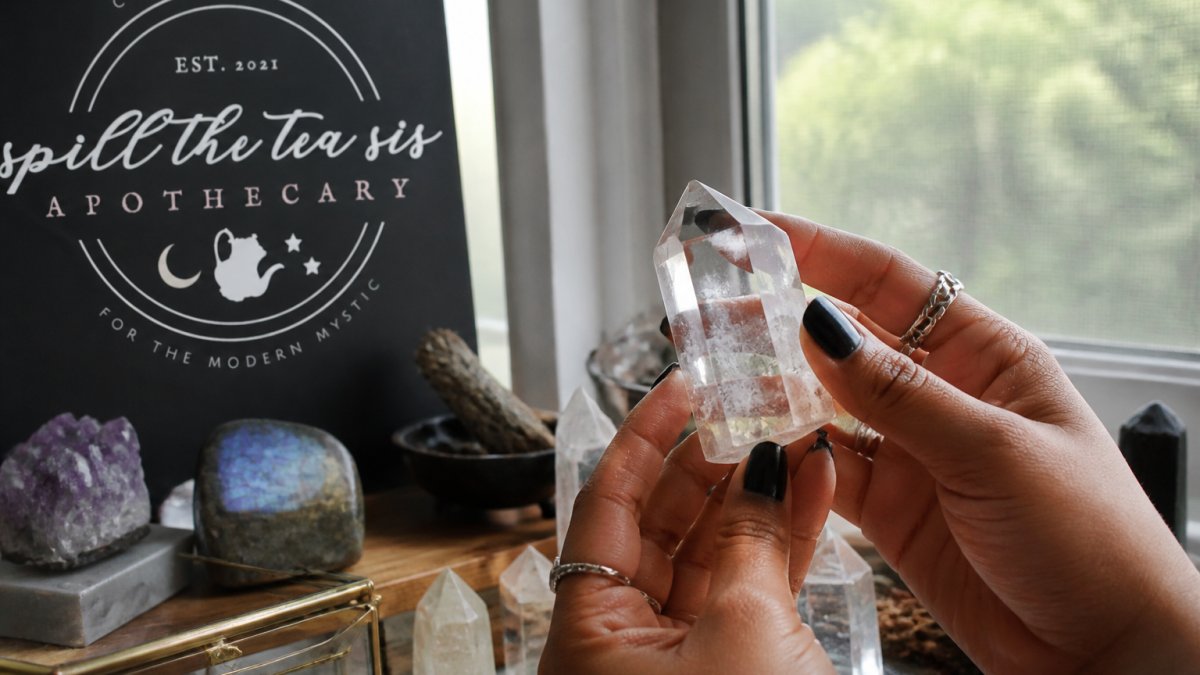
Color and Color Zoning
Real crystals often show color zoning, color varies within the same stone, fading from deep to light.
Fake and dyed stones show uniform color throughout, which is a red flag.
Natural amethyst often has lighter and darker purple zones; lab-grown or dyed amethyst looks evenly colored all the way through.
Hold the crystal up to natural light. Tilt it slowly. Real crystals show depth and variation. Fakes look flat and one-dimensional.
Clarity, Inclusions, and Internal Features
Real crystals contain inclusions, tiny particles, air bubbles, or other mineral material trapped inside during formation. Look for air bubbles, hairline fractures, mineral particles, or cloudiness. Fake crystals and glass are often perfectly clear; a flawless-looking stone might not be real. Inclusions don't make a crystal less valuable, they prove it's genuine.
Surface Texture, Shine, and Finish
Real crystals have a glassy or matte finish depending on type, with natural texture and varying shine. Glass or plastic fakes look too shiny and uniformly smooth. Run your finger across the surface: real crystal feels slightly textured; fakes feel slick.
How to Tell If a Crystal Is Dyed or Treated
Heat-treated and dyed crystals are real mineral material that has been altered, not fakes, but not natural either. Dyed crystals fade with sun exposure, and dye concentrates in cracks and fractures, so check edges and corners for darker color pooling. Treated crystals can look artificial: color too perfect or uniform, with no natural variation. Ask the seller if the stone is treated, ethical sellers disclose treatments.
Synthetic Crystals vs Natural Crystals: What's the Difference
Synthetic crystals are grown in labs using the same chemical elements as natural crystals, with the same internal structure and mineral composition. The only difference is origin: natural crystals form in the earth over geological time, while synthetics form in controlled lab conditions in weeks or months. Many prefer natural crystals for spiritual work, since the earth's energy infused the stone over thousands of years; others find synthetics acceptable because they share the same mineral properties. Synthetics are usually cheaper and more uniform.
How to Tell If Quartz Is Real
Quartz is one of the most imitated crystals. Learning how to identify fake crystals vs real crystals starts with understanding quartz. Real quartz is hard and dense with a glassy shine; clear quartz is transparent, amethyst is purple, and citrine ranges from pale yellow to deep gold. Fake quartz made from glass looks too perfect, uniform color, no natural inclusions, slick surface. Real quartz feels cool and substantial in your hand; fake quartz feels lighter and warmer.
Mystery Crystal Box | Intuitively Chosen Crystal Gift →

Simple Tests You Can Do at Home
You don't need a gem lab to sort most fakes from genuine material, but the order in which you test matters. Start with the safest, least destructive checks and only move to riskier methods if you accept you may damage the specimen, a scratch test can permanently mar a soft stone, and a heat test can crack one.
Start With Non-Destructive Checks
These methods leave the crystal unchanged and can be done with items you already own.
Weight in the hand. Mineral crystal is denser than glass or plastic of the same size.
Light and color behavior. Hold the stone up to natural daylight and tilt it slowly.
Surface and internal features. A 10x jeweler's loupe costs very little and reveals far more than the naked eye.
Ultraviolet Light and Fluorescence
A longwave UV flashlight is inexpensive and non-destructive. Many minerals fluoresce under UV, some glow, some don't, and the glow color can be a clue. But fluorescence is not a real-or-fake switch: some genuine stones are inert under UV, and some synthetics fluoresce. Use UV as one data point, not a verdict. It is most useful for spotting dye, which sometimes fluoresces in a way the base stone does not.
Hardness and Scratch Testing, Use With Caution
Hardness is a real diagnostic property, but scratch testing is destructive and easy to misread. The Mohs scale runs from 1 (talc) to 10 (diamond); quartz sits at 7, a copper penny around 3.5, a steel knife blade around 5.5, and window glass around 5.5. A steel blade should not scratch genuine quartz, but it will scratch glass and plastic imitations.
Specific Gravity, The Most Reliable Home Test
Specific gravity compares a stone's weight to the weight of an equal volume of water. Quartz has a specific gravity of about 2.65; glass is around 2.4 to 2.6 depending on composition; plastic is far lower. The difference between quartz and glass is small, so this test works best with a known reference stone of the same size and shape. A simple version: weigh the stone on a small digital scale, weigh it suspended in water, and divide the dry weight by the difference.
Ethical Crystal Sourcing and Seller Transparency
Knowing how to identify fake crystals vs real crystals is only half the job. The other half is evaluating the seller before you buy, most crystal purchases now happen online, where you cannot hold the stone.
Why Online Listings Are Hard to Judge
Photos lie, even when the seller isn't trying to deceive. Lighting, white balance, filters, and editing can make a pale amethyst look deep purple or hide dye pooling in cracks. Color variation between the photo and the stone in your hand is one of the most common complaints in online crystal sales. Before you buy, look for listings that show the stone from multiple angles, in natural light, and with a scale reference.
Questions to Ask Before You Buy
A transparent seller answers these without hesitation. Evasive answers are your signal to walk away.
- Is this stone natural, treated, synthetic, or imitation? These are four different things. A heat-treated amethyst is genuine mineral that has been altered. A lab-grown quartz is real quartz with an artificial origin. A glass "citrine" is neither. You deserve to know which one you are buying.
- Has the stone been dyed, heated, irradiated, or coated? Treatments are common and not inherently bad, but they must be disclosed. Dyed stones fade in sunlight. Irradiated stones may have a color that is not stable.
- Where was the stone mined or grown? Origin claims are hard to verify, but a seller who can
When to Seek Professional Verification
Sometimes you need expert help. Professional gemologists and crystal experts can verify authenticity with certainty.
Seek professional verification when:
- You're buying expensive crystals
- You want scientific confirmation of mineral content
- You're unsure about a crystal's origin
- You're building a serious collection
Professional gemologists use tools like ultraviolet light, magnification, and specific gravity testing, and can tell you if a crystal is natural, synthetic, or treated. They can identify the mineral type with certainty, valuable for serious collectors.
| Verification Method | What It Reveals | When to Use |
|---|---|---|
| Visual inspection | Basic authenticity, color zoning, inclusions | Always start here |
| Hardness testing | Mineral type and likely authenticity | Quick home check |
| Temperature testing | Material composition (crystal vs plastic/glass) | Rapid initial screening |
| Professional gemology | Definitive mineral ID, treatments, origin | Expensive purchases |
| Ultraviolet light | Fluorescence patterns, dyes, treatments | Expert verification only |
When you're ready to build your crystal collection with confidence, shop with intention. Real crystals carry real energy. Knowing the difference between authentic stones and imitations helps you create a practice that feels true to you.
Frequently Asked Questions
How can you tell if a crystal is real or fake?
Real crystals have natural imperfections, consistent color zoning, and specific hardness levels. Fake crystals, made from glass or plastic, often appear too perfect, have uniform color throughout, and lack the weight and temperature properties of authentic stones. Check for air bubbles (common in glass), unnatural uniformity, and lightweight feel. Real crystals also have distinct internal features like natural inclusions and geometric patterns that imitations cannot replicate.
What are fake crystals made of?
Fake crystals are typically made from glass, plastic, or synthetic materials. Glass imitations are molded to look like crystals but lack the hardness and internal structure of real stones. Plastic fakes are even lighter and more obviously artificial. Some sellers use dyed or heat-treated stones and market them as natural. Synthetic crystals are lab-created but still genuine minerals, different from outright imitations. Always ask sellers about material composition and treatment history.
How can you tell if a crystal has been dyed?
Dyed crystals often show unnaturally intense or uniform color that seems painted on rather than part of the stone's structure. Check the edges and any cracks, dye concentrates in these areas. Real natural crystals have color zoning with gradual transitions. Dyed stones may fade over time, especially if exposed to sunlight. If a crystal's color seems too vibrant or perfect compared to similar pieces, ask the seller directly whether it's been treated. Reputable sellers disclose all treatments upfront.
What's the difference between synthetic crystals and fake crystals?
Synthetic crystals are lab-created minerals with the same chemical composition and crystal structure as natural stones, they're genuine crystals, just made in a laboratory rather than by nature. Fake crystals are imitations made from glass, plastic, or other non-mineral materials that don't have the same properties. Synthetic quartz, for example, is still real quartz. The key distinction: synthetic stones are authentic minerals; fakes are not minerals at all. Both should be disclosed by ethical sellers.
Start your crystal journey with Spill The Tea Sis Apothecary. We provide authentic, intentionally selected crystals for your spiritual practice. Shop with intention and discover the crystals meant for you. Explore our Mystery Crystal Box to receive handpicked real crystals chosen with care and intuition.