


Last Updated: October 23, 2026
Quick Summary
To practice candle meditation for fall, light a single candle in a dim, slightly cool room, sit comfortably with the flame near eye level, and rest a soft gaze on it for five minutes, gently returning your attention each time your mind wanders. Add a minute or two each week until you reach ten to fifteen minutes.
- Set the candle roughly an arm's length away so your eyes don't cross.
- Start with five minutes a day for the first week, then build gradually.
- Trim the wick to about 1/4 inch before each use.
- Keep the candle away from drafts, curtains, paper, and pets.
- Use a flameless LED candle or flame video if open fire isn't safe.
Table of Contents
- Why Fall Is the Perfect Season for Candle Meditation
- What You'll Need Before You Begin
- Step 1: Choose a Candle and Set the Room
- Step 2: Find a Comfortable Seated Position
- Step 3: Practice Candle Gazing Meditation with a Soft, Steady Gaze
- A Guided Candle Meditation Script for Beginners
- How Long to Do Candle Meditation (and When to Stop)
- Candle Meditation Safety and Fire-Smart Alternatives
- Frequently Asked Questions
Why Fall Is the Perfect Season for Candle Meditation
Fall is the best season to start a candle meditation practice because the shorter days and cooler evenings pull us naturally toward stillness.
Here's what makes autumn ideal. The sun sets earlier, so evening practice feels natural rather than forced.
If you've ever felt too restless to sit still, fall gives you a built-in excuse to try. The season is already teaching you to slow down.
Below, we'll walk through the full ritual, step by step, including a timed beginner routine you can follow tonight.
What You'll Need Before You Begin
You need very little to start: one candle, a safe surface, a dark-ish room, and a chair or cushion. That's the whole list.
Here's the setup checklist we recommend:
- One candle in a stable holder (a jar candle works well)
- A heat-safe surface, like a wooden table or metal tray
- A chair or floor cushion
- A lighter or matches within reach
- A timer (your phone works, set it face-down)
- A quiet room where you won't be interrupted
Skip anything scented with synthetic-heavy fragrances if you're sensitive. Natural wax candles tend to burn cleaner and smell softer.
If you're new to ritual candles entirely, our guide on how to choose intention candles for home rituals walks you through picking one that matches your goal before you ever strike a match.
One more thing: keep a glass of water nearby. Candle gazing can dry your eyes, and a sip helps you reset.
Step 1: Choose a Candle and Set the Room
The right candle and room setup do most of the work for you. Get these two things right and the practice becomes much easier to sink into.
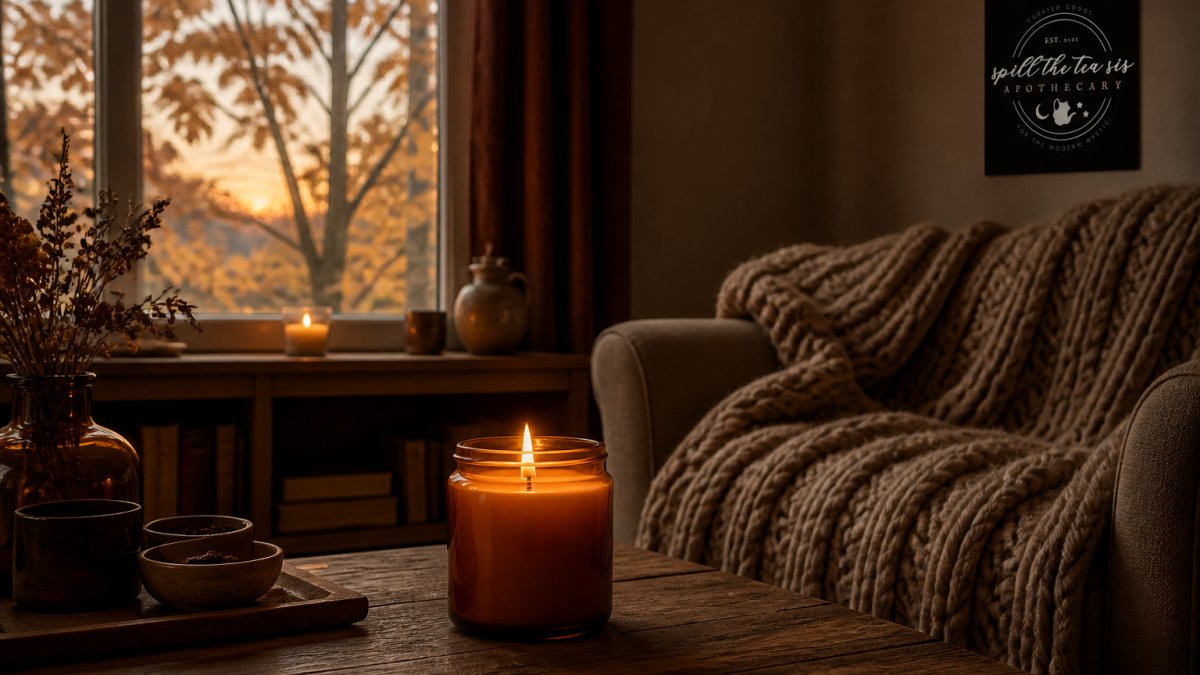
Picking Your Fall Candle
Choose a scent that matches the mood you want, not just the season. Warm spice scents support grounding. Fresh, airy scents support calm. Woodsy scents support focus.
For fall specifically, we love pairing the season's energy with intention.
Both are hand-poured in small batches with coconut apricot soy wax and a crackling cedar wick, and each burns for 30 to 50 hours.
Not sure which scent fits your goal? Our guide on how to choose candle scents for manifestation breaks down how scent connects to intention.
Adjusting Room Lighting and Temperature
Dim the lights but don't kill them completely. You want the flame to stand out without straining your eyes in total darkness.
Turn off overhead lights. Leave a lamp on in the next room, or use a soft lamp in a corner.
Set the temperature slightly cool. A room that's a touch cool keeps you alert.
Silence helps too. Close the door, silence your phone, and let the room get quiet before you light the candle.
Step 2: Find a Comfortable Seated Position
Sit in a way that lets you stay still for several minutes without fidgeting. Comfort matters more than tradition here.
You have options:
- A chair: Sit with feet flat on the floor, back supported, hands resting on your thighs. Best for beginners and anyone with back or knee issues.
- Cross-legged on a cushion: Sit on a firm cushion so your hips tilt slightly forward. Keeps your spine tall without strain.
- Kneeling on a bench: Good if cross-legged feels uncomfortable.
Whatever you choose, set the candle so the flame sits near eye level. If it's too low, you'll crane your neck and strain.
Keep a comfortable distance, roughly an arm's length away. Close enough to see the flame clearly, far enough that your eyes don't cross.
Shuffle into your seat, roll your shoulders back, and take one deep breath before you begin.
Step 3: Practice Candle Gazing Meditation with a Soft, Steady Gaze
Candle gazing meditation, sometimes called Trataka, is the practice of holding a soft, steady gaze on a flame while letting thoughts pass without chasing them. The flame becomes your fixed point.
Here's how to do it:
Soothe Your Soul Healing & Peace Intention Candle | Calming Soy Wax Candle →
- Light the candle and take three slow breaths.
- Rest your eyes on the flame with a soft gaze, not a stare.
- Blink normally. Don't force your eyes open.
- When your mind wanders, notice it and return to the flame.
- Keep your face and jaw relaxed.
- When your eyes tire, close them and picture the flame in your mind.
That last step matters. Closing your eyes and holding the afterimage is part of the traditional practice, and it gives your eyes a rest.
Where to Focus Your Eyes
Focus on the brightest part of the flame, just above the wick. Keep your gaze soft rather than sharp. A hard stare makes your eyes water within seconds.
If you wear glasses, keep them on. If your eyes feel dry, blink more and look slightly away for a moment before returning.
Noticing the Flame's Movement
Watch how the flame moves. It flickers, leans, and settles. Notice the colors at the base and tip.
Don't analyze it. Just watch. This is where concentration quietly becomes awareness.
A Guided Candle Meditation Script for Beginners
Use this guided candle meditation script out loud or in your head.
Settle in (1 minute). Sit comfortably. Feel the weight of your body in the chair or cushion. Let your hands rest on your thighs.
Clearing breath (1 minute). Take three slow breaths. In through the nose, out through the mouth. Let your shoulders drop. With each exhale, imagine the day's hurry draining out of you and into the floor.
Light and gaze (5 minutes). Light the candle. Rest your eyes on the flame with a soft gaze. Blink as needed. Keep your face and jaw relaxed. If your eyes water, look down at your lap for three breaths, then return to the flame. The flame may flicker from a draft, let it move without chasing it.
Notice (2 minutes). Watch the flame flicker and lean. When thoughts arise, let them pass like leaves on a stream. If you notice yourself analyzing the flame's colors, gently label it "thinking" and return to the simple act of watching.
Close your eyes (1 minute). Shut your eyes and hold the image of the flame in your mind. See it against the dark of your eyelids. This afterimage practice rests your eyes and deepens concentration.
Closing the practice. Take one deep breath. Wiggle your fingers and toes.
How Long to Do Candle Meditation (and When to Stop)
Start with five minutes a day for the first week. Add a minute or two each week until you reach ten to fifteen minutes. That's plenty for most people.
Stop early if any of these happen:
- Your eyes burn or water heavily
- You feel a headache coming on
- You get dizzy or lightheaded
- You feel restless and frustrated
None of these mean you failed. They mean your body needs a break. Close your eyes, breathe, and try again another day.
Evening practice fits fall best. Light the candle after dinner, when the day winds down and the room goes quiet.
Here's the pacing and the stop signals in one place.
| Item | Value | Note |
|---|---|---|
| First week | Five minutes a day | Start here |
| Weekly increase | Add a minute or two | Build gradually |
| Target session | Ten to fifteen minutes | Plenty for most people |
| Stop if | Eyes burn or water heavily | Rest and try another day |
| Stop if | Headache coming on | Don't push through |
| Stop if | Dizzy or lightheaded | Close eyes and breathe |
| Stop if | Restless and frustrated | Body needs a break |
| Best time | Evening, after dinner | Fits fall best |
Candle Meditation Safety and Fire-Smart Alternatives
Fire safety comes first, always. Keep these rules close:
- Never leave a burning candle unattended.
- Keep candles away from curtains, paper, and pets.
- Place the candle on a stable, heat-safe surface.
- Trim the wick to about 1/4 inch before each use.
- Keep hair and sleeves away from the flame.
- Blow out the candle when you finish.
Fall adds a few seasonal cautions. Drafts from open windows or heating vents can make a flame flicker unpredictably, so set your candle away from moving air.
If you have kids or pets, or you live somewhere open flames aren't safe, you have options. For a soothing intention candle option, try the Soothe Your Soul Healing & Peace Intention Candle.

For a soothing alternative that still feels like ritual, our Soothe Your Soul Healing & Peace Intention Candle is made for calming racing thoughts and deepening meditation.
Eye comfort matters as much as fire safety. Stop if your eyes burn, water heavily, or feel strained.
Frequently Asked Questions
What should I focus on during candle meditation?
Rest your soft gaze on the brightest part of the flame, just above the wick. Let the flame be your fixed point. When your attention drifts to thoughts or feelings, notice them without judgment and return your eyes to the flame. Some practitioners silently repeat a word like "peace" or "fall" to anchor attention. Keep the gaze gentle rather than staring hard, and blink naturally. If your eyes water or strain, look away for a few breaths before returning.
How long should you do candle gazing meditation?
Beginners can start with 3 to 5 minutes of gazing, then close the eyes and rest for another minute or two. Build to 10 or 15 minutes over several weeks as your comfort allows. The right duration is the one you can repeat consistently without eye strain. If you feel restless or your eyes ache, end the session early. A short daily practice done in a quiet room beats a long session you dread.
Is candle meditation safe for beginners, and what if I don't want an open flame?
Candle meditation safety comes down to basics: place the candle on a stable, heat-safe surface away from curtains, paper, and pets, never leave it unattended, and keep your face a comfortable distance from the flame. If you have asthma, scent sensitivities, or live with young children, a flameless LED candle or a battery-operated taper works just as well for the gazing practice. The focus is the steady point of light, not the fire itself.
Can candle meditation help with anxiety?
Many people use candle gazing meditation as a calming evening ritual. Focusing on a single point can interrupt racing thoughts and give the mind something simple to rest on, and the slow breathing that comes with it supports relaxation. It is not a treatment for anxiety disorders, so pair it with other support if anxiety is significant. A dim room, a warm fall scent, and a few quiet minutes can still make it a soothing part of your day.
The hardest part of candle meditation isn't the gazing. It's slowing down enough to try. If fall has you craving warmth and quiet, let us help you build the ritual. Spill The Tea Sis Apothecary hand-pours small-batch intention candles with clean coconut apricot soy wax and crackling cedar wicks, made for meditation, evening wind-downs, and seasonal intention-setting. Browse our fall candles and shop with intention to find the one that fits your practice.
