


Table of Contents
- Why Crystal Jewelry Needs Gentle Care
- What You'll Need Before You Start
- How to Clean Crystal Jewelry with Soap and Water
- Cleaning Swarovski Crystal Jewelry Without Damage
- How to Dry Crystal Jewelry Properly
- Cleaning Vintage Crystal Jewelry Safely
- Common Mistakes to Avoid
- When to Seek Professional Cleaning
- Frequently Asked Questions
Last Updated: October 5, 2026
Why Crystal Jewelry Needs Gentle Care
Crystal jewelry deserves careful attention. Crystal jewelry combines delicate gemstones with metal settings, cords, or wire wrapping that require specific care. At Spill The Tea Sis Apothecary, we understand that your crystal pieces hold both beauty and intention, which is why knowing how to safely clean crystal jewelry matters so much.

Crystals are natural minerals with varying hardness levels. Some are fragile and can scratch or chip easily. Others may fade if exposed to direct sunlight or harsh chemicals. The metal components, whether gold-plated chains, brass accents, or copper wire, can tarnish or corrode if treated improperly.
The good news? You can clean crystal jewelry safely at home with the right approach. This guide walks you through proven methods for different crystal types, common mistakes to avoid, and when to call in a professional.
What You'll Need Before You Start
Basic Supplies for Safe Cleaning
Gather these items before you start cleaning:
- Soft, lint-free cloth (microfiber works best)
- Mild dish soap (gentle, fragrance-free)
- Distilled water (tap water contains minerals that can leave spots)
- Soft-bristled brush (old toothbrush or jewelry brush)
- Small bowl for soaking
- Towels for drying
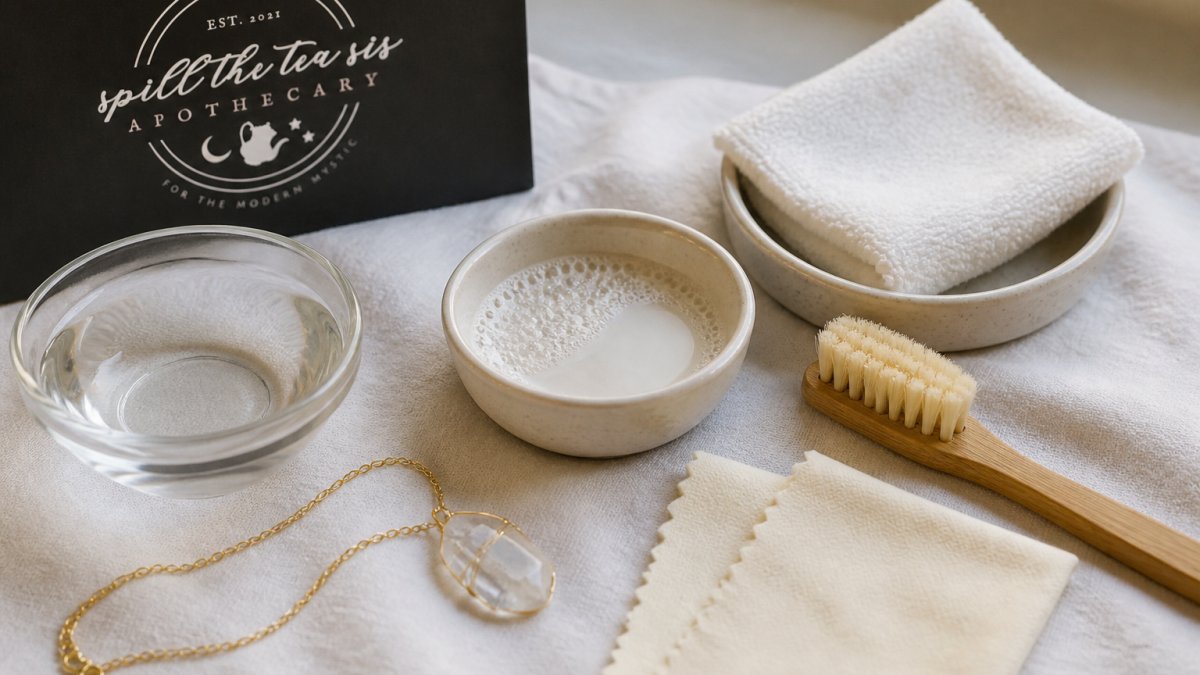
Avoid harsh chemicals, abrasive scrubbers, or commercial jewelry cleaners unless specifically formulated for crystals. These can damage delicate stones and strip protective coatings from metal settings.
Crystal Types and Their Specific Needs
Different crystals require different care approaches. Understanding your stone helps prevent damage.
Quartz-based crystals (clear quartz, amethyst, rose quartz) are relatively durable. They handle gentle soap and water well but can scratch if rubbed with rough materials.
Delicate crystals (fluorite, selenite, tourmaline) are softer and more prone to damage. These need extra-gentle handling and minimal soaking.
Swarovski crystal (man-made crystal glass) is durable but can lose its sparkle if exposed to harsh chemicals. It responds beautifully to gentle cleaning methods.
Vintage crystal jewelry often has unknown origins and may include fragile settings or antique metals. These pieces benefit from the most conservative approach.
Wire-wrapped and beaded jewelry requires attention to the wrapping material. Waxed cord can absorb water, while metal wire can tarnish if soaked too long.
How to Clean Crystal Jewelry with Soap and Water
This is the safest, most effective method for most crystal jewelry. Here's exactly how to do it:
Step 1: Prepare your cleaning station. Fill a small bowl with lukewarm distilled water. Add just a drop or two of mild dish soap, you want barely-visible suds, not a soapy bath.
Step 2: Soak gently. Place your crystal jewelry in the bowl. Let it sit for 2-3 minutes maximum. This loosens surface dust and dirt without stressing the stone or metal.
Step 3: Brush away debris. Use a soft-bristled brush to gently remove dirt from crevices, especially around metal settings and wire wrapping. Work in one direction. Avoid scrubbing back and forth, which can scratch the surface.
Step 4: Rinse thoroughly. Hold the piece under cool running water or dip it in a bowl of clean distilled water. Make sure all soap residue is gone, soap left on the surface can dull the crystal's shine.
Step 5: Dry immediately. Pat dry with a soft, lint-free cloth. Do not let the piece air-dry, as water spots can form. Pay special attention to metal settings and any crevices where water can hide.
This method works for most crystal jewelry, including handcrafted pieces from Spill The Tea Sis Apothecary's collection.
Cleaning Swarovski Crystal Jewelry Without Damage
Swarovski crystals are precision-cut glass designed to sparkle brilliantly. They're more durable than natural crystals but still need careful handling.
The soap-and-water method works perfectly for Swarovski pieces. The key difference? Swarovski crystals respond to extra polish.
After washing and drying, use a clean microfiber cloth to gently buff the surface in circular motions. This removes any remaining water spots and restores maximum sparkle. The faceted cuts of Swarovski crystals catch light beautifully when polished this way.
Avoid vinegar or alcohol-based cleaners on Swarovski pieces. These can strip the protective coating on some pieces. Stick with mild soap, water, and gentle buffing.
For wire-wrapped or beaded Swarovski jewelry, be extra careful not to soak the wrapping material longer than necessary. The crystal itself is tough, but the surrounding components need protection.
How to Dry Crystal Jewelry Properly
Drying is where many people make mistakes. Water left on crystal jewelry can leave spots, damage metal settings, or weaken cord wrappings.
Pat, don't air-dry. Use a soft cloth to remove excess water immediately after rinsing. Press gently rather than rubbing.
Dry all components. Pay special attention to metal settings, clasps, and any areas where water can hide. Trapped moisture can cause tarnishing or mold growth in cord-wrapped pieces.
Use a lint-free cloth. Regular towels leave fibers behind. Microfiber cloths are ideal, they absorb water without shedding.
Air-dry the final stage. After patting dry, leave the piece on a clean cloth for 15-30 minutes in a well-ventilated area. This ensures any remaining moisture evaporates safely.
Never use heat to dry crystal jewelry. Hair dryers, ovens, or direct sunlight can damage delicate stones and loosen settings.
Cleaning Vintage Crystal Jewelry Safely
Vintage pieces deserve extra respect. They may have been crafted decades ago with materials or techniques that differ from modern jewelry.
Start conservatively. Test your cleaning method on an inconspicuous area first. If the piece shows no damage after a gentle wash, you can proceed with confidence.
Avoid soaking vintage crystal jewelry for extended periods. Five minutes maximum. Older settings can be loose, and prolonged water exposure can weaken them further.
Pay attention to any special finishes. Some vintage pieces have gold plating, patina, or intentional aging that harsh cleaning will remove. Gentle soap and water preserve these details.
If you're uncertain about a vintage piece's composition or condition, professional cleaning is worth the investment. Vintage crystal necklaces and rings often have sentimental value that justifies expert care.
Common Mistakes to Avoid
Physical Cleaning Mistakes
Using tap water. Tap water contains dissolved minerals (calcium, magnesium, chlorine) that leave white or cloudy spots on crystal as the water evaporates. These spots are difficult to remove and dull the stone's natural sparkle. Always use distilled water for the final rinse.
Soaking too long. Soaking longer than 5 minutes stresses metal settings, weakens cord wrappings, and allows water to penetrate porous stones. Soft crystals like selenite can begin to dissolve or cloud. Metal clasps and wire can tarnish or corrode. Quick soaks, 2-3 minutes maximum, are safer and just as effective for removing surface dust.
Using harsh chemicals. Bleach, vinegar, ammonia, and commercial jewelry cleaners contain acids or abrasives that etch crystal surfaces, strip protective coatings, and tarnish metal. Even "gentle" commercial cleaners often include surfactants or solvents not formulated for delicate stones. Stick with mild dish soap (fragrance-free, dye-free) and water.
Scrubbing hard. Aggressive brushing scratches soft crystals and can loosen settings. Use gentle, one-direction strokes only. Let the soap and water do the work; your brush should feel like a whisper against the stone, not a scrub.
Letting water sit. Water spots form within minutes as minerals in the air and residual soap dry on the surface. Dry immediately after rinsing with a soft, lint-free cloth. Microfiber cloths are ideal because they absorb water without shedding fibers.
Ignoring the metal components. The chain, clasp, wire wrapping, or beading thread needs protection too. Do not focus only on the crystal. Metal can tarnish, cord can weaken, and glued settings can fail if water is not managed carefully around all components.
Storing wet. Never put crystal jewelry away while damp. Moisture trapped inside can cause mold growth in cord-wrapped pieces, corrosion in metal settings, and clouding in porous stones. Always ensure the piece is completely dry before storage.
Exposing to extreme temperatures. Sudden temperature changes can crack crystal, especially softer stones like selenite and tourmaline. Keep cleaning water lukewarm (around 70-80°F), not hot or cold. Do not move a wet piece from warm water to a cold rinse without a gradual transition.
Spiritual Cleansing vs. Physical Cleaning: Know the Difference
Many crystal resources discuss "cleansing" in an energetic or spiritual sense, the practice of clearing negative energy or resetting a stone's vibration through moonlight, sunlight, salt, sound, or intention. This is a separate practice from physical cleaning and serves a different purpose.
Physical cleaning removes visible dirt, dust, oils, and residue. It is a material-care practice grounded in protecting the stone and metal from damage.
Spiritual cleansing is a belief-based practice intended to reset or purify the energetic properties of a crystal. Common methods include placing the stone in moonlight overnight, burying it in salt, or using sound (singing bowls, bells).
These practices can coexist, but they are not the same. If you wish to physically clean your crystal jewelry, follow the soap-and-water method in this guide. If you also wish to spiritually cleanse it, do that as a separate step, for example, physical cleaning first, then placing the dry piece in moonlight. Do not confuse salt-based spiritual cleansing (which can damage metal and certain stones) with physical cleaning methods.
When to Seek Professional Cleaning
Some situations call for expert help. Know when to step back and let a professional handle it.
Antique or heirloom pieces. If the jewelry has significant age, value, or sentimental importance, professional cleaning protects your investment.
Damaged settings. If the metal is bent, loose, or corroded, a jeweler can repair it while cleaning safely.
Unknown materials. If you're unsure what type of crystal or metal you're dealing with, a professional can identify it and recommend the safest cleaning method.
Stubborn buildup. If dirt or grime won't come off with gentle methods, professionals have specialized tools and solutions that won't damage the piece.
Cord or wire damage. If the wrapping is fraying, discolored, or weakened, a jeweler can clean the crystal and repair or replace the wrapping.
Precious metal settings. If your crystal jewelry has sterling silver, gold, or other precious metals, professional cleaning ensures proper care of both the crystal and the setting.
Professional jewelers have ultrasonic cleaners, steam cleaners, and specialized solutions designed specifically for crystal jewelry. The cost is reasonable insurance for pieces you treasure.
Frequently Asked Questions
Can you clean crystal jewelry with soap and water?
Yes, mild dish soap and lukewarm water is one of the safest methods for cleaning crystal jewelry. Mix a few drops of gentle soap in warm water, soak the jewelry for 5-10 minutes, then gently scrub with a soft brush. This method works well for removing dust and light dirt without harsh chemicals. Always rinse thoroughly and dry completely to prevent water spots.
How do you safely clean Swarovski crystal jewelry without damaging it?
Swarovski crystals require extra care due to their delicate coatings and settings. Use only lukewarm water with mild soap, avoid soaking for more than a few minutes, and never use abrasive brushes. Gently wipe the crystal surface with a soft microfiber cloth and pat dry immediately. Skip ultrasonic cleaners and harsh chemicals, which can damage the crystal's coating and metal settings.
What should you avoid when cleaning crystal jewelry?
Avoid ultrasonic cleaners, steamers, harsh chemicals, abrasive scrubbing, prolonged soaking, and extreme temperature changes. Don't use vinegar or baking soda solutions on delicate crystals. Skip jewelry polishing cloths designed for metals alone. Never submerge wire-wrapped or beaded crystal jewelry longer than necessary, as water can weaken cords and adhesives. When in doubt, consult a professional cleaner.
How often should you clean crystal jewelry?
Clean crystal jewelry every 2-4 weeks if worn regularly, or as needed when you notice dust or dirt buildup. Pieces worn daily may need more frequent cleaning than occasional-wear items. A quick wipe with a soft cloth between deeper cleanings helps maintain shine and prevents dirt accumulation. Store jewelry in a clean, dry place to reduce how often deep cleaning is needed.
Caring for your crystal jewelry is part of honoring the intention behind it. Whether you've chosen a piece from Spill The Tea Sis Apothecary's curated collection or inherited a family treasure, gentle cleaning keeps your crystals sparkling and energetically clear. Start with the soap-and-water method, learn your specific crystal types, and don't hesitate to seek professional help for valuable or delicate pieces. Your jewelry will thank you with lasting beauty and shine.