


Table of Contents
- Signs a Crystal Needs Cleansing
- How Often to Cleanse Crystals
- Physical Cleaning Versus Spiritual Cleansing
- How to Cleanse Crystals Safely
- How to Cleanse Crystals Without Water
- Building a Cleansing Routine That Works for You
- Frequently Asked Questions
Last Updated: October 7, 2026
Signs a Crystal Needs Cleansing
How do you know when your crystal collection needs attention, or when crystals need cleansing? The signs aren't always obvious, but they're worth learning.
Crystals need cleansing for many reasons. They absorb energy from their environment, from the people who handle them, and from the spaces where they sit.
Before you read the signs below, one honest note: perceived energy changes are personal or spiritual interpretations, not scientifically established indicators.
Observable Signs (Physical Care Needs)
These are the signs anyone can verify, regardless of belief system:
- Visible dust, lint, or fingerprints on the surface or in crevices
- Dull or cloudy appearance where the stone once looked bright
- Sticky residue from handling, oils, lotions, or incense smoke
- A chip, crack, or scratch that appeared after a drop or impact
- Loose or tarnished jewelry settings on a pendant, ring, or bracelet
- Odor clinging to a porous stone after storage near smoke or strong scents
If you notice any of these, the fix is ordinary physical cleaning first. A soft microfiber cloth, a gentle brush, or lukewarm water (only for water-safe stones) handles most surface issues. Spiritual cleansing is a separate step, not a substitute for cleaning.

Subjective Signs (Spiritual Interpretations)
Many practitioners describe the following experiences. These are meaningful within a spiritual framework, but they are not measurable and different people will notice different things:
- The crystal feels heavier or denser in your hand than it used to
- It feels neutral or flat rather than engaging
- You feel disconnected from a stone you once reached for daily
- You find yourself avoiding a specific crystal without a clear reason
- A stone used in meditation no longer seems to support focus
A common pattern is that these impressions show up after a crystal has been handled by many people, stored in a busy room, or used during an emotionally intense period. None of that is proof, but it can be a useful prompt to pause and reset.
If you can't tell whether a crystal needs cleansing, clean it physically and wait a week. If the physical care was the real issue, the stone will look and feel different. If nothing changes, the question is spiritual, and the answer is yours to decide.
Environmental Triggers Worth Tracking
Some situations reliably precede a need for cleansing, whether or not you notice energy shifts:
- Heavy handling, a stone passed around a group, used in a class, or carried in a pocket with keys and coins
- Smoke exposure, incense, candles, or cooking smoke in the room where the crystal sits
- Shared spaces, a crystal on a communal desk, altar, or reception counter
- Travel, airports, hotels, and crowded transit expose stones to constant handling and environmental change
- Emotional events, using a crystal during grief, conflict, or a major transition
- New acquisition, a stone that arrived from a shop, estate sale, or online seller has passed through many hands
Keeping a simple note in your phone about where a crystal has been can make the decision easier than trying to sense it in the moment.
What to Do When You Notice No Signs
If nothing on either list applies, you do not have to cleanse. There is no mandatory frequency and no penalty for leaving a quiet, clean, untouched crystal alone. Many practitioners only cleanse when a specific trigger occurs. Others cleanse on a schedule for ritual reasons. Both approaches are valid. The point of this checklist is to give you reasons to act, not rules you have to follow.
How Often to Cleanse Crystals
There is no universal schedule, and any article that gives you one is oversimplifying. Frequency should track how much a crystal is used, what it's exposed to, and what kind of stone it is. Here's a practical way to think about it.
A Proportionate Routine Based on Use and Exposure
| Situation | Suggested Physical Cleaning | Suggested Spiritual Cleansing |
|---|---|---|
| Carried daily in a pocket or bag | Weekly wipe with a soft cloth | Monthly, or after a notable event |
| Worn as jewelry against skin | Weekly wipe; deeper clean monthly | Monthly, or when the piece feels off |
| Used in meditation or ritual several times a week | Wipe before and after sessions | Weekly to monthly |
| Handled by many people (shared space, events) | After each heavy-use day | After each heavy-use day |
| Displayed on a shelf, rarely touched | Monthly dusting | Seasonally, or when you feel called |
| Stored in a box or drawer | Before and after storage | Before and after storage |
| Newly acquired | Clean before first use | Cleanse before first use |
| Exposed to smoke, sweat, or strong scent | As soon as you notice residue | Within a few days |
These are starting points, not rules. Adjust based on what you observe.
Crystal-Specific Safety Considerations
Frequency also depends on what method you're using, because some methods are hard on certain minerals:
- Water-soluble stones (selenite, halite, calcite, malachite, azurite), never use water methods, no matter how often you cleanse. Use smoke, sound, moonlight, or earth instead.
- Sun-sensitive stones (amethyst, rose quartz, citrine, smoky quartz, fluorite), avoid prolonged direct sunlight. If you cleanse in sun, keep sessions short and indirect.
- Salt-sensitive stones (anything with a Mohs hardness below 5, plus porous stones like turquoise and opal), salt can scratch or dry out the surface. Use a dry salt bed only if you accept the risk, or skip salt entirely.
- Jewelry settings, metal prongs, glue, and elastic cords degrade with repeated water or salt exposure. For jewelry, prefer a dry cloth wipe plus smoke or sound cleansing.
- Fragile or cleaved stones (mica, selenite, fluorite), avoid burial in soil or sand, which can chip edges. Use moonlight or sound.
If you're unsure what a stone is, treat it as water-sensitive and salt-sensitive until you confirm otherwise. The cost of a cautious method is zero; the cost of ruining a favorite piece is real.
Lunar and Seasonal Rhythms
Some practitioners tie cleansing to the new moon or full moon. This creates a natural, easy-to-remember schedule and works well for display crystals that don't get much handling. Others cleanse seasonally, at the start of each season or on solstices and equinoxes. These rhythms are optional. They're useful mainly because they make the habit consistent.
When to Cleanse Instead of Scheduling
Many experienced practitioners skip the calendar entirely and cleanse when a trigger occurs:
- After a crystal has been handled by a crowd
- After a difficult emotional period
- After moving a crystal to a new space
- After a stone has been stored for a long time
- Before using a crystal for a specific intention or ritual
This approach is more responsive and often more meaningful than a fixed schedule. It also avoids over-cleansing, which some practitioners believe can make a stone feel depleted rather than refreshed.
What to Do When No Signs Are Noticed
If a crystal is clean, quiet, and rarely touched, you can leave it alone indefinitely. There is no objective test that says a crystal is overdue, and no penalty for not cleansing. The right frequency is the one that matches your use, your beliefs, and the physical condition of the stone.
Physical Cleaning Versus Spiritual Cleansing
It's important to understand the difference. Physical cleaning removes dust, dirt, and visible grime.
Physical cleaning is straightforward. Use a soft cloth, a gentle brush, or lukewarm water to remove surface dust.
Spiritual cleansing works with intention.
Mystery Crystal Box | Intuitively Chosen Crystal Gift →
You don't have to choose one or the other. Many practitioners do both. A clean, energetically reset crystal is ideal.
How to Cleanse Crystals Safely
Safety matters when you cleanse crystals. Not all stones can handle the same methods. Some crystals dissolve or fade in water. Others are fragile and break easily. Before you cleanse, know what you're working with.
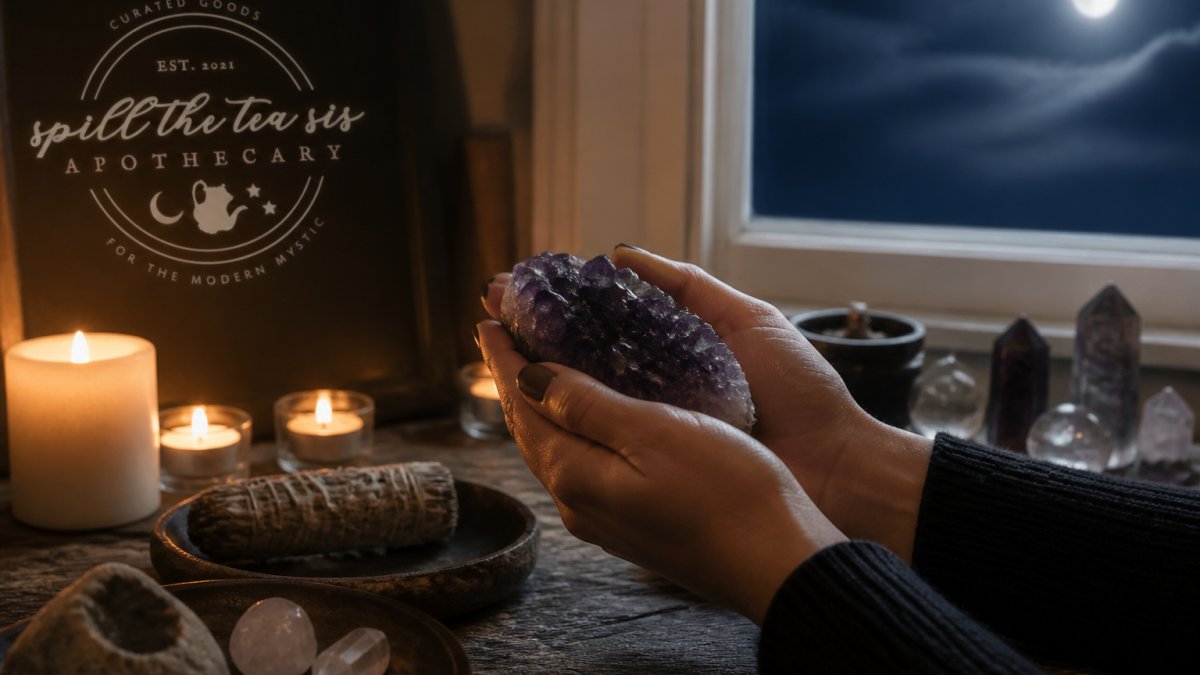
Water-Sensitive Stones: What You Need to Know
Many crystals are water-soluble or contain minerals that break down when wet. Selenite, halite, and calcite are common examples.
Other stones fade in sunlight or water. Amethyst, rose quartz, and citrine can lose their color over time with exposure to direct sun or moisture.
The safest approach with delicate stones is to skip water methods entirely. Use moonlight, smoke, sound, or earth methods instead. These work beautifully without risk.
Moonlight and Sunlight Cleansing
Moonlight is gentle and effective. Place your crystals on a windowsill or outside under the moon overnight. Many practitioners prefer the full moon for cleansing, though any moon phase works.
Sunlight is powerful but comes with caution. Direct sun can fade sensitive stones. If you use sunlight, limit exposure to an hour or two. Early morning or late afternoon sun is gentler than midday rays.
How to Cleanse Crystals Without Water
If your crystals are water-sensitive or you simply prefer dry methods, you have excellent options.
Smoke Cleansing Methods
Smoke cleansing uses the smoke from burning herbs or resins. Hand-wrapped sage is a popular choice.
Incense sticks work similarly. Light the incense, and let the fragrant smoke drift around your stones.

At Spill The Tea Sis Apothecary, we offer hand-wrapped sage and incense sticks specifically for this purpose. The hand-wrapped sage is all-natural and carefully crafted for quality and longevity.
Sound and Earth Cleansing
Sound is a powerful cleansing tool. Ring a bell, use a singing bowl, or play music near your crystals. The vibrations help shift stagnant energy. This method is safe for all stones and requires no special equipment.
Earth cleansing involves burying crystals in soil or sand for a day or two. This grounds their energy and feels deeply restorative.
Building a Cleansing Routine That Works for You
Start simple. Choose one cleansing method and practice it consistently.
Pay attention to how your crystals feel after cleansing.
Consider your lifestyle and your crystals' exposure. Heavily used stones need more frequent cleansing. Quiet-living crystals can go longer.
Remember that cleansing is both practical and intentional. You're removing physical dust and resetting energy at the same time.
If you're building a crystal collection or want guidance choosing stones that match your needs, Spill The Tea Sis Apothecary's Mystery Crystal Box offers intuitively selected crystals perfect for expanding your practice.

Frequently Asked Questions
How do you know when to cleanse your crystals?
You'll notice signs that crystals need cleansing when they feel heavy, less energizing, or appear cloudy. Some practitioners report that crystals feel different to the touch, almost dull, after absorbing energy from their environment or the people handling them. If you've recently used a crystal for emotional work, passed it between many hands, or kept it in a chaotic space, cleansing helps restore clarity. Trust your intuition: if something feels off with your stone, it's time to cleanse.
Should you cleanse a crystal when you first get it?
Yes. When you first receive a crystal, whether from a shop, gift, or mystery box, it carries the energy of everyone who has handled it and the environments it has passed through. Cleansing it before use allows you to clear that accumulated energy and set your own intention. This is especially important if you want your crystal to work with your specific goals and practice. Many practitioners cleanse new stones with moonlight, smoke, or sound before their first use.
Can you cleanse crystals without water or moonlight?
Absolutely. Water isn't suitable for all crystals, and cloudy nights happen. Smoke cleansing using sage or incense sticks is a powerful alternative that works with nearly any stone. Sound cleansing through singing bowls, bells, or even your own voice can also shift energy. Burial in earth, visualization with intention, and even sitting crystals in sunlight are effective methods. The key is choosing a method that feels right for your practice and your crystal's properties.
How often should you cleanse your crystals?
Frequency depends on how actively you use your stones. Crystals you wear daily or use in rituals benefit from weekly or bi-weekly cleansing. Decorative stones in stable environments may only need monthly cleansing. If you use a crystal for emotional support during a difficult time, cleanse it more often, even daily. Trust your intuition and the signs your crystal shows. Many practitioners also cleanse their entire collection during full moons or new moons as part of a regular spiritual practice.
Recognizing when your crystals need cleansing is a skill that grows with practice. Whether you're drawn to water cleansing, moonlight, smoke, or sound methods, the most important thing is that you're paying attention to your stones. Start with one method, notice how it feels, and build from there. At Spill The Tea Sis Apothecary, we believe that working with crystals is a deeply personal practice, and cleansing them with intention is part of honoring that connection.