


Table of Contents
- Why Proper Storage Matters for Your Crystal Collection
- Cleansing Crystals Before Storage
- Best Containers for Crystal Storage
- Protecting Crystals from Light, Moisture, and Damage
- Crystal Storage Ideas for Small Spaces
- Organizing by Hardness, Size, and Intention
- Climate-Controlled and Travel Storage Solutions
- Frequently Asked Questions
Last Updated: September 29, 2026
Why Proper Storage Matters for Your Crystal Collection
Crystals are more than decorative objects, they're tools for intention-setting and personal practice, and knowing how to store healing crystals properly ensures they maintain their beauty and energy. How you store them directly affects their longevity, appearance, and the vibrational energy they're believed to carry. Improper storage leads to physical damage, fading, and energy depletion that practitioners often attribute to neglect rather than environmental factors.
When you invest in high-quality crystals, whether from our curated collection or elsewhere, storage becomes as important as the selection itself.

The good news: learning how to store healing crystals safely isn't complicated. It requires understanding three core principles: protection from light and moisture, proper containment materials, and organization that respects each stone's unique properties. This guide covers methods to preserve collections for years, maintain metaphysical properties, and create storage solutions that fit any space.
Cleansing Crystals Before Storage
Before placing any crystal into storage, cleanse it energetically to remove accumulated vibrations and reset its intention. This step is foundational in metaphysical practice, though the method depends on the stone's composition and your preference.
Water cleansing works for hard, non-porous crystals like quartz and tourmaline. Run the stone under cool running water for 30 seconds to 2 minutes while visualizing negative energy washing away. Avoid this method for softer stones like selenite, calcite, or fluorite, they dissolve or degrade in water.
Smoke cleansing suits all crystal types. Pass your stone through the smoke of sage, palo santo, or incense for 10-30 seconds on each side. This method carries no risk of physical damage.
Salt burial cleanses crystals deeply but requires caution. Bury the stone in sea salt or Himalayan salt for 24 hours. Never use table salt, which contains additives. This method works for most stones but avoid it with soft minerals or those with metallic content, as salt can corrode them.
Moonlight and sunlight cleansing take longer but require no contact. Place crystals on a windowsill under a full moon overnight, or in sunlight for 4-6 hours. This gentler approach suits delicate specimens.
Best Containers for Crystal Storage
The container you choose protects your crystals from damage while supporting the aesthetic and energetic environment you're creating. Different materials offer different benefits, some prioritize protection, others blend function with display.
Wooden Boxes and Natural Materials
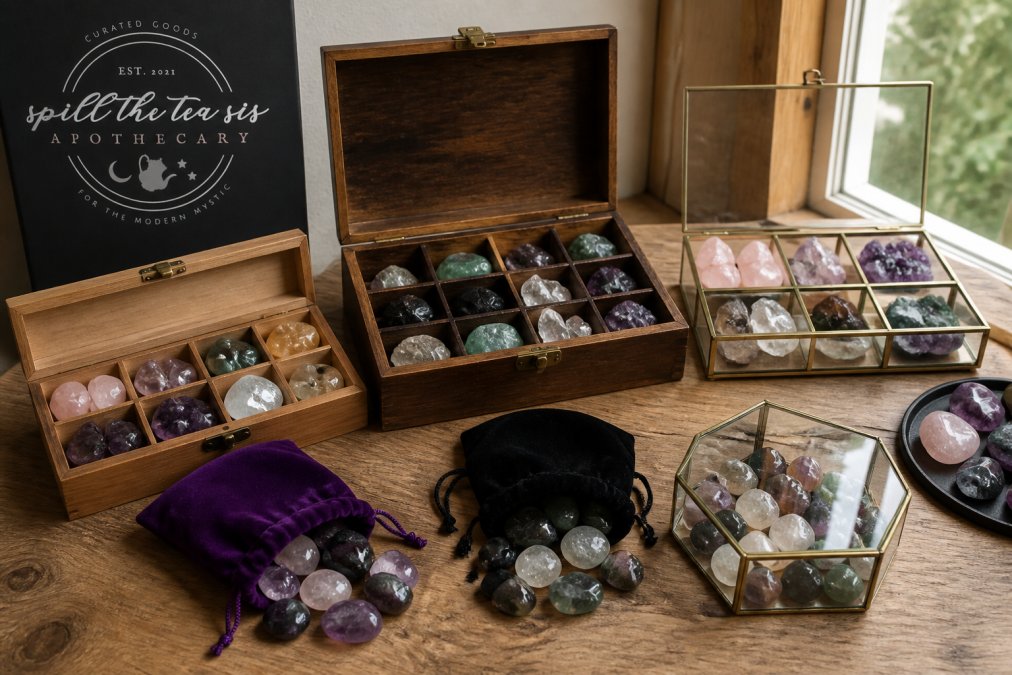
Wooden boxes offer protection from light, maintain stable temperature and humidity, and align with natural, grounding energy. Choose unfinished or naturally finished wood, avoid chemically treated options that off-gas and interfere with crystal energy.
Divide the interior with soft fabric dividers or compartments to prevent stones from shifting and scratching each other. Hardwood boxes (oak, walnut, cedar) are more durable than softwood.
For large collections, tiered wooden storage systems with multiple drawers maximize space while keeping stones organized by size, hardness, or intention. These work especially well for small-space storage solutions.
Woven baskets lined with fabric offer a softer aesthetic and work well for tumbled stones or smaller specimens. They allow air circulation, which helps prevent moisture buildup. Stack baskets vertically to save floor space.
Padded Pouches and Fabric Options
Velvet-lined pouches protect individual stones and work perfectly for travel or frequent-access storage. The soft fabric prevents scratches, and the enclosed design shields crystals from dust and light exposure. Choose natural velvet over synthetic, it breathes better and feels aligned with intentional practice.
Cotton muslin bags offer an affordable, breathable option for everyday use. They're washable, sustainable, and work well for collections you access regularly. Label each bag with the crystal type and intention to simplify your practice.
Silk pouches provide premium protection and a luxurious feel. Silk's smooth surface minimizes friction, reducing scratch risk. This option suits rare or high-value specimens you want to preserve long-term.
Glass Display Cases for Frequent Access
Glass display cases serve dual purposes: they protect crystals while keeping them visible and energetically accessible. Display cases work well for specimens you work with regularly, selenite wands, rose quartz clusters, or intention-setting stones you place on altars.
Choose cases with UV-protective glass if you're displaying them near windows. Standard glass allows harmful light frequencies to fade colors and degrade crystal structure over time. Dust-free display cases with sealed edges prevent environmental particles from settling on your stones.
Arrange display pieces on risers or stands to create visual hierarchy and prevent larger stones from blocking smaller ones. This arrangement also reduces contact between stones, minimizing accidental scratches.
Protecting Crystals from Light, Moisture, and Damage
Physical preservation requires understanding the specific vulnerabilities of different crystal types. What damages one stone may not affect another, this is where the Mohs hardness scale becomes practical.
Mystery Crystal Box | Intuitively →
Shielding from Direct Sunlight
Direct sunlight fades crystal colors through a process called photobleaching. Amethyst loses its purple depth. Citrine becomes pale. Rose quartz fades to nearly white. Even crystals not known for color sensitivity can experience energy depletion in intense light.
Store crystals in dark spaces or opaque containers. If you display them, position them away from windows or use UV-protective glass. North-facing windows provide indirect light without the intensity of southern or western exposure.
For collections in small spaces where darkness isn't possible, rotate display pieces monthly. Move stones in storage to the display case while displayed pieces return to darkness. This rotation prevents prolonged light exposure.
Managing Humidity and Moisture
Humidity is the silent threat most collectors overlook. High moisture causes oxidation, corrosion, and structural breakdown in vulnerable stones. Selenite absorbs moisture and becomes soft. Pyrite oxidizes and tarnishes. Calcite develops a chalky surface.
Store crystals in areas with humidity below 50 percent. Use silica gel packets in sealed containers to absorb excess moisture. Replace packets every 3-6 months depending on your climate. In humid climates, consider small electric dehumidifiers in storage closets or cabinets.
Avoid storing crystals in basements or attics where temperature and humidity fluctuate dramatically. Choose interior closets or shelving in climate-controlled rooms instead. If you live in a particularly humid region, invest in moisture-absorbing materials specifically designed for mineral storage.
Preventing Scratches and Physical Damage
Harder stones scratch softer ones. Quartz (7 on the Mohs hardness scale) will scratch fluorite (4). Storing incompatible stones together accelerates damage. Separate stones by hardness to prevent accidental scratching.
Wrap delicate or high-value specimens individually in soft cloth. This adds a layer of protection during storage and transport. For travel, use padded pouches and place them in a sturdy bag with additional cushioning material.
Store heavy specimens at the base of containers, lighter stones above.
Crystal Storage Ideas for Small Spaces
Limited space doesn't mean limited collection. Vertical storage, multi-functional furniture, and creative organization maximize room while maintaining protection and accessibility.
Organizing by Hardness, Size, and Intention
Organization systems prevent damage while making your practice more intentional. Multiple organizational approaches work, choose the system that aligns with how you actually use your collection.
Using the Mohs Hardness Scale
The Mohs hardness scale ranks minerals from 1 (softest) to 10 (hardest). Organizing by hardness prevents incompatible stones from damaging each other and helps you understand each stone's vulnerability.
Grouping by Size and Shape
Size-based organization simplifies inventory management and prevents weight-related damage. Raw clusters take up more space than tumbled stones, separate them to maximize container efficiency.
Sorting by Intention and Energy
Many practitioners organize by metaphysical purpose: grounding stones together, heart-chakra stones grouped, manifestation crystals in one section. This approach simplifies ritual practice, you know exactly where to find what you need.
Climate-Controlled and Travel Storage Solutions
Serious collectors and those in extreme climates benefit from climate-controlled storage. Rare specimens and large collections justify the investment in environmental stability.
| Storage Method | Best For | Protection Level | Space Efficiency |
|---|---|---|---|
| Wooden boxes | All stones, organized collections | High | Medium |
| Padded pouches | Frequent access, travel | High | High |
| Glass display cases | Regular-use stones, visual connection | Medium | Low |
| Fabric organizers | Small spaces, tumbled stones | Medium | High |
| Climate-controlled cabinets | Rare specimens, extreme climates | Very High | Low |
Frequently Asked Questions
How do you prevent crystals from scratching each other?
Separate delicate and fragile crystals by wrapping them individually in soft cloth or placing them in padded pouches. Group crystals by hardness using the Mohs scale, store softer minerals like selenite away from harder stones. Use dividers in wooden boxes or velvet-lined compartments to keep specimens from touching. For raw crystals with exposed points, wrap each one carefully before placing them together. This protects the crystals' physical structure.
What is the best material to store crystals in?
Wooden boxes, padded pouches, and velvet-lined containers are ideal for storing healing crystals. Wood protects specimens, while soft fabrics prevent scratching. Glass display cases work well for crystals you access frequently. Choose breathable materials that allow air circulation to prevent moisture buildup. Eco-friendly options like sustainably sourced wood align with conscious consumption values.
Should crystals be kept in the dark or light?
Store crystals away from direct sunlight to preserve their color and metaphysical properties. Prolonged exposure fades many stones. Keep them in a cool, dark place or use opaque containers. However, some practitioners display crystals in indirect natural light to honor their aesthetic beauty. If displaying, rotate them periodically to prevent uneven fading. Dark storage protects rare specimens.
Can you store all your crystals together in one box?
You can store multiple crystals together if you organize them thoughtfully. Separate by hardness to prevent softer minerals from scratching, and group by intention or energy type if that aligns with your practice. Wrap delicate specimens individually. Avoid overcrowding, which can cause physical damage. For large collections, use multiple containers organized by size, shape, or metaphysical properties. This approach protects your crystals and makes them easier to find when you need them.