


Table of Contents
- Why These 8 Crystals Are Perfect for Beginners
- Clear Quartz: The Master Healer
- Amethyst: The Stone of Calm
- Rose Quartz: The Stone of Self-Love
- Black Tourmaline: Protection and Grounding
- Citrine: Abundance and Manifestation
- How to Identify Real Crystals
- How to Cleanse Crystals at Home
- Where to Start Your Collection
- Frequently Asked Questions
Last Updated: September 17, 2026
Why These 8 Crystals Are Perfect for Beginners
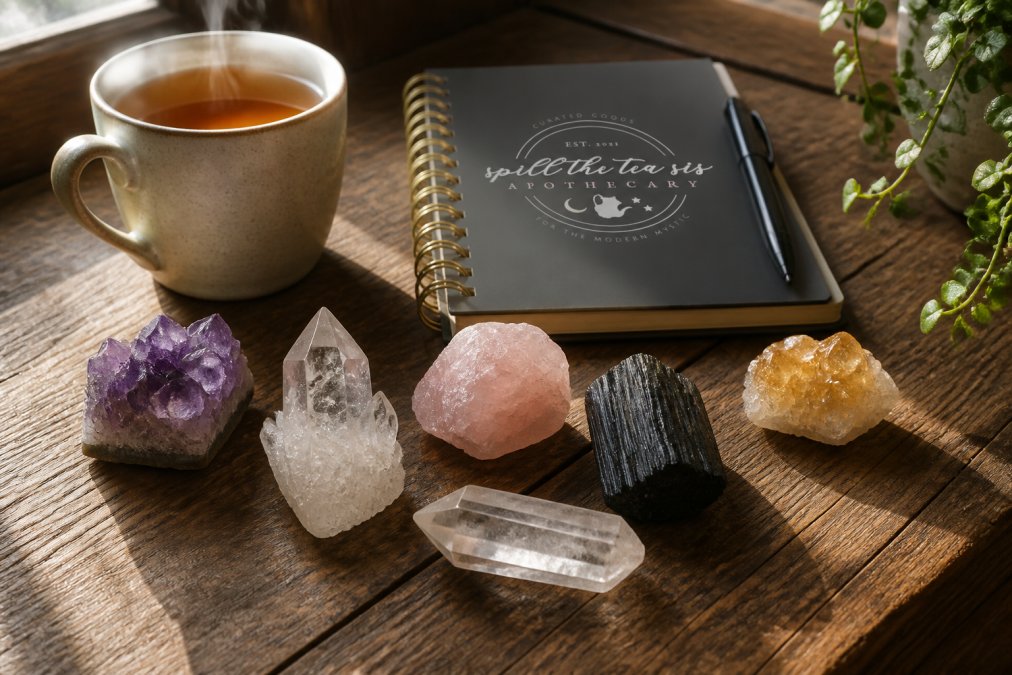
Clear Quartz: The Master Healer
Clear quartz earns its "master healer" nickname because it is believed to amplify the energy of whatever sits near it, including your other crystals. Pair it with amethyst and the calm deepens; pair it with citrine and abundance work sharpens. At Mohs 7, it handles daily use without scratching easily, tumbled pieces suit pocket carrying, raw points look better on a shelf or altar.
Amethyst: The Stone of Calm
Amethyst is the stone most beginners recognize on sight. Its purple color comes from iron and natural irradiation, and it has been worn for calm and clear thinking for centuries. It is affordable, comes in every size from a thumbnail tumble to a tower, and pairs with everything else in this list. Where beginners go wrong is leaving amethyst in direct sun, prolonged sunlight fades the color, so keep it away from a south-facing window.
Rose Quartz: The Stone of Self-Love
Rose quartz is tied to self-love, gentleness, and emotional healing, a common first purchase for anyone navigating grief, a breakup, or burnout.
Black Tourmaline: Protection and Grounding
Black tourmaline is the grounding anchor of a beginner collection. Where the other stones open things up, this one settles you down, which is why practitioners often keep a piece by the front door or under a work desk. It is also easy to identify: striations run along the length of the crystal. For energy work or meditation, black tourmaline keeps you from floating off, ground first, then open.
Citrine: Abundance and Manifestation
Citrine is the go-to stone for abundance work and one of the best crystals for manifestation in a starter kit. Its warm yellow-to-amber color comes from traces of iron, and it pairs naturally with intention setting around money, career, or creative output. Real, natural citrine is pale and slightly smoky; the bright orange "citrine" sold everywhere is usually heat-treated amethyst.
How to Identify Real Crystals
Real crystals feel cooler than glass at room temperature, have natural internal flaws, and sit at a specific hardness on the Mohs scale. Glass imitations warm up quickly, look too perfect, and scratch easily.
Start with the Mohs scale
The Mohs hardness scale runs from 1 (talc) to 10 (diamond). Every stone in this guide sits at 7, though rose quartz is more prone to fractures. Glass sits around 5.5, and most resins and plastics below 3. That gap makes the scratch test useful, and is why you should never test a polished display piece.
| Stone | Mohs Hardness | Common Impostor | Impostor Hardness |
|---|---|---|---|
| Clear quartz | 7 | Glass | 5.5 |
| Amethyst | 7 | Dyed quartz or glass | 5.5 or lower |
| Rose quartz | 7 | Dyed glass or resin | 5.5 or lower |
| Black tourmaline | 7-7.5 | Dyed black obsidian or glass | 5-5.5 |
| Citrine | 7 | Heat-treated amethyst | 7 (same family) |
The four checks that actually work
- Temperature test: Hold the stone for 30 seconds. Real stone stays cool longer than glass or resin. Fastest first pass, but it fails on very small tumbled stones that warm up quickly regardless of material.
- Bubble check: Tiny round air bubbles mean glass. Natural inclusions look like fractures, clouds, or needles, not spheres. Hold the stone to a bright light and use a magnifying app if you do not own a jeweler's loupe.
- Scratch test: On a hidden spot of a raw, inexpensive specimen, real quartz (hardness 7) will scratch glass (hardness 5.5); glass will not scratch quartz. Never run this on anything polished or display-grade.
- Streak and fracture check: Real crystals break along predictable planes. Glass fractures in smooth, curved shells called conchoidal fractures. If the broken edge looks like the bottom of a soda bottle, it is glass.
Spotting the most common fakes
Dyed quartz is the most common amethyst imitation. Check the base of the point: real amethyst fades toward the bottom, while dyed quartz is saturated evenly all the way through and the color often pools in the cracks. Heat-treated amethyst sold as citrine is not glass, but it is a different stone than natural citrine, which is pale yellow to smoky amber and often shows color zoning.
When to ask for help
If you are buying online, look for sellers who list the mineral family, the locality, and the treatment status (natural, heated, dyed, or irradiated). A seller who cannot answer those three questions is not necessarily selling fakes, but they are not giving you enough information to make an informed purchase. Local gem and mineral clubs, university geology departments, and independent jewelers can often verify a stone in person.
How to Cleanse Crystals at Home
Cleansing crystals at home takes five to ten minutes and needs nothing you do not already own. The four safest methods are moonlight, sound, smoke, and salt, and each suits different stones.
Zip Code Mystery Box | Crystals & →
What cleansing actually means
Most practitioners describe cleansing as resetting a stone's energetic charge so it can hold a new intention, like clearing a whiteboard. Geologically, nothing changes; the practice is about your relationship with the stone, not a chemical reaction.
The four methods, with trade-offs
Moonlight is the gentlest option. Leave your crystals on a windowsill overnight during a full moon. This works for every stone in this guide, including color-sensitive ones, because moonlight does not fade amethyst or rose quartz the way direct sun does. The trade-off is timing: you are limited to the days around the full moon for the strongest charge.
| Cleansing Method | Time Needed | Best For | Avoid On |
|---|---|---|---|
| Moonlight | Overnight | All stones, color-sensitive pieces | Nothing |
| Sound | 1-2 minutes | Any stone, quick resets | Nothing |
| Smoke | 2-3 minutes | Deep cleansing after heavy use | Nothing |
| Salt | 24 hours | Raw quartz, black tourmaline | Polished, soft, or dyed stones |
| Running water | 1-2 minutes | Raw quartz, amethyst, rose quartz | Selenite, halite, pyrite, malachite |
Charging without a selenite slab
For charging, place your stones on a selenite slab or a clear quartz cluster, both are believed to recharge without water or sun. If you own neither, these alternatives work just as well:
- Brown rice or dry sea salt (in a bowl, not touching the stone): Bury the stone in dry rice overnight. The rice absorbs moisture and is believed to absorb stagnant energy. Avoid this with porous stones that can trap rice dust.
- Sunlight (short exposure): Ten to fifteen minutes of early morning sun charges clear quartz and black tourmaline. Keep amethyst, rose quartz, and citrine out of direct sun entirely.
- Your own energy: Hold the stone in your dominant hand, set a clear intention, and visualize it filling with light. This is the simplest method and the one most practitioners return to once the novelty of tools wears off.
A note on water
Running water is popular but not safe for every stone. Selenite and halite dissolve, pyrite rusts, and malachite can release toxic copper compounds when wet. Of the five stones in this guide, clear quartz, amethyst, rose quartz, and black tourmaline can handle a quick rinse. Keep citrine dry, the heat treatment that produces most commercial citrine makes the color more sensitive to prolonged moisture.
Where to Start Your Collection
If you are not sure which stone to buy first, buy the one that matches what you actually need right now. Grounding? Black tourmaline. Calm? Amethyst. A big goal? Citrine.
Frequently Asked Questions
What crystals should a beginner get?
Start with Clear Quartz, Amethyst, Rose Quartz, and Black Tourmaline. These four cover clarity, calm, self-love, and protection. Clear Quartz is the master healer and amplifies other stones. Amethyst brings peace, Rose Quartz opens the heart, and Black Tourmaline grounds and shields. You can find these at Spill The Tea Sis Apothecary, and their Mystery Crystal Box is a great way to start.
How do you know if a crystal is authentic?
Check for natural imperfections like inclusions or uneven color. Real crystals are often cool to the touch and have a Mohs hardness that resists scratching. Glass fakes have bubbles and uniform color. Ask about sourcing. Reputable shops like Spill The Tea Sis Apothecary source ethically and can tell you where stones come from. If a deal seems too good, it probably is.
How often should I cleanse my new crystals?
Cleanse new crystals as soon as you bring them home to clear any lingering energy from transit and handling. After that, cleanse them monthly or whenever you feel their energy has become dull. Methods include moonlight, sound, smoke, or salt. For a gentle daily reset, place them on a windowsill overnight. Your intuition is the best guide.
What is the best crystal for protection and grounding?
Black Tourmaline is the top choice for protection and grounding. It creates a protective shield against negative energy and helps you stay rooted. Pair it with Clear Quartz to amplify its effects. Carry a piece in your pocket or place it near your front door. Spill The Tea Sis Apothecary offers Black Tourmaline in their curated boxes.
How do I start a crystal collection on a budget?
Begin with a Mystery Crystal Box from Spill The Tea Sis Apothecary. Their $22 box contains crystals valued at 2-4x what you pay, and each is intuitively chosen. You can also try the Zip Code Mystery Box, where the price is based on your zip code digits. Both options give you a variety of stones without a big upfront cost.