


Table of Contents
- Understanding Your Mystery Box Crystals
- Crystal Display Ideas for Every Space
- How to Arrange Crystals on a Shelf
- Crystal Display Case Ideas
- How to Organize a Crystal Collection
- Lighting, Placement, and Care
- Frequently Asked Questions
Last Updated: October 9, 2026
When you open a display mystery crystal box from Spill The Tea Sis Apothecary, you're holding the beginning of something magical. This guide walks you through how to display mystery crystal box finds so they become part of your home's spiritual landscape, not forgotten in a drawer.

Whether your finds are tiny clusters or statement spheres, the right display transforms them from gifts into intentional decor. We'll cover sorting what you've received and arranging it with intention.
Understanding Your Mystery Box Crystals
When you receive a mystery crystal box, the first step isn't display, it's understanding what you have. Each piece carries different energy, fragility, and visual impact. Assessing your finds before arranging them prevents mistakes and helps you create a display that works.
Identifying and Sorting Your Finds
Open your box and lay everything out. Note each piece's color, size, and shape: raw chunk, polished sphere, or small cluster. Some are delicate points; others are sturdy chunks that handle more handling.
Create simple categories as you sort. Group by size: tiny pieces under an inch, medium pieces one to three inches, and larger statement pieces. Group by color family: purples and blues, pinks and reds, greens, earth tones, clear and white.
This sorting also reveals the energy mix in your box. You might notice grounding earth-tone stones, or a lean toward calming blues and purples. That awareness shapes how you'll arrange everything.
Assessing Size, Shape, and Condition
Before arranging anything, assess condition. Look for chips, cracks, or rough edges. Some damage is part of raw crystals' natural beauty; other damage means a piece needs careful placement where it won't catch on fabric or get knocked over.
Shape matters enormously. Spheres sit stably on stands or risers. Points and clusters work best on shelves where they won't tip. Flat or tumbled pieces go almost anywhere. Raw chunks with interesting angles catch light beautifully.
Size determines placement too. Tiny pieces get lost on a large shelf but shine in a small display case or clustered for impact. Large pieces anchor a display; medium pieces fill the space between and create balance.
Crystal Display Ideas for Every Space
The beauty of mystery crystal box finds is their variety, which means you have options for showcasing them. Whether your space is small or sprawling, minimalist or eclectic, there's a way to display your crystals that feels right.
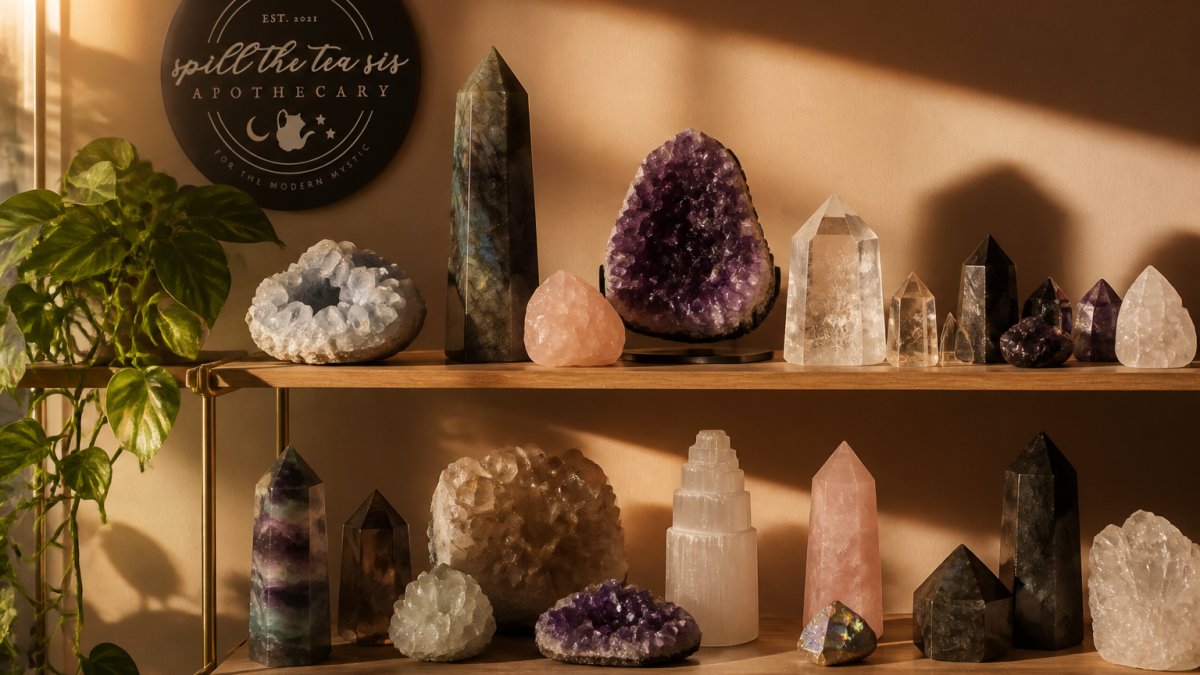
Clustering Small Crystals for Impact
Small crystals don't have to be scattered. Grouped together, they create visual weight. Take your smallest pieces, under an inch, and cluster them in groups of three to seven, arranged by color or complementary colors.
Clustering works several ways: group them in a small glass bowl or wooden dish, arrange them directly on a shelf nestled close together, or place them in a small velvet pouch and display the pouch itself.
The key is proximity. Small pieces sitting far apart disappear visually; together, they create a focal point your eye lands on, registering colors, textures, and intentional arrangement.
Featuring Crystal Spheres and Statement Pieces
If your mystery box included a sphere or larger statement piece, give it prominence. A sphere on a simple stand becomes a meditation focal point; a larger cluster or point at eye level anchors your entire display.

Statement pieces work best when not competing with other elements. A large amethyst cluster shouldn't be surrounded by dozens of tiny pieces. Give it breathing room: place it alone, or pair it with just two or three complementary smaller pieces.
Lighting matters here too. Position a statement piece where natural light or a lamp hits it directly to show off its color and facets, making the crystal come alive in a way flat display can't achieve.
How to Arrange Crystals on a Shelf
Shelves are the most accessible display option. A single shelf can hold an entire collection, or you can spread pieces across multiple shelves. The key is visual balance and intentional arrangement.
Using Risers and Levels for Visual Depth
A flat shelf with all crystals at the same height feels static. Height variation, using risers, books, or small stands, creates visual interest and makes your display feel curated rather than random.
A riser can be anything: a small wooden block, a stack of books, an acrylic riser, or a decorative box. Place one toward the back of your shelf, then position a larger or more striking crystal on top.
Create a rhythm with your risers. Don't put them under every piece; use them strategically to break up the visual plane. A good pattern: piece at shelf level, piece on a riser, piece at shelf level, piece on a riser. This creates movement and prevents clutter.
Creating Color and Texture Balance
Don't arrange by color alone. A shelf of only purple stones or clear quartz feels monotonous. Instead, create balance by mixing colors and textures.
One approach: place your largest or most striking piece first, then arrange others around it, alternating colors and textures.
Another approach: create small color zones. One section might feature earth tones, browns, blacks, grays; another cool colors, blues, purples, whites. These zones create rhythm while keeping the display cohesive.
Texture variation matters as much as color. Raw, rough pieces next to polished, smooth ones create tactile interest. A cluster with many points next to a smooth tumbled stone next to a raw chunk gives your display dimension.
Crystal Display Case Ideas
If you want to protect your collection from dust or create a dedicated display space, a case is the answer. Display cases range from simple to elaborate.
DIY Display Cases and Enclosures
You don't need to buy a fancy display case. Many household items work beautifully. A clear glass bowl with a lid creates an enclosed display. A glass jar or terrarium holds small to medium pieces.
For a DIY approach, consider a wooden box with a glass top. You can find these at craft stores or online. Line the bottom with velvet or fabric, arrange your crystals, and you have a professional-looking display.
Mystery Crystal Box | Intuitively Chosen Crystal Gift →
Another option: use a bookshelf with glass doors, or add glass doors to an open shelf using simple hardware. This protects your collection while keeping it visible.
The advantage of DIY cases is customization. You control the size, the backing, the lighting.
Dust-Free Storage and Protection
Dust settles on crystals, dulling their shine and making them less visually striking. If you're displaying your collection in an open shelf, regular gentle dusting keeps them looking fresh. A soft brush or microfiber cloth works best.
For pieces you want to protect completely, a closed case is ideal. Glass or acrylic enclosures keep dust out while letting light in. If you're displaying in a case, consider adding a small LED light strip inside.
For very delicate pieces, thin points, fragile clusters, or rare finds, consider storing them in a padded box when not on display, and rotating them into your main display periodically. This protects them while still letting you enjoy them.
How to Organize a Crystal Collection
As your collection grows, especially if you receive multiple mystery boxes over time, organization becomes important. You need a system that lets you find what you want, rotate pieces seasonally, and keep everything in good condition.
Rotation and Seasonal Display Strategies
You don't have to display every crystal at once. Rotation keeps your display fresh and lets you feature different pieces throughout the year.
A rotation system works like this: decide on a main display area, a shelf, a case, a table. This is what visitors see and what you interact with daily.
Label or photograph your stored pieces so you remember what you have. A simple notebook or phone photos work perfectly.
Seasonal rotation also connects your display to the energy of the season. Winter might call for protective, grounding stones. Summer might call for energizing, uplifting stones. This practice deepens your relationship with your collection.
Lighting, Placement, and Care
The final pieces of the display puzzle are lighting and placement. The right light transforms a collection. The right placement keeps pieces safe and accessible.
Positioning Crystals for Natural and Artificial Light
Natural light is beautiful but inconsistent. A shelf in direct sunlight all day might fade some stones over time. A shelf in soft, indirect natural light showcases crystals without risk.
Artificial light gives you control. A warm-toned LED light strip behind or above your display mimics candlelight and makes crystals glow.
The best display uses both. Natural light during the day, supplemented by soft artificial light in the evening. This creates depth and keeps your crystals visible and beautiful throughout the day.
Position your display where you'll see it regularly. A shelf at eye level in a room you spend time in becomes part of your daily spiritual practice.
Protecting Your Collection from Damage
Crystals are durable, but they're not indestructible. Protect them from unnecessary handling by people who don't understand their value.
Some crystals are softer than others. Selenite, for example, can scratch easily. Tourmaline is harder and more durable.
Avoid placing crystals in direct sunlight for extended periods if you're concerned about fading.
Handle your crystals with intention. When you move them, do so mindfully. This protects the physical pieces and honors the energy you believe they carry.
Displaying your mystery crystal box finds is an act of intention.
When you're ready to expand your collection or refresh your display, the Mystery Crystal Box from Spill The Tea Sis Apothecary offers new pieces curated with intention.
Frequently Asked Questions
What's the best way to display small crystals from a mystery box?
Small crystals shine when grouped together in clusters or arranged on risers to create visual depth. Try placing them in shallow bowls, on tiered shelving, or in small acrylic stands. Grouping by color or size creates a cohesive look. The Mystery Crystal Box from Spill The Tea Sis Apothecary often contains 2-4 pieces, making it perfect for starting a display that you can build on over time.
How do I keep my crystal display clean and dust-free?
Display cases with glass doors or acrylic enclosures protect crystals from dust. For open shelves, use a soft brush or microfiber cloth to gently dust weekly. Consider placing your display in a cabinet or behind glass if you live in a dusty environment. Avoid placing crystals near high-traffic areas or vents that accumulate dust.
Can I display crystals without using stands or risers?
Absolutely. Try displaying crystals in glass bowls, jars, or shallow trays. You can also arrange them directly on shelves using books or stacked items as natural risers. Household objects like small boxes, cork pieces, or even folded fabric create texture and height variation. The key is creating visual interest through different levels and groupings.
How should I arrange crystals on a shelf to make them look organized?
Start by grouping similar-sized pieces together, then vary the heights using risers or stands. Create odd-numbered clusters (groups of 3 or 5) for a more balanced look. Leave breathing room between groups to avoid a cluttered appearance. Consider the color palette and arrange warm and cool tones throughout the shelf. Step back frequently to assess the overall composition.
What lighting works best for displaying mystery box crystal finds?
Natural light from windows brings out crystal colors and sparkle beautifully, but direct sunlight can fade certain stones over time. Soft artificial lighting like warm LED strips or small lamps positioned behind or below crystals creates a magical glow. Avoid harsh overhead lighting, which can wash out colors. Test different angles to see how light interacts with your specific pieces.