


Quick Summary
Place your main ancestral photos at the center or slightly behind the candle, where your eye lands first, and keep them away from open flame and direct sunlight. Choose clear, emotionally true images, and make a copy of any irreplaceable print before displaying it. Start with one person and build from there.
- Choose an image where the person's face is clear enough to read from a few feet away.
- Keep at least a foot of space between any open flame and a photo.
- Display a copy of irreplaceable prints and store the original flat in an acid-free envelope.
- Dust photos with a soft, dry microfiber cloth every few weeks, never with damp materials.
- Ask relatives before using a photo that belongs to someone else or includes living people.
Table of Contents
- Why Ancestral Photos Anchor an Altar
- How to Create an Ancestor Altar Step by Step
- Choosing the Right Photos for Your Altar
- Where to Place Ancestor Photos on Your Altar
- What to Put on an Ancestor Altar Beside the Photos
- Caring for Photos and Refreshing the Altar Over Time
- Building an Ancestor Altar Without Photos
- Your Next Step: Choosing the First Photo for Your Altar
- Frequently Asked Questions
Last Updated: October 31, 2026
Most people who set up an altar wonder where a photo of a grandmother or great-grandfather belongs, and whether it matters if it sits in the wrong spot. Ancestral photos give an altar its anchor, because they turn a collection of objects into a place that points to specific people. This guide walks through the question step by step.
Why Ancestral Photos Anchor an Altar
An ancestor altar is a dedicated space where you remember and honor the people who came before you. A photograph makes that remembrance personal.
The photo can do more than decorate. It can become the reason you light a candle, pause, or speak a name out loud. With it, the space can feel like a conversation with your family history.
How to Create an Ancestor Altar Step by Step
Setting up an ancestor altar does not need to be complicated. Follow these steps in order:
- Pick a quiet, low-traffic spot. A shelf, dresser top, or windowsill works well.
- Clear the surface. Remove clutter so the space feels intentional.
- Choose your central photo. Start with one person you feel close to.
- Add a cloth or base. A simple piece of fabric helps define the space.
- Place a candle. A candle gives the altar a focal point and a ritual to return to.
- Add personal objects. Include something that belonged to, or reminds you of, your ancestors.
- Set a small offering. Many people use water, flowers, or a favorite food.
- Spend a few minutes there each week. Consistency matters more than a perfect setup.
Start small. You can add more photos and objects as your practice grows.
Choosing the Right Photos for Your Altar
The best photo is the one that brings a feeling of connection. Look for images where the person's face is clear, even if the print is small. Some people choose a candid snapshot that captures a laugh or a gesture; others prefer a formal portrait from an older era. Both work. What matters is that when you look at the image, you feel the person is present rather than posed.
A few practical filters help narrow the choice:
- Face clarity. If you have to squint to find the person, the photo will not anchor the altar. Choose an image where the eyes and expression read easily from a few feet away.
- Emotional truth. Pick a photo that matches how you want to remember the person, not necessarily the most flattering or most recent one. A photo from a good season often carries more warmth than a formal studio shot.
- Respect for the person depicted. Ask yourself whether the ancestor would have been comfortable with the image on display. A photo taken at a difficult moment, or one the person disliked, can create a quiet friction you feel every time you approach the altar.
When Family Members Disagree
Consent and family sensitivities matter here. Some relatives may feel uneasy about a photo appearing in a ritual space, especially if the person died recently or if the family holds different religious views. A short conversation before you display an image can prevent hurt feelings later.
A few patterns that help:
- Ask before using a photo that belongs to someone else. If a cousin holds the only print of a grandparent, ask whether you can make a copy rather than borrowing the original.
- Name the discomfort out loud. If a relative is uneasy, ask what specifically bothers them. Sometimes the concern is about a particular photo, sometimes about the altar itself, and sometimes about a relationship that was complicated.
- Offer a compromise. You might display a smaller photo, place it slightly back from the center, or keep a particular image in a closed frame that opens only during your own practice.
Complicated Relationships and Living People in Photos
Not every ancestor was easy to love. If a relationship was complicated, you are not required to display a photo that stirs up pain. A photo from before a difficult period, or a symbolic object instead of a face, can also work.
Photos that include living people deserve a second thought. A group shot with a living relative in it can be meaningful, but the living person may not want their image used in a ritual context.
Framed Versus Unframed Photographs
Framed photos are easy to display and protect the image from dust and handling. A simple frame on a shelf looks clean and stays put.
Glass in a frame can reflect candlelight and make the image hard to see, so angle the frame away from the flame. Unframed prints need more care, since they can curl, fade, or stain near heat and moisture.
Making a Copy Before You Display
Before any irreplaceable print goes on the altar, make a copy. A phone photo of the original, taken in even daylight, is enough for most purposes. Print the copy at a size that fits your space, and store the original flat in an acid-free envelope away from heat and light. Making a copy protects the original from candle smoke, spills, and the slow fading that comes from sunlight.
Where to Place Ancestor Photos on Your Altar
Place the main photo at the center or slightly behind the candle, where your eye lands first. If your corner is tight, these space-saving altar designs for small apartments show how to fit photos into limited room.
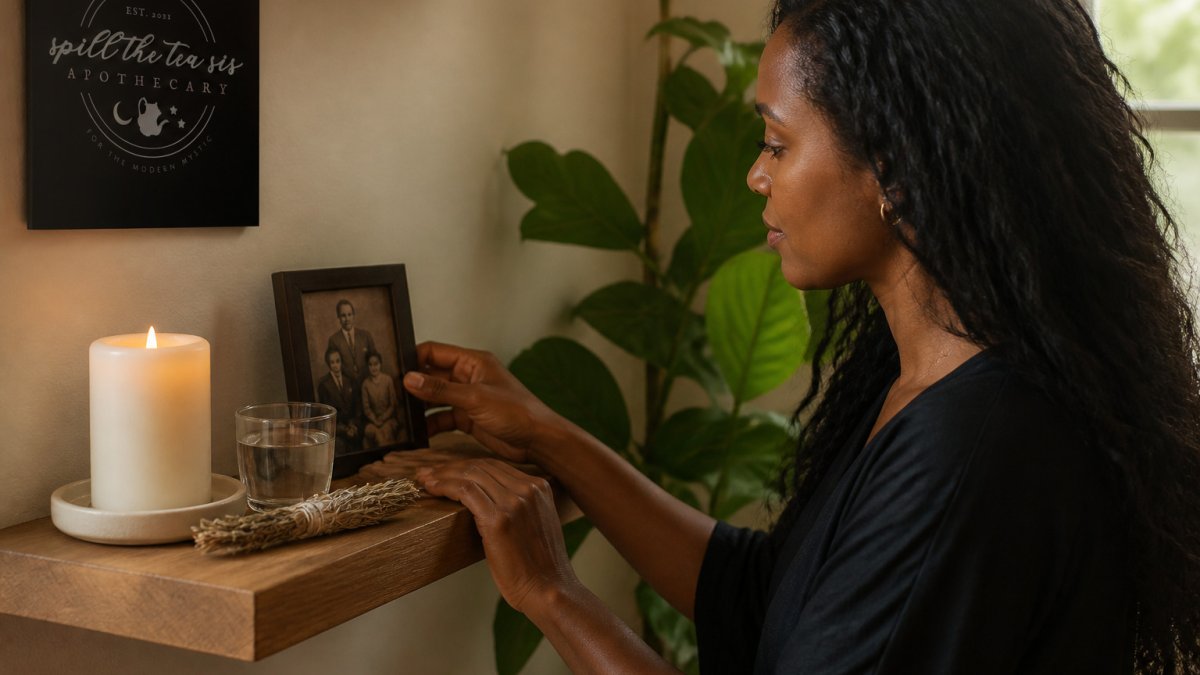
Avoid placing photos directly in front of an open flame or in direct sunlight. Heat and light fade images over time. A spot near a window with indirect light works well for most people.
We Are The Granddaughters of the Witches Candle | Ancestral Magic & Intuition →
What to Put on an Ancestor Altar Beside the Photos
Beyond photos, many people add objects that carry memory. Consider these options:
- Handwritten names on small cards or paper
- Heirlooms such as a watch, a piece of jewelry, or a rosary
- A recipe card in a loved one's handwriting
Choose items that you can care for. A few well-chosen objects often feel stronger than a crowded display.
Caring for Photos and Refreshing the Altar Over Time
Photos need regular attention, and the care routine is simpler than most people expect. Dust them gently with a soft, dry cloth every few weeks, microfiber works well because it lifts grit without scratching the surface. Avoid paper towels and anything damp, since moisture can wick into the print and leave a stain.
Check for signs of trouble each time you clean:
- Fading. Colors that look washed out or a yellow cast usually mean UV exposure. Move the photo out of direct sun and consider a copy for display.
- Curling. Prints that curl at the edges are drying out or sitting near heat. Flatten them between two clean boards with a light weight for a few days.
- Moisture or spotting. Small dark spots or a musty smell suggest humidity. Move the altar away from kitchens, bathrooms, and any spot where steam collects.
Protecting Originals from Heat, Smoke, and Sunlight
The two biggest threats to ancestral photos are heat and light. A candle placed directly in front of a print can warp it, and the soot from a smoky flame settles on the surface over time. Keep at least a foot of space between any open flame and a photo, and angle frames so the glass does not magnify sunlight onto the image.
Sunlight is slower but just as damaging. A window that gets direct afternoon sun will fade a print within a season or two. Indirect light is safer. If your only good spot is sunny, display a copy and keep the original stored flat in an acid-free envelope in a cool, dark drawer.
Refreshing the Altar Through the Year
Refresh the altar with the seasons. You might swap in fresh flowers in spring or add a warmer cloth in winter. Some people update the offerings on important dates, such as a birthday or the anniversary of a passing. Small changes keep the space alive without making it feel new every time.
A simple quarterly reset works for many practitioners:
- Remove everything from the surface and dust the shelf or table.
- Wipe frames and glass with a dry cloth.
- Replace any faded or damaged prints with fresh copies.
- Refresh water, flowers, and any perishable offerings.
- Return each item with a moment of attention, naming the person it honors.
Handling Photos and Offerings After a Remembrance Period
When a remembrance period ends, after a holiday, an anniversary, or a season of focused practice, decide deliberately what stays and what goes.
Photos and keepsakes can stay in place or be wrapped and stored. If you store a photo, place it flat in an acid-free envelope, label the envelope with the person's name and the date, and keep it in a dry, dark spot.
Photos need regular attention, and a few simple checks keep them in good condition.
| Problem | Cause | Fix |
|---|---|---|
| Fading or yellow cast | UV exposure from sunlight | Move out of direct sun; display a copy |
| Curling edges | Drying out or heat nearby | Flatten between clean boards under light weight for a few days |
| Spots or musty smell | Humidity or moisture | Move away from kitchens, bathrooms, and steam |
| Gray film on glass | Candle smoke soot | Wipe the glass, not the photo; keep flame distant |
Building an Ancestor Altar Without Photos
Not everyone has photos of the people they want to honor. That is fine. Many practitioners use handwritten names on paper, a personal object, or a symbol that represents their lineage.
A single item, like a stone or a piece of fabric from a family home, can serve as the center of the space. The practice rests on the intention behind it rather than on any particular image.
Your Next Step: Choosing the First Photo for Your Altar
Pick one photo this week and find a spot for it. Start with a single person and a single candle, then build from there. Browse our candles and altar-friendly pieces at Spill The Tea Sis Apothecary when you are ready to add a ritual element. Our Granddaughters of the Witches intention candle is hand-poured in small batches in Northampton, and our Angels Are Near When Cardinals Appear candle is designed to support remembrance and reflection.
Frequently Asked Questions
How do you set up an ancestor altar with photos?
Start with a stable surface such as a shelf, cabinet top, or small table that you can leave undisturbed. Choose one or two framed photographs of ancestors you want to honor, and place them at the back or center so they are the focal point. Add a candle in a safe holder, a glass of water, and one or two personal objects connected to those relatives. Clean the surface before you begin, then arrange the items so each one is visible and has room to breathe. Keep the setup simple at first and add to it as your practice grows.
Where should you place photos on an ancestor altar?
Place the main photographs at the back or center of the altar, where they are the first thing you see when you approach. Set smaller items, offerings, and candles in front of or around the photos so the images stay clear. Keep photos out of direct sunlight and away from heat sources, since light and warmth can fade prints and warp frames over time. If you use a shelf, keep the photos at eye level so the altar feels like a place of connection rather than a storage space.
Can you put living relatives' photos on an ancestor altar?
Many people keep photos of living family members on an altar, while others prefer to reserve the space for those who have died. There is no single rule, so the choice depends on your tradition and your family. If you include living relatives, consider asking them first, especially if they may not be comfortable with it. Some practitioners keep living relatives' photos on a separate personal altar or shelf to keep the ancestor space distinct. Trust your own sense of what feels respectful.
How do you honor ancestors if you do not have their photographs?
You can honor ancestors without photos by writing their names on a card, using a handwritten letter, or placing a meaningful object that belonged to them, such as a piece of jewelry, a recipe card, or a watch. Some people use a favorite food, a symbolic color, or a plant tied to a relative's memory. Speaking their names aloud while you light a candle can also create a strong sense of presence. The altar works through your intention and attention, so an object chosen with care can carry as much meaning as a portrait.
