


Last Updated: October 30, 2026
Quick Summary
Candle color therapy is the practice of choosing a candle's color to match the emotional state you want to create, then using light, scent, and focused attention to help get you there. Pick one color per session, state a one-sentence intention out loud, and sit with the flame for a few minutes.
- Warm colors like red, orange, and yellow are best for daytime energy, creativity, and focus.
- Blue, green, and soft white are the colors most often associated with calm and relaxation.
- Burn a candle for 15 to 30 minutes during a ritual and never leave it unattended.
- Match scent to color, such as a blue candle with lavender for calming tones.
- Start with one candle rather than five so it becomes a consistent cue for habit.
Table of Contents
- What Candle Color Therapy Actually Does for Your Mood
- Candle Color Meanings: A Practical Chart for Daily Use
- The Best Candle Color for Relaxation (and When to Choose It)
- How to Set an Intention With a Candle in Five Steps
- How Long Should You Burn a Candle During a Ritual?
- Mistakes That Weaken Your Candle Color Practice
- Matching Candle Scents to Your Mood Goal
- Choosing Your First Intention Candle
- Frequently Asked Questions
What Candle Color Therapy Actually Does for Your Mood
Candle color therapy is the practice of choosing a candle's color to match the emotional state you want to create, then using light, scent, and focused attention to help get you there. It works through a simple mix of ritual, visual association, and calm repetition. At Spill The Tea Sis Apothecary, we see candle color therapy as a way to give your intention a physical shape. The color is the reminder. The flame is the anchor. And the scent does the quiet work in the background.
Here is the honest version: the color itself is not magic. What changes your mood is the full ritual around it. You slow down. You light something on purpose. You name what you want. That combination is what calms a racing mind.
The American Psychological Association's overview of color and emotion notes that color associations are learned and personal, which is exactly why picking your own meaning matters more than following a strict rulebook.
Candle Color Meanings: A Practical Chart for Daily Use
Candle color meanings are simply a shared language for mood. Red points to energy. Blue points to calm. You do not have to memorize all of them. Use this chart as a starting point and adjust to what feels right for you.
| Color | Mood It Supports | Best Time to Use It |
|---|---|---|
| Red | Energy, courage, drive | Morning or before a big task |
| Orange | Creativity, warmth, joy | Midday creative blocks |
| Yellow | Focus, confidence, clarity | Work sessions, study |
| Green | Balance, growth, grounding | When you feel scattered |
| Blue | Calm, honest expression | Hard conversations, journaling |
| Purple | Intuition, reflection | Evening wind-down |
| White | Reset, clarity, fresh starts | New beginnings, cleansing |
| Black | Protection, release | Letting go of heavy energy |
| Pink | Self-love, softness | Self-care nights |
Warm Colors: Red, Orange, and Yellow
Warm colors wake you up. Reach for red when you need a push. Orange suits creative work. Yellow helps when your focus keeps slipping. These are daytime colors for most people.
Cool Colors: Green, Blue, and Purple
Cool colors settle you down. Green grounds. Blue softens. Purple invites reflection. Try these in the evening or after a stressful day.
Neutral Colors: White, Black, and Pink
Neutral tones are the flexible ones. White resets a space. Black helps you release what you are done carrying. Pink is for gentleness and self-kindness.
The Best Candle Color for Relaxation (and When to Choose It)
Blue, green, and soft white are the colors most often associated with calm. If you want a candle that is already built for this, our Soothe Your Soul Healing & Peace Intention Candle blends sea salt, freesia, and light musk for a serene atmosphere.

Choose blue when your thoughts will not stop. Choose green when you feel ungrounded. Choose white when you want a clean emotional slate.
How to Set an Intention With a Candle in Five Steps
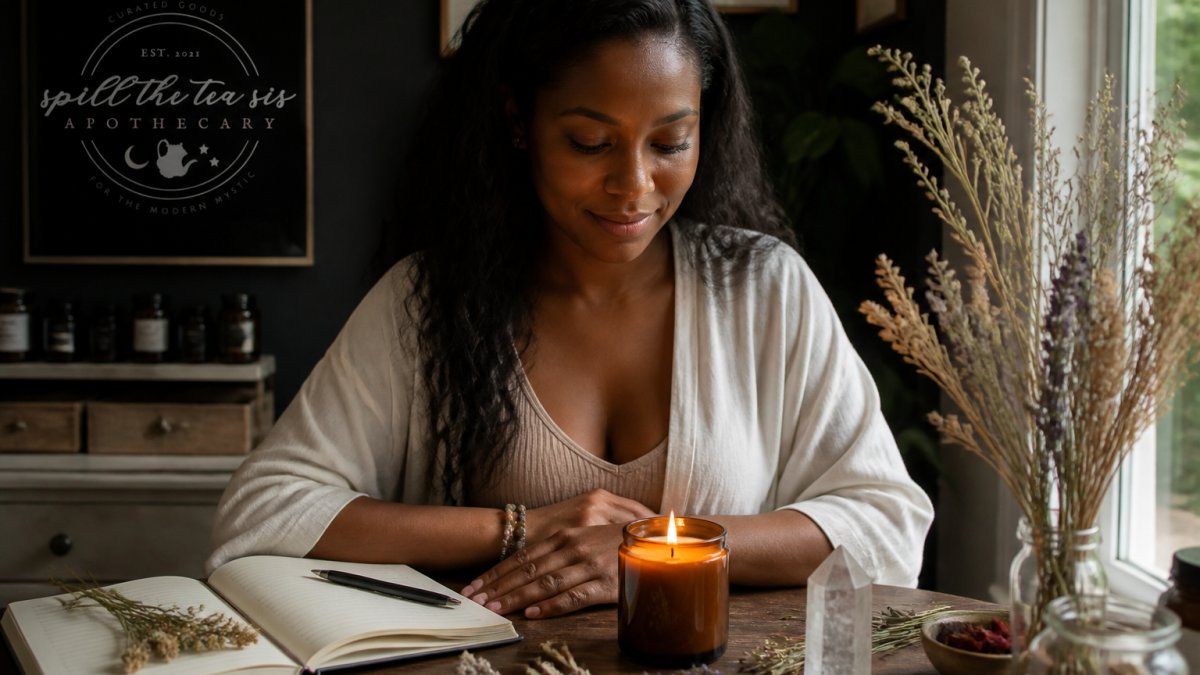
Setting an intention with a candle takes about five minutes. You pick a color, light the wick, state your intention out loud, sit with it, and close the ritual with gratitude. That is the whole method. The steps below walk you through it.
- Choose your color. Match it to the mood you want, not the mood you have.
- Clear the space. Take three slow breaths before you light anything.
- Light the wick and say your intention. Keep it to one sentence, present tense: "I am calm."
- Sit with the flame for a few minutes. Watch it. Let your shoulders drop.
- Close with gratitude. Blow it out or let it burn, then say thank you.
If you want to build this into a daily habit, our guide on how to set intentions for daily mindfulness practice goes deeper.
How Long Should You Burn a Candle During a Ritual?
Burn a candle for 15 to 30 minutes during a ritual. A candle should never burn unattended. The U.S. Fire Administration's candle safety guidance recommends keeping candles at least one foot from anything flammable and blowing them out before you leave a room.
Ten minutes works if you are short on time. Longer sessions suit deep meditation. Watch the wax pool, not the clock.
Soothe Your Soul Healing & Peace Intention Candle | Calming Soy Wax Candle →
Mistakes That Weaken Your Candle Color Practice
The biggest mistake is treating the color like a magic switch. It is not. Your attention is what does the work, and a few habits quietly drain it.
- Skipping the intention. A candle without a stated purpose is just a candle.
- Multitasking. Scrolling during a ritual pulls you right back out of it.
- Mixing too many colors at once. Pick one mood per session.
- Letting wax tunnel. Trim the wick to about a quarter inch before each burn.
- Ignoring safety. Never leave a flame unattended or near fabric.
Watch out: burning a candle in a drafty spot causes uneven melting and can tip hot wax. Keep it on a stable, heat-safe surface.
Matching Candle Scents to Your Mood Goal
Scent and color should point the same direction. For a deeper guide on choosing candle scents for manifestation, match the scent to your specific intention. A blue candle with a lavender scent pairs calming tones together. A yellow candle with a citrus note suits focus.
Quick pairings that work well:
- Calm: lavender, sea salt, light musk
- Focus: citrus, bergamot, peppermint
- Grounding: sandalwood, cedar, amber
- Joy: orange, freesia, warm vanilla
The Cleveland Clinic's explanation of how scent affects mood explains why smell reaches the emotional centers of the brain so quickly. That is why scent does so much of the heavy lifting in a candle ritual.
Choosing Your First Intention Candle
Start with one candle, not five. Pick the mood you need most right now, then match the color and scent to it. Beginners do best with a single candle they use consistently. It becomes a cue, and cues build habits.
If you want a shortlist to pick from, our roundup of the best intention candles for beginners is a good place to start. Curious why handcrafted candles feel different? Read up on the benefits of handcrafted intention candles before you buy.
A few things worth knowing before you choose:
- Check the wax type.
- Look at burn time. A 9 oz candle typically gives 30 to 50 hours.
- Decide on a wood wick or cotton wick. Wood crackles; cotton is quieter.
- Buy from a maker who tells you what is in it.
Our candles are hand-poured in small batches on Main Street in Northampton, made with 100% natural coconut apricot soy wax and certified clean fragrance oils. If you want energy and confidence, The Sun Tarot Candle leans bright and warm. For quiet evenings, Golden Hour brings sandalwood and amber.
Candle color therapy only works when you actually slow down and use it. That is the hard part, and it is where we can help. Spill The Tea Sis Apothecary hand-pours every intention candle in small batches, using clean coconut apricot soy wax, crackling cedar wicks, and scents built around a single mood. Browse our intention candles, pick the color that matches how you want to feel, and light it with purpose. Get started with Spill The Tea Sis Apothecary and turn a few quiet minutes into a real ritual.
Frequently Asked Questions
What candle color is best for relaxation?
Blue and lavender are the most common picks for winding down, with white as a flexible alternative when you want a clean, neutral scent. The color sets your mental cue; the fragrance does the sensory work. A calming intention candle scented with sea salt, freesia, and light musk pairs well with a blue or white color scheme for a bedtime or meditation ritual.
Are candle color meanings based on science or spiritual tradition?
The color associations come from spiritual and folk traditions, not controlled studies. What research does support is that scent and ritual can influence how calm or alert you feel. Treat candle color therapy as a personal ritual tool: pick the hue that matches the state you want to cultivate, and judge it by how your evenings actually feel over a few weeks.
How do you use candle color therapy for focus and clarity?
Yellow and white are the usual choices for focus. Set the candle on a clear desk, state one specific task as your intention, and burn it for 20 to 30 minutes while you work. Keep the scent light so it does not compete with concentration. Extinguish it when the task ends so the candle stays tied to that one purpose.
What candle color is associated with love and self-care?
Pink is the standard color for self-love and gentle care, while red is used for passion and courage. For a self-care ritual, pair a pink candle with an intention like treating yourself with patience this week. Light it during a bath, journaling session, or evening skincare routine so the color becomes a repeated cue for that promise.
