


Last Updated: October 29, 2026
Quick Summary
Kitchen witchcraft is a home-based practice that treats cooking, baking and tending herbs as deliberate acts of intention. It is one of the most accessible entry points into magic because it asks you to do what you already do every day in the kitchen.
- Begin with one routine you already do, such as morning coffee or a weekly soup.
- Name your intention before you start, such as patience, protection, gratitude or comfort.
- Use only food-grade culinary herbs, and never ingest a plant you cannot identify with certainty.
- Keep spells small and repeatable, and record what you notice in a notebook.
- Kitchen witchcraft is symbolic and does not replace medical care or advice.
Table of Contents
- What Kitchen Witchcraft Is and Where It Comes From
- Getting Started: Turning Everyday Cooking Into Ritual
- Kitchen Witch Herbs and Their Meanings
- Simple Herbal Spells for Beginners
- Kitchen Witch Tools and What You Actually Need
- Herbal Magic Safety: Cooking, Skin Contact and Ingredients
- Your First Kitchen Ritual This Week
- Frequently Asked Questions
What Kitchen Witchcraft Is and Where It Comes From
Kitchen witchcraft is a home-based practice that treats cooking, baking and tending herbs as acts of intention.
Kitchen witchery is a folk tradition rather than a single codified system. Its roots are in the hearth-centered household magic of many European folk traditions, where the home and the cooking fire were places of protection, blessing and daily ritual.
If you want to explore the folklore behind the practice, read about the stories and symbols that shape kitchen witch traditions.
Getting Started: Turning Everyday Cooking Into Ritual
Start with the meals you already make. Choose one routine, such as morning coffee, a weekly soup, or the bread you bake on Sundays, and treat it as a small ritual.
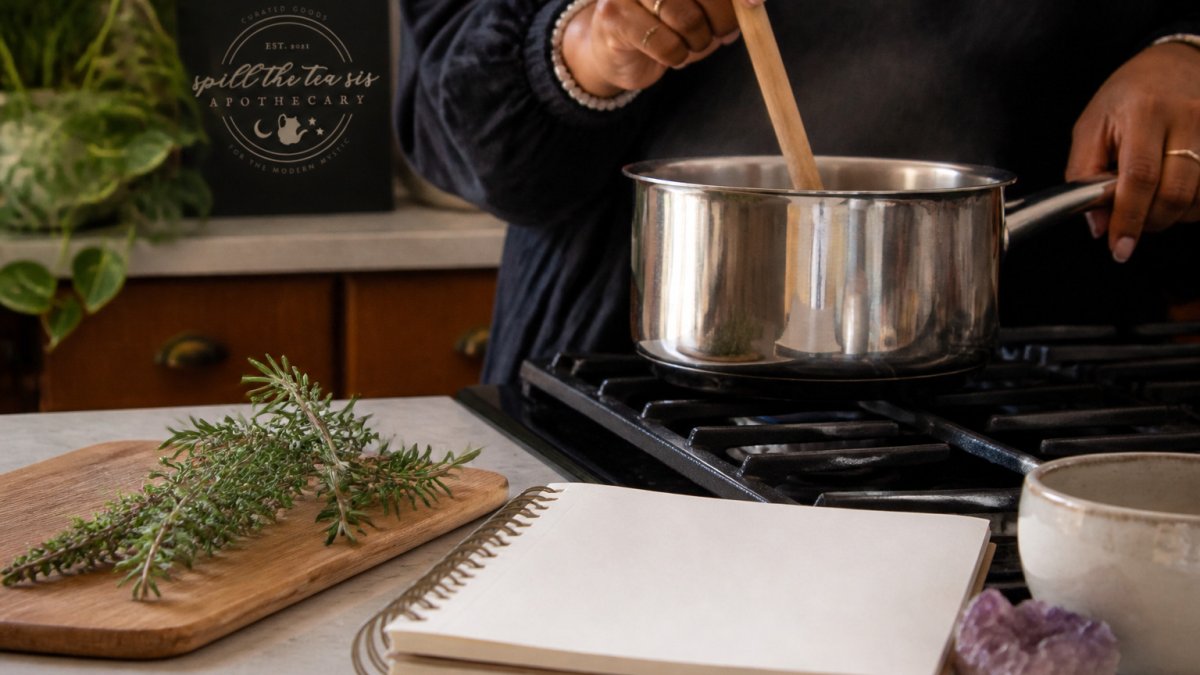
Next, slow your hands. Stirring clockwise while you hold your intention is a common practice, but the direction matters less than the focus.
Finish by noticing how the meal felt to make. Over a few weeks, this simple habit tends to make the practice feel natural.
Kitchen Witch Herbs and Their Meanings
Herbs are the heart of most kitchen witch practices, and the most useful ones are already in your spice rack. The table below pairs each herb with its common magical association, a practical culinary use, and the safety note a beginner most needs. Traditional meanings vary across regions and households, so treat them as starting points rather than fixed rules.
| Herb | Common magical association | Everyday culinary use | Beginner safety note |
|---|---|---|---|
| Rosemary | Remembrance, clarity, protection | Roasted vegetables, bread, lamb, tea | Use culinary amounts in food only |
| Sage | Cleansing, wisdom, release | Brown butter sauce, stuffing, bean dishes | Culinary sage is fine in food amounts; avoid long-term high-dose supplements without professional guidance |
| Thyme | Courage, strength, steady nerves | Soups, stocks, roasted chicken, tea | Culinary amounts are generally recognized as safe; do not use thyme essential oil internally |
| Parsley | Protection, celebration, freshness | Salads, tabbouleh, finishing garnish | Very safe in food amounts; pregnant people should avoid large therapeutic doses of parsley seed |
| Basil | Peace, love, household harmony | Pesto, tomato dishes, salads | Culinary amounts are generally recognized as safe; basil essential oil is not for internal use |
| Mint | Clarity, hospitality, cooling | Tea, desserts, salads, drinks | Avoid large amounts if you have reflux; peppermint oil is not for internal use without professional guidance |
| Cinnamon | Warmth, prosperity, speed | Baking, oatmeal, chai, stews | A pinch is plenty; large amounts of cassia cinnamon can be hard on the liver over time |
| Ginger | Energy, courage, momentum | Stir-fries, tea, baking | Culinary amounts are generally recognized as safe; check with a professional if you take blood thinners |
How to Choose an Herb for a Working
Let your intention guide you, then check three things before you use the herb:
- Is it food-grade? Buy culinary herbs from the grocery aisle or a reputable supplier. Never ingest a plant you cannot identify with certainty, and never assume a decorative or garden-center plant is safe to eat.
- Have you used it before? Start with herbs you already cook with. A first-time herb plus a first-time spell is two variables at once.
- Does it fit your body and diet? Check for allergies, pregnancy or nursing status, and medication interactions. When in doubt, use the herb as a scent or a symbolic object rather than ingesting it.
Sourcing, Storing, and Substituting Herbs
Fresh herbs from a grocery store or farmers market are fine for spells. Dried herbs lose potency over time, so buy in small amounts and store them in airtight glass jars away from heat and light.
If you cannot find a specific herb, substitute by association rather than by exact match. Rosemary and sage both carry cleansing associations; thyme and ginger both carry courage.
The Line Between Symbolic and Medicinal Use
Kitchen witchcraft uses herbs symbolically and in ordinary culinary amounts. It is not a substitute for medical treatment, and an herb's magical association says nothing about its clinical effects.
Keep a small notebook to record which herbs you use, what you hoped for, and how you felt afterward. Over a few months, your own notes will tell you more about which herbs fit your practice than any list, including this one.
Simple Herbal Spells for Beginners
A beginner-friendly herbal spell needs only three things: a clear intention, one or two food-grade herbs, and a simple repeatable action. The spells below are written so you can complete each one in under fifteen minutes with ingredients from a standard grocery store. Treat them as templates, swap herbs only for other culinary herbs you have already used safely in food.
Spell 1: Rosemary Clarity Tea for Focus
Intention: mental clarity before a task you have been avoiding.
Ingredients and tools: one teaspoon of dried culinary rosemary, eight ounces of hot (not boiling) water, a mug, a small strainer, and a notebook.
Preparation: rinse the rosemary, place it in the mug, and pour the hot water over it.
Timing: morning or just before the task.
Cleanup: compost or discard the spent rosemary, wash the mug by hand, and write one line in your notebook about what you noticed.
Spell 2: Thyme Courage Sachet for a Hard Conversation
Intention: steadiness before a difficult conversation or appointment.
Ingredients and tools: two tablespoons of dried culinary thyme, a four-inch square of clean cotton or muslin, a length of kitchen twine, and a pen.
Kitchen Witch Tee ( BLACK DESIGN) | Witchy Kitchen Graphic T-Shirt →
Timing: the evening before or the morning of the event. Replace the thyme every four to six weeks, or sooner if the scent fades.
Cleanup: open the sachet, compost the thyme, and either wash and reuse the cloth or retire it.
Spell 3: Parsley Protection Simmer Pot
Intention: a sense of protection and reset for the home.
Preparation: combine everything in the pot and bring it to a low simmer. Never leave a simmer pot unattended, and never let it boil dry.
Timing: a weekend morning or the first day of the month.
Cleanup: strain the solids into the trash (not the sink, to avoid clogs), wash the pot, and wipe down the stove.
How to Write Your Own Beginner Spell
Use this four-line template in your notebook:
- Intention: one sentence, present tense, no promised outcome.
- Herb and amount: one culinary herb, measured in teaspoons or tablespoons.
- Action and words: one physical motion plus one spoken or written line.
- Timing and cleanup: when you will do it and how you will dispose of or store the materials.
Keep spells modest and one intention per session. Kitchen witchcraft is a spiritual and symbolic practice. It should never replace medical care, and it should never be used to promise specific outcomes. If a spell involves ingesting an herb, confirm it is labeled food-grade and that it is safe for you, see the safety section below for the questions to ask before you consume anything new.
Kitchen Witch Tools and What You Actually Need
You do not need a large collection of tools to begin. A wooden spoon, a sturdy pot, a few glass jars for dried herbs, and a notebook are enough for most practitioners. Many people also keep a small altar or shelf near the stove for objects that carry meaning to them.
If you want to build your collection gradually, start with reference reading. Explore recommended books on modern kitchen witchcraft to learn more about the practice before buying supplies. For a dedicated ritual object, a kitchen witch tee is a simple way to carry the practice into your daily routine. Browse our magical tools and altar supplies when you are ready to expand your kit.

Our advice is to buy slowly. Use what you already own for the first few months, and add items only when you notice a clear need.
Herbal Magic Safety: Cooking, Skin Contact and Ingredients
Safety matters more than any spell. Only consume herbs that are labeled as food-grade and sourced from a reputable supplier, and never ingest a plant you cannot identify with certainty.
Test any herb on a small area of skin before using it in a bath, salve or massage blend, and avoid applying undiluted essential oils directly.
Ethical practice also means being honest about what the practice does. Describe your herbal rituals as personal and symbolic, not as treatments for illness.
Your First Kitchen Ritual This Week
Choose one day this week and set aside ten minutes. Pick a single herb you already have, decide on one intention, and prepare a simple meal or drink while holding that intention in mind. Stir slowly, notice the scents, and speak your intention aloud or write it on a card.
When you finish, record what you made, what you intended, and how you felt. Repeat the ritual next week with the same herb or a new one. Over time, your notes will show you which practices resonate and which ones to let go.
Kitchen witchcraft rewards patience. Start small, keep your records honest, and let the practice grow at a pace that suits your life.
Frequently Asked Questions
What is kitchen witchcraft?
Kitchen witchcraft, sometimes called kitchen witchery, is a folk practice that treats cooking, baking and home routines as spellwork. Practitioners add intention to ordinary acts such as stirring, chopping and seasoning, often using culinary herbs like rosemary, sage, parsley and thyme. It draws on European folk traditions of household magic and is practiced today in many forms. There is no single required belief system, so beginners can shape the practice around their own values, whether that is protection, comfort, gratitude or everyday mindfulness in the home.
How do beginners start practicing kitchen witchcraft?
Start with one small habit rather than a full system. Choose a single daily cooking task, such as making tea or chopping vegetables, and before you begin, state a clear intention in a sentence or two. Move slowly, pay attention to your hands and the smells and textures involved, and close the moment with a short word of thanks. Keep a simple notebook to record what you did and how it felt. Over several weeks, you will see which rituals feel meaningful and can expand from there.
What herbs are commonly used in kitchen witchcraft?
Common beginner herbs include rosemary, often associated with remembrance and clarity; sage, traditionally linked with cleansing and protection; parsley, used in folk practice for its association with celebration and transition; and thyme, linked with courage and purification in many older traditions. Basil, bay, mint and lavender are also popular. These meanings come from folklore and personal tradition rather than scientific evidence, so treat them as symbolic guides for your practice and choose herbs you enjoy using.
What tools does a beginner kitchen witch need?
You do not need expensive equipment to begin. A wooden spoon, a heatproof pot, a sharp knife, a cutting board, a mortar and pestle, and a few clear glass jars for dried herbs cover most beginner needs. Many practitioners also keep a notebook for recording intentions, a candle for marking the start and end of a ritual, and a dedicated bowl or tray for offerings. Start with what you already own, then add items as your practice develops.
How do you use herbs safely in spells and cooking?
Use only herbs you can identify with certainty, and buy from sources that label botanical names clearly. Some herbs are unsafe in large amounts or for certain people, including those who are pregnant or taking medication, so check reliable botanical or medical references before consuming any herb. Keep ritual herbs that you do not intend to eat separate from your food, label jars, and keep them away from children and pets. Avoid applying herbs to broken skin, and never treat a herbal spell as a substitute for medical care.
