


Table of Contents
- What Does Ethically Sourced Mean for Crystals?
- How to Tell If Crystals Are Ethically Sourced
- Red Flags of Unethical Crystal Mining and Greenwashing
- Questions to Ask Your Crystal Seller
- Ethical Crystal Sourcing Standards and Third-Party Verification
- The Geological and Human Impact of Crystal Extraction
- Shopping with Intention: Building Your Ethical Crystal Practice
- Conclusion
Last Updated: August 26, 2026
What Does Ethically Sourced Mean for Crystals?
Ethically sourced crystals are stones extracted, processed, and distributed with fair labor practices, environmental protection, and supply chain transparency. Miners receive fair wages, workers operate safely, and extraction sites are managed responsibly.
The crystal industry has a reputation problem. Many sellers claim their stones are "ethical" without evidence of origin, mining practices, or environmental restoration. This vagueness matters because crystal mining can involve child labor, dangerous conditions, water contamination, and permanent geological damage (ilo.org). When you buy from sellers who trace their supply chain, you support operations that prioritize people and planet alongside profit.
At Spill The Tea Sis Apothecary, we understand that choosing ethically sourced crystals means making a real choice aligned with your values. The difference between responsibly sourced and unvetted extraction can mean the difference between a miner earning a living wage and working in exploitative conditions.
How to Tell If Crystals Are Ethically Sourced
Identifying ethically sourced crystals requires looking beyond marketing language and asking specific questions about mine-to-market practices.
Supply Chain Transparency and Mine-to-Market Traceability
Transparent sellers can tell you exactly where their crystals come from, the mining region, method, and ideally the specific supplier. This detail shows the seller investigated sources rather than buying from middlemen without questions.
Look for sellers who document supply chains publicly through photos of mining partners, extraction method explanations, or written sourcing statements. Ask: "Which country did this crystal come from? Who mined it? Did you visit the source or communicate directly with the miner?" Honest answers might be "I work directly with a cooperative in Brazil" or "I source from a family-run operation in Madagascar that I've visited." Vague answers like "We source from ethical suppliers" without specifics warrant further investigation.
Fair Wages and Worker Protections
Ethical crystal mining means miners earn livable wages and work safely. In many mining regions, workers face exploitation, low pay, long hours, no safety equipment, and no legal protections (peer-reviewed research). Responsible operations establish minimum wage standards, provide protective gear, limit hours, and ensure workers have recourse for unsafe conditions.
A seller committed to fair wages will mention this explicitly, perhaps noting they work with suppliers meeting specific labor standards or have verified conditions firsthand. Some partner with mining cooperatives where workers have collective bargaining power and fair compensation is built into the business model. Silence on worker welfare while discussing only environmental impact indicates incomplete ethical consideration.
Sustainable Mining and Environmental Impact
Crystal mining leaves a geological footprint through extraction, potential water system disruption, and landscape disturbance (usgs.gov). Sustainable practices minimize damage through careful planning, restoration efforts, and avoiding sensitive ecosystems.
Responsible miners restore quarries after extraction, replant vegetation, and manage water runoff to prevent contamination. They avoid protected areas and consult local communities about environmental concerns. Some use artisanal mining, small-scale, labor-intensive extraction causing less landscape damage than industrial operations.
Look for sellers explaining their sources' environmental practices. Statements like "sourced from restored quarries" or "artisanal mining partners" suggest ecological consideration. Silence on environmental practices indicates they haven't addressed this aspect.
Red Flags of Unethical Crystal Mining and Greenwashing
Greenwashing means using vague ethical language to appear responsible without making real changes. Sellers use terms like "natural," "pure," "authentic," or "sacred" to suggest ethical sourcing, but these describe the crystal itself, not mining practices. The crystal industry has no regulatory body policing false claims.
The Greenwashing Checklist: Words That Sound Ethical But Aren't
"Natural" or "Pure"
- What it sounds like: Ethically sourced.
- What it actually means: Unpolished or uncut. This describes appearance, not sourcing or mining conditions.
"Authentic" or "Genuine"
- What it sounds like: Real and responsibly sourced.
- What it actually means: Not synthetic or fake. This is about the product, not ethics.
"Ethically sourced" (without specifics)
- What it sounds like: Fair labor and environmental practices verified.
- What it actually means: Nothing unless the seller explains what "ethical" means in their case.
"Responsibly sourced"
- What it sounds like: Environmental and labor impact considered.
- What it actually means: Nothing unless backed by supply chain details or third-party verification.
"We support fair trade" (without certification)
- What it sounds like: Partnership with fair trade organizations.
- What it actually means: The seller claims support but has no certification proving it.
"Sacred" or "Spiritual energy"
- What it sounds like: Special properties and careful sourcing.
- What it actually means: The seller emphasizes metaphysical qualities to distract from supply chain questions.
"We care about the environment"
- What it sounds like: Environmental practices in place.
- What it actually means: A values statement, not a practice statement.
Pricing Red Flags
Unusually low prices often signal corners cut on wages or environmental protection. If a seller offers significantly lower prices than competitors, ask why. Legitimate reasons include direct sourcing, bulk purchasing, or cooperative partnerships. Non-legitimate responses include refusing to explain pricing or admitting suppliers minimize labor expenses.
Imagery and Narrative Red Flags
Some sellers use emotional narratives to distract from transparency:
- Pristine landscape photos paired with no mining impact or restoration information.
- Stories about crystal "healing energy" taking more space than supply chain information.
- Imagery of miners without context about wages or working conditions.
- Spiritual messaging emphasizing metaphysical benefits while avoiding origin questions.
When sellers use these narratives to avoid transparency, they're using emotion as a smokescreen.
The Verification Test
Apply this test to any seller's ethical claims:
- Can they name it? (Specific mining region, operation, or cooperative)
- Can they prove it? (Documentation, third-party verification, or communication records)
- Can they explain it? (Specific labor or environmental practices, supply chain details)
Yes to all three indicates genuine commitment. No to any suggests greenwashing.
Questions to Ask Your Crystal Seller
Before buying, ask these specific questions:
- Where was this crystal mined? Expect a specific country and ideally region or operation name.
- How do you verify ethical sourcing? Look for answers mentioning direct miner relationships, site visits, or third-party verification.
- What mining method was used? Artisanal or small-scale mining typically has less environmental impact.
- Can you share information about the miners or mining operation? Ethical sellers often have sourcing stories.
- What happens to the mining site after extraction? Responsible operations restore the land.
- Do your suppliers have certifications or third-party verification? This adds credibility.
- Why should I trust your sourcing claims? This reveals whether the seller has genuine knowledge or repeats marketing language.
Sellers answering directly and specifically have done the work. Those deflecting, using vague language, or saying "we don't track that information" haven't prioritized ethical sourcing.
Ethical Crystal Sourcing Standards and Third-Party Verification
The crystal industry lacks formal certification standards like fair trade coffee or chocolate. This absence makes third-party verification crucial, but you need to know what to look for when sellers claim verification.
Understanding Verification Frameworks
Look for references to established organizations focused on mining ethics, labor standards, or environmental protection. Some sellers work with fair trade cooperatives, mining associations, or environmental groups setting and auditing ethical standards. A seller claiming certification should name the certifying body, explain verified standards, and ideally provide documentation or links to certifier records.
How to Verify Supply Chain Documentation
Legitimate sellers often have:
- Mine-to-market invoices or receipts showing origin and ownership transfers, creating a paper trail from extraction to retail.
- Sourcing statements naming specific mining regions, operations, or cooperatives. Vague statements without geographic or operational specifics indicate incomplete work.
- Photos or descriptions of mining partners, including cooperative or operation names, showing accountability.
- Environmental or labor certifications from recognized bodies with proof of current status.
- Direct communication records with suppliers about labor practices, environmental restoration, or mining methods.
Red Flags in Verification Claims
Be skeptical of sellers who create their own "ethical standards" without external verification, claim certification without naming the certifier, use vague language like "ethical suppliers" without naming them, or refuse to share sourcing information claiming confidentiality.
Building Your Own Verification Checklist
When evaluating ethical claims, ask for and review:
- Specific origin information: Country, region, and ideally mining operation or cooperative name.
- Supply chain documentation: Invoices, receipts, or sourcing statements showing the crystal's journey.
- Third-party verification details: Certifying organization name, verified standards, and proof of current certification.
- Labor practice information: Wage standards, working conditions, or fair trade cooperative partnerships.
- Environmental practice information: Mining methods, land restoration, or environmentally conscious operation partnerships.
Sellers providing most or all of this information have done the work. Those deflecting, claiming confidentiality, or saying "we don't track that information" haven't prioritized ethical sourcing.
The Geological and Human Impact of Crystal Extraction
Crystal mining affects both landscape and people. Geologically, extraction removes material from the earth, sometimes creating permanent voids or destabilizing hillsides. Water systems can be contaminated by mining runoff, and ecosystems disrupted if mining occurs in sensitive areas.
The human impact is equally significant. In Brazil, Madagascar, India, and other mining regions, communities often face poverty, limited opportunities, and exploitation. Workers without legal protections or collective bargaining power become vulnerable to wage theft, unsafe conditions, and child labor.
Understanding both impacts helps you make informed choices. A crystal sourced through artisanal mining by fairly paid workers in a restored landscape represents a different ethical choice than industrially mined crystals extracted without environmental restoration or labor protections. Truly ethical sourcing addresses both the geological footprint and the human cost of extraction.
Shopping with Intention: Building Your Ethical Crystal Practice
Building an ethical crystal practice means being intentional about every purchase. Choose sellers who prioritize transparency and answer sourcing questions.
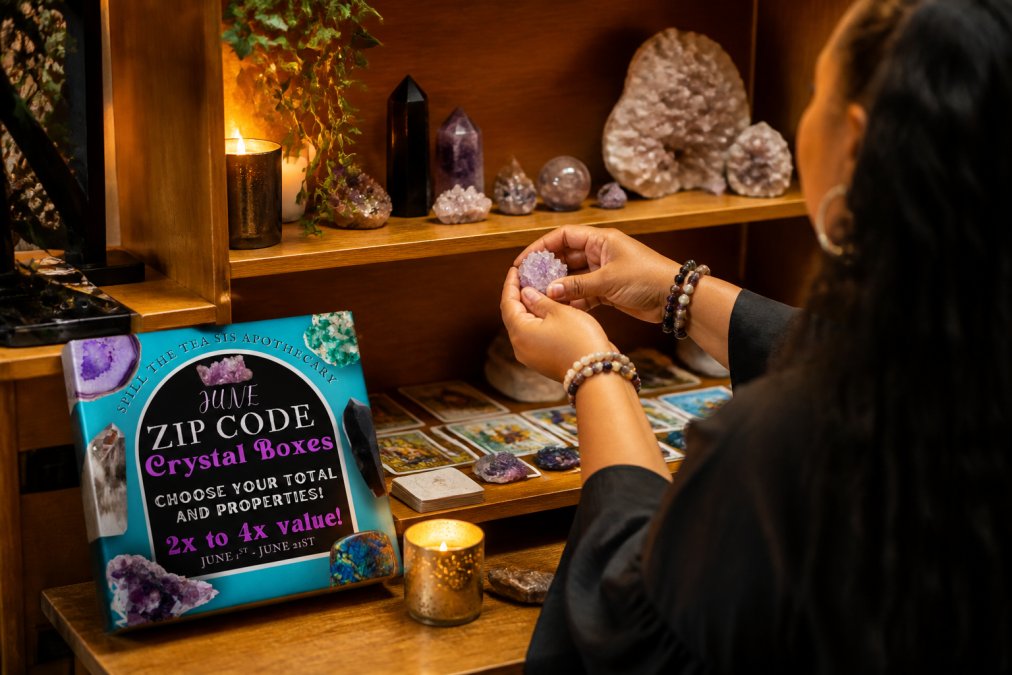
When expanding your collection, consider mystery boxes from sellers you trust. Spill The Tea Sis Apothecary's Mystery Crystal Box offers intuitively chosen stones, supporting intention-setting while honoring the crystals' journey.

For budget-conscious exploration, the Zip Code Mystery Box provides curated crystals based on your location, combining affordability with intentional selection.

Build your practice by buying less but choosing better. Invest in fewer stones from sellers explaining their sourcing rather than accumulating many crystals of unclear origin. Quality and transparency matter more than quantity.
Connect with sellers sharing your values. Ask questions and request sourcing information. Support businesses prioritizing fair wages, environmental responsibility, and supply chain transparency. Your purchasing choices shape the market, demand ethical sourcing and encourage more sellers to prioritize it.
Choosing ethically sourced crystals means taking responsibility for where your spiritual tools come from. The crystal industry's lack of formal regulation puts the burden on individual buyers to ask questions and demand transparency. When you purchase from sellers explaining their supply chain, working with fairly compensated miners, and considering environmental impact, you're voting for a different crystal industry where spirituality and ethics align.
Start by asking questions. Look for sellers answering them directly. Build your practice with stones from sources you can trust. At Spill The Tea Sis Apothecary, we believe your spiritual journey deserves tools sourced with care, integrity, and respect for both the people and earth involved in bringing them to you.
Frequently Asked Questions
What red flags should I watch for when buying ethically sourced crystals?
Watch for sellers who cannot explain their supply chain, offer prices suspiciously low compared to market standards, or use vague language like 'natural' without detail. Greenwashing tactics include unsubstantiated claims about 'eco-friendly' mining without third-party verification, synthetic coatings or chemical treatments presented as natural, and refusal to answer questions about worker conditions. Legitimate sellers provide mineral provenance, explain sourcing regions, and discuss labor safety practices openly. If a seller avoids your questions about origin or ethics, move on.
Are there certifications for ethically sourced crystals?
The crystal industry lacks a single governing certification body like those in other mineral sectors. However, responsible procurement practices do exist. Some sellers pursue third-party verification frameworks through organizations that audit mining practices, labor standards, and environmental impact. Ask sellers if their crystals come from artisanal mining operations with documented fair wages, or if they've undergone ethical auditing. Handcrafted items and locally sourced stones often carry better traceability than mass-produced alternatives. Always request documentation of any claims.
How do I know if a crystal seller is actually supporting fair wages and worker safety?
Ask directly: Where are the crystals mined? What are the working conditions? Do miners receive fair wages above subsistence level? Ethical sellers can name specific regions, mining cooperatives, or artisanal operations. They discuss labor safety measures and can explain how they verify worker protections. Request information about their supply chain transparency and whether they conduct regular ethical auditing. Small, family-owned, or women-owned businesses often have more direct relationships with miners and can speak to these practices with confidence and specificity.
What's the difference between sustainable mining and ethical sourcing for crystals?
Sustainable mining focuses on environmental impact: minimizing the geological footprint, managing toxic residues, and reducing carbon footprint during extraction. Ethical sourcing addresses human concerns: fair wages, no child labor, worker exploitation prevention, and human rights protections. Both matter. A crystal can come from an environmentally responsible mine but still involve worker exploitation, or vice versa. True ethical sourcing combines both, minimizing environmental degradation while ensuring miners and workers are treated fairly and safely throughout the mine-to-market journey.
This article was written using GrandRanker