


Table of Contents
- 1. Start With a Cleansing Ritual Before You Decorate
- 2. Choose Crystals and Gemstones That Carry Intention
- 3. Build an Eco-Friendly Altar With Natural Materials
- 4. Add Handcrafted Spiritual Decor Made in Small Batches
- 5. Layer Lighting and Candle Rituals for Warmth
- 6. Design a Small-Space Spiritual Sanctuary
- 7. Maintain and Cleanse Your Spiritual Home Decor
- Conclusion: Shop With Intention
- Frequently Asked Questions
Last Updated: September 16, 2026
1. Start With a Cleansing Ritual Before You Decorate
Sustainable spiritual home decor ideas begin with subtraction, not addition. Before you hang a print or place a crystal, clear the space you already have. Smoke cleansing is one of the oldest tools for this.
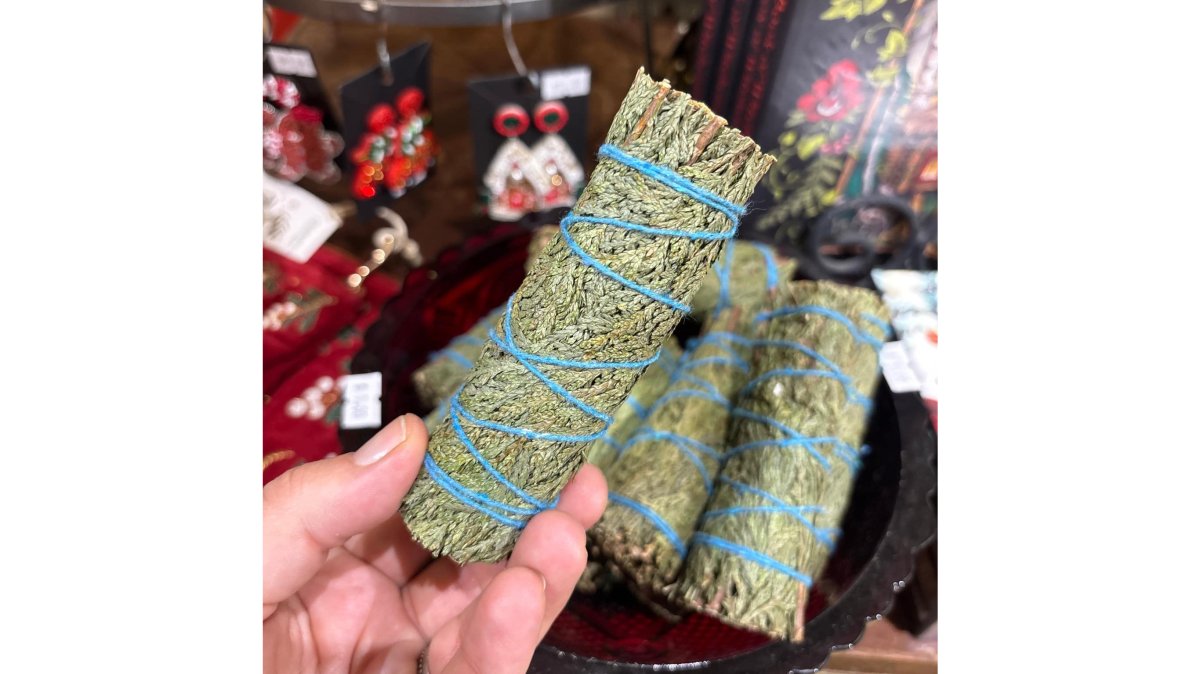
How to Clear Energy in a New or Reset Space
Move through the room in one direction, usually clockwise, pausing at thresholds. Set one clear intention per room rather than a vague wish for "good vibes." When the smoke thins, open the windows and let the room breathe for ten minutes before bringing anything new inside.

2. Choose Crystals and Gemstones That Carry Intention
Crystals work as visual anchors for intention, which is why they belong in a spiritual home decor plan rather than a display case. Pick stones for the feeling you want in each room, not how they photograph.
How to Tell if Crystals Are Ethically Sourced
This is the part most decor guides skip, and it matters most if you care about the word sustainable in front of spiritual. A crystal is only as clean as its supply chain.
- Where was this mined? A country is a start. A region or mine is better.
- Who cut and polished it? Many stones are mined in one place and finished in another, and the finishing step is where labor conditions are hardest to verify.
- Is it dyed, heat-treated, or irradiated? Heat treatment is common and often disclosed. Dyeing is common and often not. If a stone's color looks too saturated for its price, ask.
- Is it a byproduct or a primary dig? Some stones, like amethyst and quartz, are mined at industrial scale. Others are pulled as byproducts of larger operations, which usually means less additional land disturbance.
Sustainable Alternatives When You Cannot Verify a Stone
If a seller cannot trace a crystal, you still have options that keep the practice intact:
- Lab-grown quartz has the same chemical structure as mined quartz and avoids the mining question entirely.
- Vintage and estate stones are already in circulation, so buying them adds no new extraction.
- Beach stones, river rocks, and found objects carry the same anchoring function. Many practitioners treat a stone from a place that matters to them as more potent than anything bought.
- Wood, clay, and dried botanicals can hold the same intention as a crystal at the center of an altar, and they return to the earth when you are done with them.
Cleansing and Charging Your Stones
A stone that sits on a shelf for a year collects dust and, in most traditions, stale energy. Two habits keep a collection working:
- Cleanse monthly. Rinse hard stones like quartz and amethyst under cool water, then dry them fully. Soft stones like selenite, halite, and malachite should never touch water, use smoke, sound, or a dry cloth instead.
- Charge in moonlight, not sunlight. Sunlight fades amethyst, rose quartz, and citrine over time. A windowsill on a full-moon night does the same job without the fading.
3. Build an Eco-Friendly Altar With Natural Materials
An eco-friendly altar uses materials that return to the earth: wood, clay, linen, dried botanicals, beeswax, and unglazed ceramic. Skip plastic trays, resin statues, and synthetic runners.
4. Add Handcrafted Spiritual Decor Made in Small Batches
Handcrafted decor carries the maker's attention in a way mass-produced pieces do not, and small-batch goods tend to use fewer synthetic finishes, keeping indoor air cleaner.
5. Layer Lighting and Candle Rituals for Warmth
Lighting sets a room's emotional temperature faster than any object you place in it. Overhead fixtures flatten a space; layered light gives it depth.
| Layer | Purpose | Best Placement |
|---|---|---|
| Ambient | Soft overall glow | Corner floor lamp or dimmable overhead |
| Task | Focus and reading | Desk or bedside |
| Flame | Ritual and warmth | Altar or coffee table |
| Accent | Depth and shadow | Shelf or windowsill |
6. Design a Small-Space Spiritual Sanctuary
A small-space sanctuary works on vertical real estate and multipurpose surfaces. You do not need a spare room, just one square meter that belongs to your practice.
Why a Sacred Corner Works Better Than a Sacred Room
A dedicated room sounds ideal but often backfires: a room you walk past without entering becomes storage, while a corner you pass daily becomes ritual.
Home Blessings Intention Candle | New →
Build the Corner in Four Layers
Clear a dresser top, windowsill, or single shelf. Keep only what you use weekly and store the rest in a box underneath. Then build up:
- Base layer. A low wooden board, a ceramic plate, or a folded linen runner. This defines the edge of the sacred space without a wall or a door.
- Vertical layer. A wall shelf above the base, or a narrow leaning shelf beside it. This is where a candle, a small statue, or a framed print lives.
- Living layer. One dried herb bundle, one plant, or one bowl of water. Living and dried elements are what keep a corner from reading as a display.
- Personal layer. One object that means something to you and nothing to anyone else. A stone from a trip. A note. A ring dish from a grandparent.
Four layers, one square meter, no drilling required.
Sustainable Small-Space Materials
Small spaces are where sustainable choices pay off fastest: you buy less, and every piece is visible.
- Reclaimed wood for the base board or shelf. Look for furniture makers who sell offcuts, or use a cutting board that has already lived a life.
- Unglazed ceramic for the water bowl and the candle dish. It ages instead of chipping.
- Linen and cotton for the runner, in undyed or naturally dyed finishes. Skip polyester blends, which shed microplastics every time you move them.
- Beeswax or coconut-soy candles in a small tin or a repurposed jar. A single small candle does more for a corner than three large ones.
- Dried botanicals from your own kitchen, rosemary, lavender, bay, tied with cotton twine. Free, compostable, and replaced seasonally.
Rotate Seasonally, Not Constantly
Seasonal rotation keeps a small space from going stale. Swap one object each season, the Persephone Candle for spring renewal, or a Vintage Teacup Gift Set for a slower autumn ritual.
7. Maintain and Cleanse Your Spiritual Home Decor
Maintenance is where a spiritual practice either holds or fades. Dust crystals with a dry soft cloth, refresh dried herbs every few months, and trim candle wicks to about a quarter inch before each burn.
- Dust crystals and statues with a dry cloth
- Replace dried herbs and botanicals
- Trim candle wicks to a quarter inch
- Air each room for ten minutes
- Restock incense and sage before you run out
- Rotate one seasonal object
Conclusion: Shop With Intention
Building a space that supports your practice takes less money than most people expect and more attention than most people give. Sacred rooms are the ones where every object was chosen on purpose and maintained with care.
Frequently Asked Questions
What are some eco-friendly home decor ideas for a spiritual space?
Start with materials that break down or last: coconut apricot soy wax candles, hand-wrapped sage, dried botanicals, and vintage or secondhand vessels. Skip plastic figurines and synthetic fragrance diffusers. Choose incense sticks over aerosol sprays. A small tray holding a candle, a crystal, and a sprig of dried rosemary does more for the room's energy than a shelf of mass-produced items. The goal is fewer pieces, each one chosen on purpose.
How do I identify ethically sourced crystals for my altar?
Ask two questions before buying: where was it mined and can the seller trace it? Reputable shops answer directly and will tell you when they cannot. Look for sellers who name their suppliers and avoid vague phrases like 'sourced with love.' If a crystal is priced far below the market average, the savings usually come from somewhere. Buying from small apothecaries that know their makers is a practical shortcut.
What is the 3-5-7 rule in decorating, and does it work for spiritual spaces?
The 3-5-7 rule is a styling guideline: group objects in odd numbers, like three candles, five crystals, or seven dried stems, because odd counts feel more natural to the eye than even ones. It works well on an altar or shelf where you want visual balance without symmetry. Pair it with varying heights. A tall candle, a medium crystal, and a low dish of incense read as one arrangement rather than three separate objects.
How can I make my home feel spiritual without buying a lot of new things?
Work with what you already own. Move a chair to face a window. Clear one surface completely, then place a single candle and a stone on it. Add a bowl of water, which many traditions use for cleansing and reflection. Sound counts too: wind chimes near a door or a singing bowl on a shelf shift the feel of a room. The most sustainable decor is the decor you already have, rearranged with attention.
What should I keep in my home for positive energy?
Common choices include amethyst for calm, rose quartz for warmth, a Buddha statue or another figure that grounds you, and plants like the Rose of Jericho, which opens when placed in water. Keep a cleansing tool on hand, such as hand-wrapped sage or incense sticks, for resetting a room after arguments or illness. Add something handmade. Objects made by a person carry a different weight than factory-made ones, and you will notice it daily.