


Table of Contents
- Why Sustainable Intention Candles Matter for Your Home
- How to Set an Intention with a Candle
- Non-Toxic Candle Ingredients to Avoid
- Quick Comparison: Top 5 Sustainable Intention Candles
- 1. Hocus Pocus Intention Candle: Magic, Mystery & Transformation
- 2. Soothe Your Soul Intention Candle: Healing & Peace
- 3. Return To Sender Intention Candle: Protection & Energy Clearing
- 4. Magic of New Beginnings Intention Candle: Road Opener & Manifestation
- 5. Hecate Candle: Intuition & Deep Inner Work
- How to Burn a Candle for Longevity and Cleaner Air
- Making the Choice
- Frequently Asked Questions
Last Updated: September 22, 2026
Why Sustainable Intention Candles Matter for Your Home
Sustainable intention candles are hand-poured candles made with renewable waxes, clean fragrance oils, and lead-free wicks, designed to support a specific ritual goal while limiting what you breathe in at home. This guide breaks down how to choose one that holds up.
Here's what most shoppers miss: the ritual and the ingredients are the same decision. A candle you light nightly becomes part of your indoor air, not just your altar, so wax, wick, and fragrance matter as much as the intention you set.
The five candles below were chosen on four criteria: wax base, wick material, fragrance sourcing, and whether the maker states ingredients openly. We also factored in burn time and vessel reuse.
U.S. Consumer Product Safety Commission candle safety guidance
How to Set an Intention with a Candle
Setting an intention with a candle means naming one clear outcome, writing it down, and lighting the wick while holding that outcome in mind. The candle becomes a repeated cue, not a magic switch.
A simple approach that works for beginners:
- Write your intention as a single present-tense sentence ("I am open to new work").
- Clean the space you'll burn in, even briefly.
- Hold the candle and read the sentence aloud once.
- Light it and sit with the thought for a few minutes.
- Relight it on a schedule, and repeat the same sentence each time.
Consistency does more than any single burn: a candle you return to nightly builds a stronger association than one lit once and forgotten.
Non-Toxic Candle Ingredients to Avoid
The main ingredients to avoid in a candle are paraffin wax, phthalates in fragrance, lead wicks, and petroleum-derived additives. Knowing the names is only half the job, the harder part is verifying a label means what it implies.
Phthalates are chemicals sometimes used as solvents and fixatives to carry fragrance and help it last longer. Many buyers look for phthalate-free labeling because these compounds are associated with indoor air quality concerns. The catch: "phthalate-free" is not a regulated term, so a maker can use it without third-party verification. The stronger signal is a specific certification, a fragrance oil described as certified clean or compliant with International Fragrance Association (IFRA) standards, which set usage limits by product category.
Paraffin is a petroleum byproduct. It burns, but it is not renewable and produces more soot than plant-based waxes when the wick is untrimmed. You will sometimes see paraffin blended into a candle marketed as "soy", a blend can legally carry the soy name even when soy is a minority of the wax. If the wax base matters, look for "100%" in front of the wax type.
Lead-core wicks are largely a thing of the past in the United States, but "lead-free cotton wick" is still worth checking. A wood wick is an easy alternative. A metal core can release trace metals as it burns, and the wick is the one component you cannot inspect once the candle is poured.
Synthetic fragrance covers a wide range. Certified clean fragrance oils sit in a different category than unlisted synthetic blends, and the difference is usually stated on the product page. A common myth is that a stronger scent means a more toxic candle.
A quick label check:
- Wax is soy, coconut, beeswax, or a blend of these, and says "100%" if that is the claim
- Fragrance is listed as phthalate-free or certified clean, ideally with an IFRA reference
- Wick is cotton or wood, not metal-cored
- No petroleum, preservatives, or lead listed
- The maker states ingredients openly rather than only using mood words like "natural"
U.S. Environmental Protection Agency indoor air quality resources
Quick Comparison: Top 5 Sustainable Intention Candles
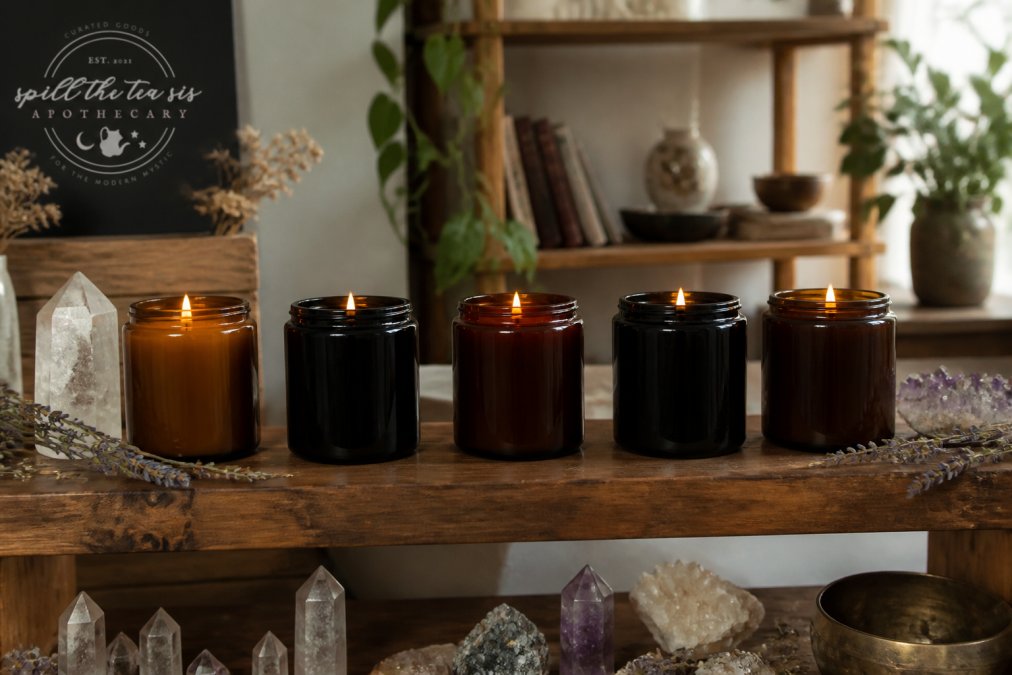
All five picks use the same base: 100% natural coconut apricot soy wax, a crackling cedar wood wick, certified clean fragrance oils, and a 30 to 50 hour burn time. Each is handcrafted in small batches and free from preservatives, phthalates, lead, and petroleum.
Hocus Pocus Intention Candle | Magic →
| Candle | Intention | Scent Direction | Price |
|---|---|---|---|
| Hocus Pocus | Magic & transformation | Dark floral, amber, patchouli | $29.99 |
| Soothe Your Soul | Healing & peace | Sea salt, freesia, light musk | $29.99 |
| Return To Sender | Protection & clearing | Sage, citrus, oakmoss | $29.99 |
| Magic of New Beginnings | Road opener | Bergamot, neroli, sandalwood | $29.99 |
| Hecate | Intuition & transformation | Oakmoss, amber, sage | $32.00 |
1. Hocus Pocus Intention Candle: Magic, Mystery & Transformation
Best for anyone who wants their ritual to feel like an event. Hocus Pocus leans dark and floral: cinnamon and sugar up top, balsam and amber in the middle, patchouli and cedarwood at the base.

2. Soothe Your Soul Intention Candle: Healing & Peace
Best for grief, anxiety, and anyone who needs the room to soften. The scent is fresh and airy: ozone and orange, then sea salt, freesia, and green leaves, grounded with tonka bean, light musk, and amber.
3. Return To Sender Intention Candle: Protection & Energy Clearing
Best for boundary work and clearing a space after a difficult interaction. Sage, orange, and grapefruit open it up; lavender sits in the middle; amber, tonka bean, and oakmoss hold the base.
4. Magic of New Beginnings Intention Candle: Road Opener & Manifestation
Best for transitions: a new job, a move, a relationship shift, or a chapter you're trying to start. Bergamot leads, neroli, orange blossom, and jasmine follow, and sandalwood anchors it.
5. Hecate Candle: Intuition & Deep Inner Work
Best for practitioners doing ancestral or lunar work. Oakmoss, amber, sage, and a lift of citrus make this the most resinous, grounding candle in the set.
How to Burn a Candle for Longevity and Cleaner Air
Getting the full 30 to 50 hours out of a candle comes down to three habits: trim the wick to about 1/4 inch before every burn, let the melt pool reach the jar's edge on the first light, and never burn longer than four hours at a stretch.
A few more habits worth keeping:
- Keep candles out of drafts, which cause uneven burning and soot
- Burn on a heat-safe surface away from curtains and paper
- Extinguish with a snuffer rather than blowing, to avoid scattering soot
- Stop burning when about 1/2 inch of wax remains
What Happens After the Last Burn
Most candle guides stop at the last light, but the end-of-life stage is where a candle's real footprint lives, and almost no listicle covers it.
- Freeze the jar for about an hour, the remaining wax shrinks and usually pops free.
- If wax clings, pour in hot (not boiling) water and let it float to the top.
- Wipe the inside with a paper towel and wash with warm soapy water.
- Peel or soak off the label if you want a clean look.
Making the Choice
The sustainable intention candles worth buying are the ones you'll actually relight. A candle that sits on a shelf because the scent was wrong does nothing for your practice or the planet.
Frequently Asked Questions
What makes an intention candle sustainable?
Sustainable intention candles use renewable waxes like coconut apricot soy, lead-free cotton or wood wicks, and certified clean fragrance oils free from phthalates and petroleum. They also come in reusable or refillable vessels and are made in small batches to reduce waste. Choosing candles with these features supports cleaner indoor air and a smaller carbon footprint.
What are the non-toxic candle ingredients to avoid?
Avoid candles made with paraffin wax, synthetic fragrance containing phthalates, lead-core wicks, and petroleum-based additives. These can release volatile organic compounds and soot into your home. Instead, look for soy wax, beeswax, or coconut wax labeled phthalate-free, with lead-free cotton or wood wicks. Checking the ingredient list helps you choose candles that are safer for you and the environment.
How do I set an intention with a candle?
To set an intention with a candle, first choose a candle whose purpose matches your goal, like protection or new beginnings. Hold the unlit candle and focus on your intention, saying it aloud or in your mind. Light the wick and visualize your intention manifesting. Let the candle burn for at least an hour, then snuff it out. Repeat daily or as needed to reinforce your focus.
Are soy and beeswax candles better for the environment?
Yes, soy and beeswax candles are generally better for the environment because they come from renewable resources and burn cleaner than paraffin. Soy wax is biodegradable and burns slower, while beeswax is naturally produced and has a subtle honey scent. Both are good choices for sustainable intention candles, especially when paired with lead-free wicks and eco-friendly packaging.
What is the best manifestation candle for beginners?
The best manifestation candle for beginners is one with a clear intention and clean ingredients. The Magic of New Beginnings Intention Candle from Spill The Tea Sis Apothecary is a house favorite for road opening and fresh starts, made with coconut apricot soy wax and certified clean fragrance oils. Its uplifting bergamot and sandalwood scent helps anchor your intention while you focus on new opportunities.