


Table of Contents
- Start With the Rider-Waite-Smith System
- Rider-Waite-Smith vs Modern Tarot Decks
- How to Judge Card Stock, Size, and Finish
- How to Choose a Tarot Deck That Fits Your Intuition and Aesthetic
- How to Cleanse New Tarot Cards
- Using Intention Candles for Tarot Rituals
- Budget, Gifts, and Buying Ethically
- Frequently Asked Questions
Last Updated: September 25, 2026
Start With the Rider-Waite-Smith System
Learning how to choose a tarot deck for beginners in 2026 starts with one question: which system does the deck follow? Most beginner-friendly decks build on the Rider-Waite-Smith system, published in 1909 and illustrated by Pamela Colman Smith. Its 78 cards, with scenes on every pip card, remain the foundation for nearly every modern deck.
A deck built on the Rider-Waite-Smith system comes with shared interpretation you can actually learn from.
Why Pamela Colman Smith's Imagery Still Teaches Best
Pamela Colman Smith drew full scenes onto every card, including the numbered Minor Arcana cards earlier decks treated as plain symbols. That choice made tarot learnable: a beginner can look at the Three of Swords and see grief without opening a guidebook.
Modern decks often replace those scenes with abstract art. Beautiful, yes, but abstract art asks you to already know the meaning. Traditional imagery teaches you as you look.
Rider-Waite-Smith vs Modern Tarot Decks
Traditional and modern tarot decks differ in one practical way: how much they explain themselves. The Rider-Waite-Smith deck shows you the story. Many modern decks ask you to bring it with you.
That doesn't make modern decks a bad choice. It makes them a second deck.
- Rider-Waite-Smith and close variants: scene-based imagery, widely documented, easiest for beginners
- Modern themed decks: unique art and symbolism, often less documented, better once you know the basics
- Oracle cards: not tarot at all, no fixed structure of 78 cards, freer but less systematic
If you're brand new, start with a Rider-Waite-Smith-based deck and add a modern deck later. You'll read both better for it. You can explore the history of the Rider-Waite-Smith deck through the Library of Congress archives.
How to Judge Card Stock, Size, and Finish
Card stock, size, and finish decide whether you'll actually shuffle the deck or leave it in the box. It's the difference between a deck you use daily and one you resell.
Card stock is the paper weight and flexibility. Thin stock bends and creases fast; sturdy stock with a slight flex shuffles cleanly and survives years of use. Test it in person with one gentle riffle, if it feels flimsy, it will stay flimsy.
Card size matters more than beginners expect. Standard tarot cards run close to 7 cm by 12 cm, which suits most hands. Larger decks look striking but are hard to shuffle. Smaller decks suit smaller hands and travel well.
Finish comes in two main types. Matte has a soft, low-glare surface that photographs well and feels good in the hand. Glossy slides more easily for riffle shuffling, but shows fingerprints and glare.
| Feature | What to Look For | Why It Matters |
|---|---|---|
| Card stock | Sturdy with slight flex | Survives years of shuffling |
| Card size | Standard tarot dimensions | Comfortable in most hands |
| Finish | Matte or glossy, your preference | Affects shuffle feel and wear |
| Edges | Smooth, evenly cut | Prevents snags and fraying |
| Guidebook | Included, with card meanings | Speeds up learning |
A common mistake is buying online without checking the stock. If you can hold a deck first, do it. If you can't, read reviews that mention paper quality specifically.
The Durability Test: How to Check Card Stock Before You Commit
Most guides tell you to "feel the cards" but never explain what you're feeling for. Here's a practical durability test you can run in under a minute, in person or through reviews.
The riffle test. Gently riffle the corners. Good stock springs back slightly and resists permanent bending. Cards that flop like paper napkins will crease within months; rigid cardboard will crack at the edges.
The bend-and-release test. Bend one card gently into a U shape and release. Quality stock returns to flat; cheap stock stays warped. It's the fastest way to spot a deck that won't survive regular use.
The edge test. Run your thumb along the side of the deck.
- Thin stock + glossy finish: Slides easily, good for riffle shuffling, but wears out fast.
- Medium stock + matte finish: The sweet spot for most beginners. Comfortable overhand shuffling, minimal wear.
- Thick stock + matte finish: Durable but stiff. Better for overhand shuffling than riffle.
- Thick stock + glossy finish: Slides well but can be slippery. Best for large hands.
Accessibility and Neurodivergent-Friendly Decks
Not every beginner reads the same way. If you have low vision, sensory processing needs, or prefer simplified imagery, the standard Rider-Waite-Smith deck may not fit. Here's what to look for instead.
How to Choose a Tarot Deck That Fits Your Intuition and Aesthetic
Intuition and aesthetic aren't decoration. They're how you'll actually connect with the cards. A deck you find beautiful gets used. A deck you find ugly sits on a shelf.
Reading the Guidebook Before You Buy
The guidebook tells you how much support the deck offers. A good guidebook explains each card's meaning, the suits, and the Major Arcana archetypes in plain language. Some decks ship with a thin pamphlet that leaves beginners guessing.
How to Cleanse New Tarot Cards
Cleansing new tarot cards is a simple reset: it clears any energy the deck picked up before it reached you and marks the moment it becomes yours. There's no single correct method, so pick what feels natural.
Common approaches include:
- Passing each card through incense smoke
- Leaving the deck under moonlight overnight
- Knocking on the deck three times to release stored energy
- Sorting the cards back into order, then shuffling
- Holding the deck and setting a clear intention for your practice
Using Intention Candles for Tarot Rituals
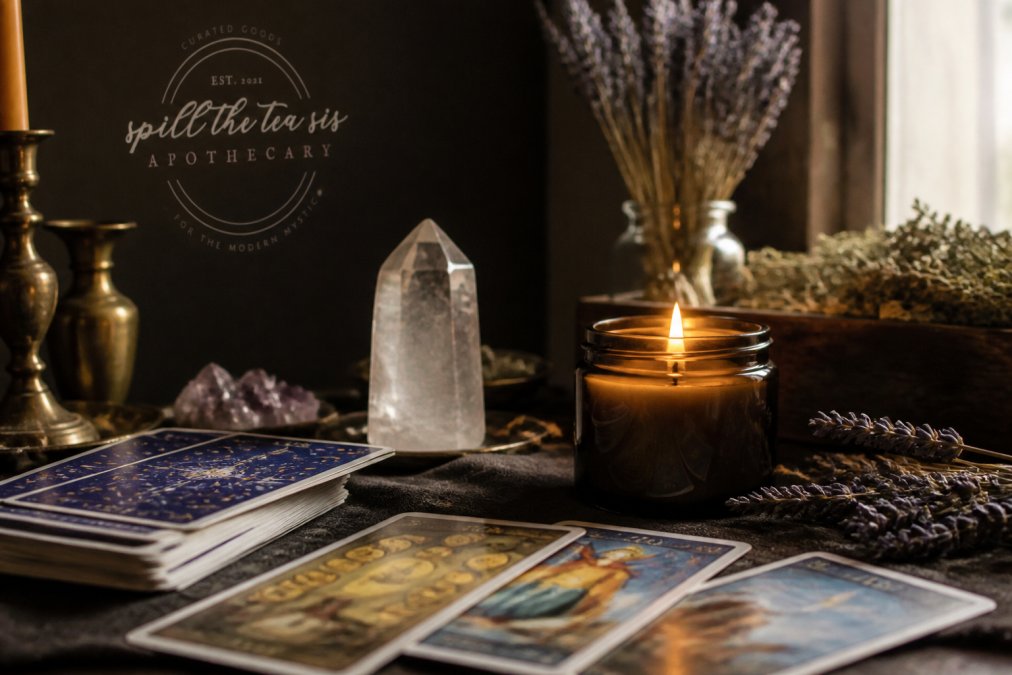
Using intention candles for tarot rituals turns a quick card pull into a practice you return to. The candle gives your reading a beginning and an end, and gives your attention something to rest on while you settle in.
Budget, Gifts, and Buying Ethically
Budget matters, but it isn't the main decision. A deck you'll use for years costs less per reading than three cheap decks you abandon. Set a range you're comfortable with, then choose within it based on the criteria above.
How to Avoid Counterfeit Decks
Counterfeit decks are mass-produced copies of popular decks, often sold at prices that seem too good to be true. They use low-quality paper, blurry printing, and sometimes omit the guidebook entirely. The original artist and publisher see none of the money.
Red flags to watch for:
- The price is significantly lower than the publisher's list price.
- The listing doesn't name the artist or publisher.
- The guidebook is missing, photocopied, or poorly printed.
- The card images look pixelated or the colors are washed out.
- The seller can't tell you where the deck was printed.
- Reviews mention "cheap paper," "blurry art," or "no guidebook."
How to verify a deck is authentic:
- Check the publisher's website for the official list of retailers.
- Look for the ISBN or product code on the box and compare it to the publisher's listing.
- Buy directly from the publisher or from established retailers that specialize in tarot and oracle decks.
- If buying from a marketplace, check the seller's return policy and reviews. A seller with a history of complaints about counterfeits is a risk.
- When in doubt, contact the publisher. They can confirm whether a seller is authorized.
Supporting Independent Artists and Small Shops
Independent artists and small shops are worth seeking out. They tend to print in smaller runs, answer questions, and stand behind their work. You can often find them through artist collectives, tarot forums, or local metaphysical shops.
Questions to ask before buying from an independent seller:
- Where was the deck printed?
- Is the guidebook included, and is it printed or digital?
- What is the card stock weight and finish?
- What is your return policy if the deck arrives damaged?
Frequently Asked Questions
Do I need to buy my own tarot deck or should it be a gift?
You can absolutely buy your own deck. The old superstition that a deck must be gifted is not a rule, and many readers find that choosing a deck themselves creates a stronger connection. If someone gifts you a deck, that is lovely too, but do not wait for one. Pick a deck that you feel drawn to, whether you purchase it or receive it.
How do I know if a tarot deck is right for me?
Look at the artwork first. If the imagery makes you want to keep looking, that is a strong sign. Then check the guidebook, card size, and card stock. A deck that feels good in your hands and whose pictures you can read without effort will serve you better than one that is popular but feels flat to you.
Can I use intention candles alongside my tarot practice?
Yes. Many readers light a candle before a reading to set a mood and focus their intention. Using intention candles for tarot rituals can help you slow down and center yourself. Choose a scent that feels grounding or clarifying, light it before you shuffle, and let the flame mark the start of your reading time.
What is the difference between Rider-Waite-Smith and modern decks?
The Rider-Waite-Smith deck, illustrated by Pamela Colman Smith, uses clear scenes on every card and is the base for most tarot study. Modern decks often reinterpret those scenes with different art styles, themes, or symbolism. Beginners usually learn faster with a Rider-Waite-Smith or a close clone, then branch into modern decks once the structure feels familiar.
Picking a deck you'll actually use comes down to system, feel, and connection, and that combination is personal. Spill The Tea Sis Apothecary curates tarot decks, intention candles, and handcrafted spiritual tools for readers at every stage, from first shuffle to daily practice. Browse the collection, or stop by the Main Street shop and hold a few decks in your hands before you decide. Shop with Intention.