


Last Updated: October 25, 2026
Quick Summary
To recycle candle jars, first remove all wax, the wick, and the metal tab, then wash the glass with dish soap until no residue or soot remains. Clean glass jars are accepted curbside by most programs, while ceramic or coated vessels usually are not. Reuse the jar first when it is in good shape.
- Freeze thick jars two to four hours so the wax shrinks and pops free in one piece.
- Never pour wax down a drain, since it hardens in pipes and causes clogs.
- Remove the wick tab and label before recycling, as a metal tab can contaminate a whole batch.
- Check your local accepted-materials list, because glass rules vary by city and county.
- Reuse clean, intact jars for storage, spices, makeup brushes, or ritual space before recycling.
Table of Contents
- Can You Recycle Candle Jars? Start Here
- How to Remove Wax From a Candle Jar
- How to Clean Candle Jars for Recycling
- How to Reuse Candle Jars Around Your Home
- What to Do With Wax, Wick Tabs, and Labels
- Checking Your Local Glass Recycling Rules
- Recycle, Reuse, Donate, or Toss: A Quick Decision Guide
- Pick Your Next Intention Candle With Care
- Frequently Asked Questions
Can You Recycle Candle Jars? Start Here
Yes, you can recycle candle jars, but only after the wax, wick, and metal tab are gone. Most curbside programs reject jars that still hold leftover wax.
At Spill The Tea Sis Apothecary, we hand-pour every intention candle in small batches, so we think hard about what happens to the vessel after the last burn.
Below, we walk through the full process: removing wax, cleaning the glass, and choosing between recycling, reuse, and donation. The steps take about 20 minutes of hands-on work.
Glass, Ceramic, or Coated: Know Your Vessel
Not every candle container belongs in the recycling bin. Glass jars are the easiest to recycle. Ceramic vessels and coated containers usually are not accepted in curbside programs.
Check the bottom of the jar first. Most recyclable glass carries a recycling symbol or a number. If you see no marking, treat it as non-recyclable until your local program says otherwise.
- Clear or colored glass: usually accepted curbside
- Ceramic or stoneware: rarely accepted, check with your local facility
- Coated or painted glass: often rejected because of the finish
- Thick decorative glass: may be too dense for standard sorting equipment
How to Remove Wax From a Candle Jar
Removing wax is the step most people rush, and it is the one that decides whether your jar is recyclable. You have two safe options: freeze it or warm it gently.
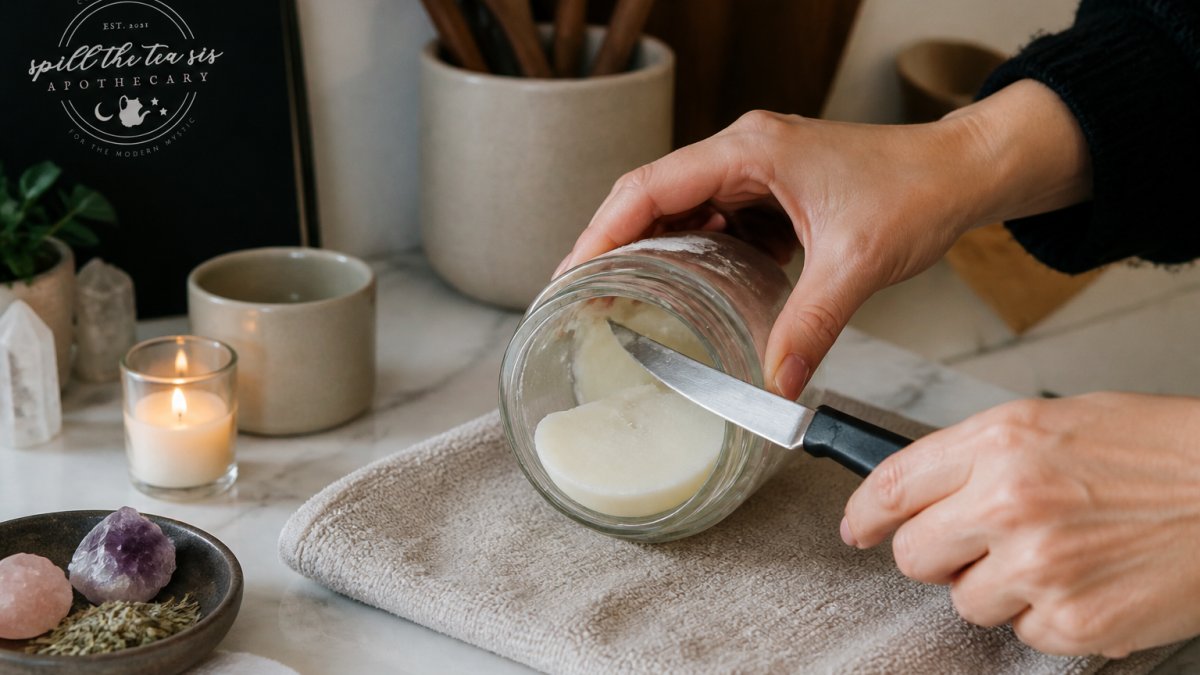
Start by trimming or removing the wick. Then pick a method below based on how much wax is left and what the jar is made of.
The Freezer Method for Stubborn Wax
The freezer method works best for thick jars with a lot of remaining wax. Put the jar in the freezer for a few hours. The wax hardens and shrinks, then pops free.
- Place the jar upright in the freezer, lid off
- Wait two to four hours
- Press on the wax with your thumbs to loosen it
- Lift out the hardened disc in one piece
- Scrape off any thin wax residue with a plastic tool
Watch out: cold glass can crack if you pour hot water into it right away. Let the jar reach room temperature first. Also check the jar for cracks before freezing; a jar that is already chipped may split when the wax contracts.
Gentle Heat: Warm Water and a Hair Dryer
Warm water is the gentler route for jars with a thin layer of wax left. Fill the jar with warm, not boiling, water and let it sit.
A hair dryer works for wax stuck to the sides.
- Use warm water, never boiling
- Never microwave a candle jar
- Keep a candle warmer out of this process entirely
Watch out: hot water plus cold glass equals cracks. Add warm water slowly and never submerge a cold jar in a hot sink.
What to Do With the Wax You Remove
Small wax remnants should go in the trash, not down a drain. Wax cools and hardens in pipes and can cause clogs.
Once the bulk wax is out, move on to cleaning. A jar with visible wax residue or heavy soot is likely to be rejected at the sorting facility, so the cleaning step matters as much as the removal step.
How to Clean Candle Jars for Recycling
Cleaning is where most recycling attempts fail. A jar with wax residue or heavy soot gets rejected at the sorting facility. Clean glass gets accepted.
Follow these steps:
- Peel off the label and adhesive with warm water and dish soap
- Scrub the inside with a bottle brush and a drop of dish soap
- Rinse until no soap film remains
- Dry completely, upside down on a rack
- Check for any remaining wax residue before you toss it in the bin
Soot on the rim comes off with a paste of baking soda and water. Rub it on, let it sit, then rinse.
If the label will not budge, soak the jar in warm soapy water for an hour. Most paper labels lift cleanly after that.
How to Reuse Candle Jars Around Your Home
Reuse beats recycling when the jar is in good shape. A clean glass vessel has a second life in almost every room. This is the part most guides skip, and it is where the real value sits.
Here are our favorite ways to repurpose an empty container:
Persephone Candle | Spring Rebirth Manifestation Soy Candle →
- Storage: cotton swabs, hair ties, or office supplies
- Kitchen: spice jars, loose tea storage, or utensil holders
- Bathroom: makeup brushes or bath salts
- Ritual space: crystal storage, spell jar bases, or incense holders
- Gifting: fill with small treasures and pass it on
Once the jar is clean, you may find yourself curious about the candles that filled it. If you want to understand the practice behind them, read about the benefits of using intention candles for manifestation before you repurpose or buy again.
What to Do With Wax, Wick Tabs, and Labels
The wax, wick tab, and label all need separate handling. This is the step that keeps non-glass parts out of the recycling stream.
- Wax: small amounts can go in the trash. Never pour wax down a drain.
- Wick tabs: these are small metal or plastic discs. Toss them in the trash unless your program accepts metal.
- Labels: paper labels can be composted or trashed. Plastic labels go in the trash.
- Lids: metal lids are often recyclable. Plastic lids depend on your local rules.
Separating these parts matters. A metal tab left in a glass jar can contaminate a whole batch at the sorting facility.
Checking Your Local Glass Recycling Rules
Glass recycling rules vary by city and county, and guessing is how good intentions end up in the wrong bin.
Most municipal waste departments publish an accepted-materials list online. Look for these details:
- Whether colored glass is accepted
- Whether glass must be separated from other recyclables
- Any size or shape limits
- Drop-off locations for glass your curbside program rejects
The U.S. Environmental Protection Agency's recycling guidance explains how local programs set their own rules. When in doubt, call your hauler. A two-minute call saves a rejected load.
If your area does not take candle jars, a local drop-off center often will. Some communities also host glass-only collection events.
Recycle, Reuse, Donate, or Toss: A Quick Decision Guide
Use this guide to pick the right path for your jar in under a minute. The key is to separate the glass from everything else first, then match the jar's condition and material to the safest option.
| Jar Condition | Best Option | Why |
|---|---|---|
| Clean glass, no cracks | Recycle curbside | Accepted by most programs |
| Clean glass, good shape | Reuse at home | Saves energy and money |
| Clean, decorative, intact | Donate | Thrift stores resell glassware |
| Chipped or cracked | Toss or check drop-off | Sharp edges, unsafe to reuse |
| Ceramic or coated | Toss unless local program says yes | Rarely accepted curbside |
| Heavy wax residue | Clean first, then decide | Residue causes rejection |
Recycling is the fallback, not the first choice. Reuse always comes first when the vessel is sound.
Separate the Non-Glass Parts First
Before you choose a path, remove the wick tab, label, and lid. A metal wick tab left in a glass jar can contaminate a whole batch at the sorting facility. Paper labels can be composted or trashed; plastic labels go in the trash. Metal lids are often recyclable, while plastic lids depend on your local rules. If a component cannot be separated, the jar is usually not worth recycling curbside.
Check Local Rules Before You Toss It in the Bin
Glass recycling rules vary by city and county. Most municipal waste departments publish an accepted-materials list online. Look for whether colored glass is accepted, whether glass must be separated from other recyclables, any size or shape limits, and drop-off locations for glass your curbside program rejects. The U.S. Environmental Protection Agency's recycling guidance explains how local programs set their own rules. When in doubt, call your hauler. A two-minute call saves a rejected load.
When the Jar Is Borderline
If the jar is cracked, chipped, or coated, treat it as non-recyclable unless your local program explicitly says otherwise. Sharp edges make reuse unsafe, and decorative coatings often cause the glass to be rejected.
If you are starting to think about which candles are already eco-friendly, browse our guide to the top sustainable intention candles for home before your next burn.
Pick Your Next Intention Candle With Care
The best way to reduce candle waste is to buy a vessel you will want to keep.
Our Persephone Candle is a good example.
We hand-pour every candle on Main Street in Northampton with intention and care. That same care should follow the jar after the last burn.
If you want to try something new, our Mystery Manifestation Candle is a fun way to explore a scent you would not pick yourself.
Frequently Asked Questions
Do candle jars need to be completely clean before recycling?
Most curbside programs ask that containers be mostly clean, not spotless. Scrape out as much wax as you can, wash the jar with dish soap and warm water, and let it dry. A thin film of wax residue usually does not disqualify glass, but a jar that is still half full of wax can contaminate a load. Check your local program's guidance, since acceptance rules vary by hauler.
Can you recycle candle jars with metal wicks or labels still attached?
Remove the wick tab and as much label and adhesive as possible before recycling. Metal wick tabs belong in the trash, not the glass bin. Labels are often paper or plastic film and can interfere with processing, so peel them off and use warm water or a little oil to loosen adhesive. If a label will not budge, check whether your local program accepts glass with labels; many do, but some are strict.
Can you recycle candle jars in curbside recycling?
Sometimes. Curbside programs accept glass jars in many areas, but not all, and some only take bottles and jugs. Ceramic vessels, coated jars, and decorative containers are usually not accepted. Before you toss a jar in the bin, look up your hauler's accepted materials list or call them. When in doubt, reuse the jar or take it to a glass drop-off site instead.
What can you do with empty candle jars besides recycling them?
Reuse is often the better path. Clean jars work as storage for crystals, tarot cards, herbs, or small ritual tools. You can also use them for makeup brushes, pens, or bathroom odds and ends. If you have more jars than you need, offer them to a thrift store or a local craft group. Reusing a sturdy glass vessel keeps it out of the waste stream longer than recycling does.
Recycling a candle jar takes 20 minutes and keeps glass out of the landfill. The harder question is choosing candles worth keeping in the first place. At Spill The Tea Sis Apothecary, we hand-pour small-batch intention candles in reusable glass vessels, made with clean-burning coconut apricot soy wax and cedar wood wicks. Shop with intention and give every jar a second life.
