


Last Updated: November 4, 2026
Quick Summary
Safely dispose of altar offerings by matching the method to the material: compost or bury fruit, herbs, grains, and flowers, burn small amounts of plain food and loose incense outdoors in a metal bowl, and seal pet-toxic foods in a tied bag for an outdoor bin. Never burn plastic, foil, treated wood, or synthetic fabrics, and never leave food sitting for days.
- Share blessed food with family soon after ritual only if your tradition allows it.
- Burn offerings outdoors in a metal bowl, stay until fully out, and douse ashes with water.
- Keep meat, dairy, oily foods, plastic, foil, and chemically sprayed items out of compost.
- Seal chocolate, grapes, onions, garlic, xylitol, alcohol, and caffeine away from pets and bin them securely.
- Close the ritual by washing hands and the offering bowl, then light a cleansing candle or incense.
Table of Contents
- Why Respectful Disposal of Altar Offerings Matters
- Can You Eat Offerings? Food Safety and Spiritual Etiquette
- What to Do with Food Offerings to Ancestors
- How to Burn Food Offerings Safely and Respectfully
- Eco-Friendly Disposal: Composting, Burying, and Beyond
- Urban Disposal Hacks for Small Spaces
- Safety First: Toxic Materials, Allergies, and Pet Concerns
- Closing the Ritual: Post-Disposal Practices for Energetic Closure
- Frequently Asked Questions
Why Respectful Disposal of Altar Offerings Matters
Offerings sit at the heart of most spiritual traditions. You leave fruit, water, flowers, or incense for a deity, an ancestor, or a spirit you honor.
Altar offerings are the gifts you place on a sacred space during ritual or devotion. They can be food, drink, flowers, herbs, or objects.
Proper disposal protects more than your spiritual practice. It also protects your household.
Below, we walk through seven safe methods, plus answers to the questions people ask most.
Can You Eat Offerings? Food Safety and Spiritual Etiquette
The short answer: it depends on your tradition and on how long the food sat out. Some paths share blessed food with the community after ritual.
Ask yourself three questions before you take a bite:
- What does your tradition teach about consuming offerings?
- How long was the food left on the altar?
- Was the food covered or left open to dust and insects?
Food left out for hours, especially dairy, meat, or cooked rice, can grow harmful bacteria.
If your practice allows you to share the offering, eat it soon after the ritual ends.
Watch out: tasting food that sat on an altar for a full day is a common mistake.
What to Do with Food Offerings to Ancestors
Food offerings to ancestors deserve special care. Many traditions treat them as a shared meal, where the ancestors take the spiritual essence and the living share the physical food.
Here is a simple approach that works for most practitioners:
- Leave the food on the altar for the length of your ritual or the time your tradition sets.
- Thank the ancestors out loud and state that the offering is complete.
- If your path allows, share a portion with family.
- Return what remains to the earth, the compost, or the trash, depending on the material.
Never leave food sitting for days. Spoilage draws pests and creates a health risk. A respectful removal done on time beats a neglected plate left too long.
If you honor ancestors with a dedicated space, you may want to refresh that space often. Our guide on how to build a personal altar walks through setup step by step.
How to Burn Food Offerings Safely and Respectfully
Burning is an old and meaningful way to send an offering upward. It also carries real fire risk and real health risk. What you burn matters as much as how you burn it.
Follow these steps for a safe burn:
- Choose a fire-safe spot outdoors, away from dry grass, branches, and buildings.
- Use a metal bowl or fire pit to contain the flames.
- Burn small amounts at a time, never a large pile.
- Stay with the fire until it is fully out.
- Stir the ashes and douse them with water before you walk away.
Watch out: burning offerings indoors without ventilation fills your home with smoke and fine particles. Keep it outside or skip the burn entirely.
What Never Goes in the Fire
Burning the wrong materials releases toxic fumes into the air you and your household breathe. Keep these out of any offering fire:
- Plastic wrap, foil, and coated paper, release dioxins and other harmful compounds when burned.
- Treated wood and painted items, pressure-treated lumber and painted scraps can release arsenic, lead, or other heavy metals.
- Synthetic fabrics and ribbons, polyester, nylon, and acetate melt and off-gas rather than burn cleanly.
- Scented candles with paraffin and synthetic dyes, paraffin is a petroleum byproduct, and many fragrance oils are not designed for combustion.
- Glossy magazines, receipts, and thermal paper, coatings and inks produce irritating smoke.
A simple rule: if you would not put it in a campfire you plan to cook over, do not put it in an offering fire. Plain food, dried herbs, loose incense, and untreated paper are the safe core of a burn ritual.
Smoke, Asthma, and Indoor Air
Even a clean outdoor burn produces smoke. If anyone in your household has asthma, COPD, or chemical sensitivity, burn when they are away or skip the burn and use burial or composting instead.
Many practitioners pair a burn with incense to set the mood and carry the intention. Our ritual and cleansing incense sticks are an easy companion for smoke offerings and quiet reflection.
Go Smudge Yourself Intention Candle | Cleansing, Clearing & Protection →

Eco-Friendly Disposal: Composting, Burying, and Beyond
Composting and burying return offerings to the earth in a way many practitioners find deeply satisfying. Both methods work best with natural, biodegradable items.
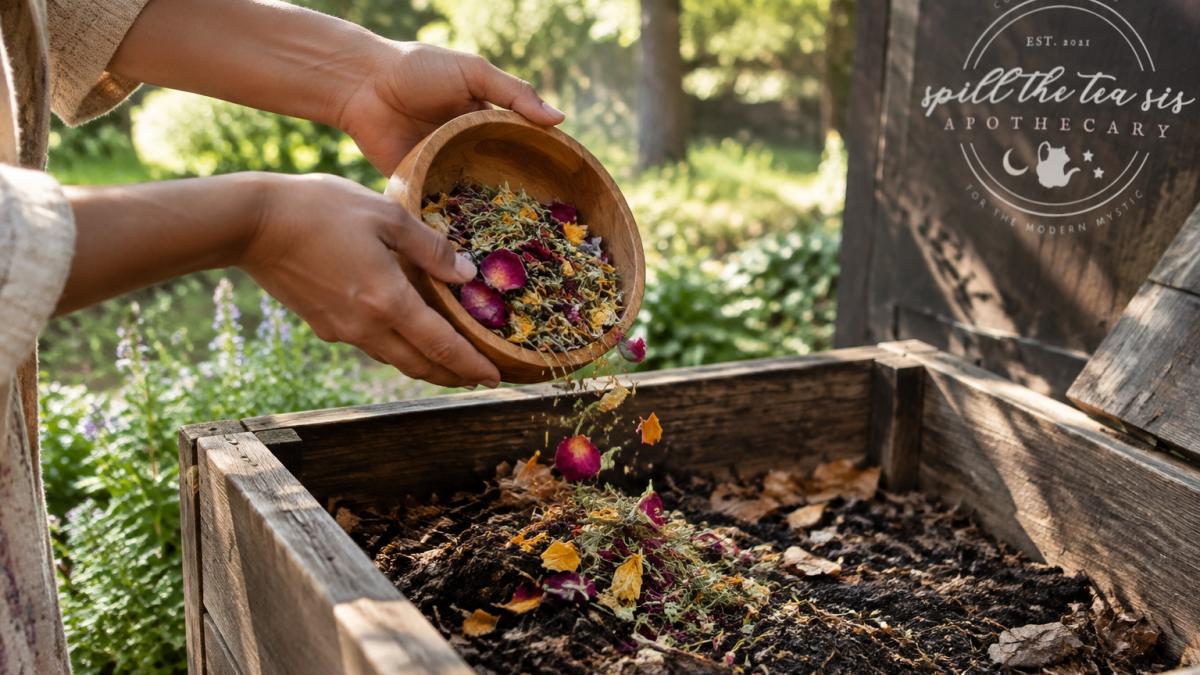
Good candidates for compost or burial:
- Fruit and vegetable scraps
- Dried herbs and flower petals
- Grains, seeds, and plain bread
- Natural cloth or paper wrappers
Keep these out of the compost:
- Meat, dairy, and oily foods
- Plastic, foil, and coated paper
- Anything sprayed with chemicals
Burying works well if you have a yard. Dig a shallow hole, place the offering inside, thank the earth, and cover it.
For a wider look at low-waste spiritual habits, read our piece on why sustainable spiritual practices matter.
Urban Disposal Hacks for Small Spaces
No yard? No problem. City practitioners face real limits, but you still have good options.
- Balcony pots: bury small offerings in a planter with soil.
- Countertop composter: turn food scraps into soil indoors.
- Shared compost drop-off: many neighborhoods have one nearby.
- Trash with care: wrap food, tie the bag, and take it out the same day.
- Freezer hold: freeze food scraps until trash day to stop smells.
Keep your altar small and your offerings modest. A pinch of herbs or a splash of water is easier to dispose of than a full plate. If space is tight, our guide on altar decor ideas for small apartments shows how to keep a compact setup.
Safety First: Toxic Materials, Allergies, and Pet Concerns
Some offerings are not safe to leave out, burn, or toss in the kitchen trash without care. Knowing which ones protects your household, your pets, and you. This section matters most if you share a home with animals or allergy-prone family members.
Foods That Are Dangerous to Pets
Many traditional offerings are toxic to cats and dogs. The most common altar offenders include:
- Chocolate, theobromine is toxic to dogs and cats; dark chocolate and baking chocolate are the most dangerous.
- Grapes and raisins, linked to kidney failure in dogs, even in small amounts.
- Onions, garlic, chives, and leeks, damage red blood cells in dogs and cats.
- Macadamia nuts, cause weakness and tremors in dogs.
- Xylitol, an artificial sweetener in some candies and baked goods; causes dangerous insulin spikes in dogs.
- Alcohol, even small amounts of wine or liquor offerings are hazardous.
- Caffeine, coffee and tea offerings should never be left within reach.
Watch out: a dog can reach a plate on a low altar or a bowl on the floor in seconds. If you offer any of these items, place them on a high shelf, in a closed cabinet, or dispose of them immediately after the ritual ends.
How to Dispose of Pet-Toxic Offerings
Do not simply scrape chocolate or grapes into an open kitchen trash can where a pet can nose through it. Instead:
- Seal the food in a tied plastic bag or a lidded container.
- Take it directly to an outdoor bin with a secure lid.
- If you compost, keep pet-toxic foods out of the compost entirely, home compost does not reach temperatures that reliably break down all toxins.
- Wash the offering plate and bowl thoroughly before reuse.
Allergies in the Household
If someone in your home has food allergies, avoid leaving those foods on the altar at all. Trace amounts of peanut, tree nut, shellfish, or sesame residue can cause reactions through contact or airborne particles. Choose simple, natural items that are safe for everyone in the home, and remove them promptly.
Toxic Materials in Burned or Left-Out Offerings
Beyond food, some materials release harmful fumes or chemicals when burned or left to spoil. Keep these away from curious pets and children:
- Synthetic fabrics and plastic wrap
- Scented candles with paraffin and dyes
- Treated wood and painted items
- Certain plants that are toxic to pets, including lilies, sago palm, and oleander
When in doubt, choose simple, natural items and remove them promptly. A clean, safe ending honors the offering and keeps your home healthy.
Many common altar offerings are dangerous to cats and dogs, so know the risks before you leave anything within reach.
| Offering | Risk to pets | Safe handling |
|---|---|---|
| Chocolate | Theobromine toxic to dogs and cats | Seal in tied bag, outdoor bin |
| Grapes and raisins | Linked to kidney failure in dogs | Keep out of compost entirely |
| Onions, garlic, chives, leeks | Damage red blood cells | Dispose immediately after ritual |
| Macadamia nuts | Cause weakness and tremors in dogs | Place high or in closed cabinet |
| Xylitol | Dangerous insulin spikes in dogs | Seal and bin with secure lid |
| Alcohol | Hazardous even in small amounts | Never leave within reach |
| Caffeine | Coffee and tea offerings unsafe | Remove promptly after ritual |
Closing the Ritual: Post-Disposal Practices for Energetic Closure
Disposal ends the physical offering. A short closing practice ends the ritual itself. For guidance on crystals that support ancestral healing and trauma release, see our article on crystals for ancestral healing and release. Many practitioners find this step brings a sense of calm and completion.
Try this simple closing sequence:
- Wash your hands and the offering bowl.
- Light a cleansing candle or incense.
- State a short thanks or closing prayer.
- Sit quietly for a minute and breathe.
- Note anything you felt or noticed during the ritual.
A cleansing candle helps reset the space after the work is done. The Go Smudge Yourself intention candle is designed for energetic cleansing, with a scent profile of lavender, sage, and cedar. If you want to seal the space with protection, the Return To Sender intention candle supports strong boundaries and release.


Frequently Asked Questions
How long should you keep food offerings on an altar?
Most practitioners leave food offerings for 24 to 72 hours, or until the food shows signs of spoilage. Fresh fruit and baked goods typically last two to three days before attracting pests or growing mold. If the offering includes dairy or meat, remove it after a few hours. Trust your senses: if it smells off or looks changed, it's time to dispose of it respectfully.
Is it disrespectful to throw away ritual offerings?
Not inherently. The respect lies in your intent and the care you take during disposal. Many traditions teach that once an offering has served its purpose, returning it to the earth or to the trash is acceptable as long as you do so mindfully. Avoid treating offerings as garbage in a careless way; instead, wrap them, say a quiet thank-you, and dispose of them with intention.
Can you compost food offerings left on an altar?
Yes, composting is one of the most eco-friendly options for biodegradable offerings like fruit, grains, herbs, and flowers. Avoid composting items with synthetic materials, candles with paraffin wax, or anything treated with chemicals. If you don't have a compost bin, burying small amounts in a garden works well, provided local regulations allow it.
How do you dispose of non-perishable altar items like candles or crystals?
For candles, let them burn down completely if safe, or melt leftover wax and discard it in the trash after it cools. Crystals can be cleansed and reused, gifted, or returned to nature if they are natural stones. Never bury or discard synthetic materials or items containing toxic dyes. If an item holds strong energetic connection, consider a small closing ritual before disposal.
Disposing of offerings with care takes a little planning, but it turns a routine chore into a final act of respect. At Spill The Tea Sis Apothecary, we hand-pour intention candles in small batches to support exactly these moments, from cleansing to closure. Our candles use natural coconut apricot soy wax, clean fragrance oils, and a crackling cedar wood wick. Shop with intention and give your rituals the ending they deserve.
