


Last Updated: November 6, 2026
Quick Summary
Candle dressing is the practice of applying oil to a candle before burning it, and it is the first hands-on skill most people learn in candle magic. Choose an oil that matches your intention, dilute essential oils in a carrier oil, and keep the wick clean so the candle burns properly.
- Dressing a candle takes about five minutes once you have your supplies gathered.
- Dilute essential oils in a carrier oil before applying them, since most are not meant for undiluted use.
- Rub oil from the middle outward for drawing work and toward yourself for banishing or releasing work.
- Use only a thin, even film of oil, because excess oil pools and drowns the flame.
- Keep dried herbs below the top inch of the candle and brush away loose pieces before lighting.
Table of Contents
- What Candle Dressing Means and Why It Matters
- Choosing Oils for Dressing Candles by Intention
- How to Dress a Candle Step by Step
- How to Dress a Candle for Protection
- How to Dress a Candle for Money
- Candle Magic Fire Safety You Should Never Skip
- Troubleshooting, Allergies, and Scent-Free Alternatives
- Shop with Intention at Spill The Tea Sis Apothecary
- Frequently Asked Questions
What Candle Dressing Means and Why It Matters
Candle dressing is the practice of applying oil to a candle before burning it, and it is the first hands-on skill most people learn in candle magic.
Why bother? Because a candle you simply light is a candle. A dressed candle is a statement.
The beginner guide to candle dressing oils below covers everything you need to start: which oils to choose, how much to use, how to keep the wick clean, and how to stay safe while you work.
Choosing Oils for Dressing Candles by Intention
The oil you choose should match the outcome you want. That is the whole rule. Everything else is detail.
A practical starting point for beginners:
- Protection: sage, rosemary, cedarwood, or a blend built around them
- Money and abundance: cinnamon, bergamot, patchouli, or sweet orange
- Love: rose, jasmine, ylang-ylang, or lavender
- Calm and healing: lavender, chamomile, or sandalwood
- Luck: bay leaf, nutmeg, or frankincense
You do not need a cabinet full of bottles. Two or three oils that you actually use will carry you through most spellwork. If you want to go deeper on matching scent to goal, our guide on how to choose candle scents for manifestation walks through the pairing process step by step.
Carrier Oils vs Essential Oils vs Fragrance Oils
These three are not interchangeable, and the difference matters for both safety and results.
Carrier oils are the base. Olive oil and grapeseed oil are the traditional choices, and both are inexpensive and easy to find.
Essential oils are concentrated plant extracts. A few drops go a long way.
Fragrance oils are synthetic scent blends.
A common beginner mistake is pouring undiluted essential oil straight onto wax. Dilute it in a carrier oil first, and your candle will burn cleaner and smell better.
A Beginner's Quick-Reference Oil Chart
Traditions vary, and no single oil is mandatory for any intention. Use this chart as a starting point, then adjust based on what you have on hand and what scent you can tolerate.
| Intention | Common oils | Why practitioners reach for them |
|---|---|---|
| Protection | Rosemary, cedarwood, sage | Grounding, clearing associations |
| Money | Cinnamon, bergamot, patchouli | Warm, expansive, drawing qualities |
| Love | Rose, jasmine, ylang-ylang | Heart-centered, relational associations |
| Calm | Lavender, chamomile, sandalwood | Soothing, settling scent profiles |
| Luck | Bay leaf, nutmeg, frankincense | Traditional folk associations |
Unscented carrier oil alone is a valid choice for anyone who wants to avoid scent entirely.
How to Dress a Candle Step by Step
Dressing a candle takes about five minutes once you have your supplies. Here is the method we use.
- Cleanse the candle. Wipe it down or pass it through incense smoke to clear any lingering energy before you begin.
- Carve your intention. Use a pin or the tip of a knife to scratch a word, a symbol, or a name into the wax. Short and specific beats long and vague.
- Pour a small amount of carrier oil into a dish. Add your essential oil drops and stir clockwise to blend.
- Apply the oil. Rub it along the candle from the middle outward, away from the wick, for drawing work. Rub toward yourself for banishing or releasing work.
- Speak or think your intention while you dress the candle. Repeat it quietly as you work.
- Add herbs if you like. Roll the oiled candle in dried herbs, or press them gently into the wax.
- Set the candle in its holder and let it settle before lighting.
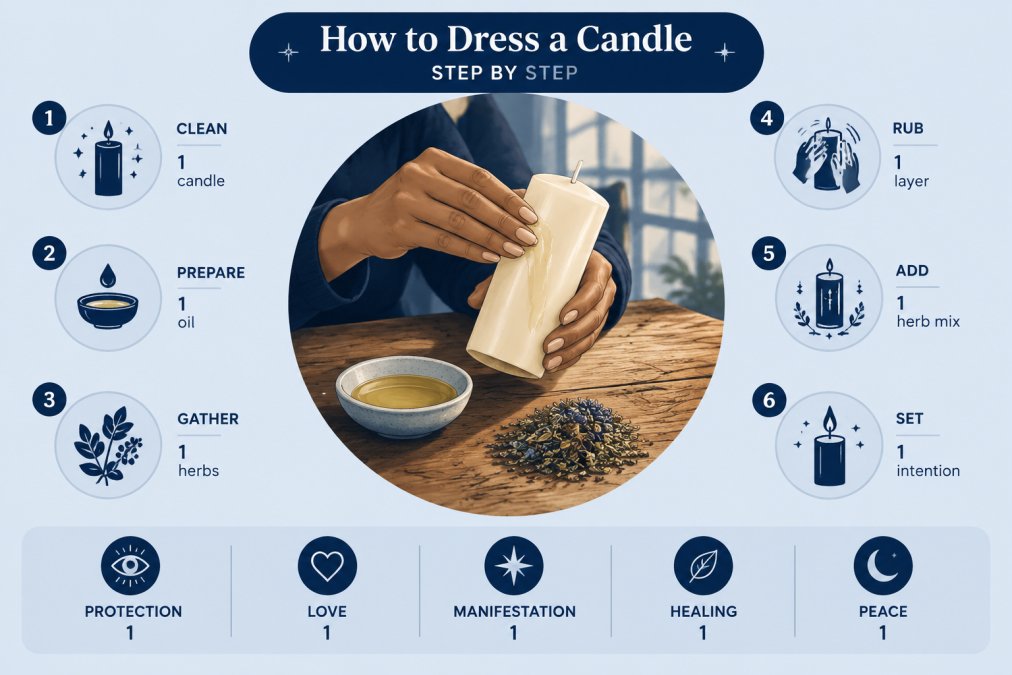
If you want to layer herbs with your oils, our guide on how to choose herbs for intention candle spells covers which herbs pair with which goals.
How Much Oil to Use and How to Keep the Wick Clean
Less oil than you think. A thin, even film is enough. If the wax looks wet or slick, you have used too much, and the excess will pool and drown the flame.
The wick is the part that matters most. Oil-soaked wicks smoke, sputter, and refuse to stay lit. Keep your fingers and the oil away from the wick entirely, and if you do get oil on it, trim the wick back before burning.
How to Dress a Candle for Protection
Protection work calls for grounding oils and a deliberate, outward motion. Rosemary, cedarwood, and sage are the workhorses here.
Cleanse the candle first, then carve a protective symbol or the word "safe" into the wax.
A common mistake is dressing a protection candle in a hurry. Slow down. Protection work is about steadiness, and the pace of your hands sets the tone for the whole ritual.
If you would rather start with a candle that is already prepared, our Hecate candle, built around oakmoss and amber, is a good place to begin.
How to Dress a Candle for Money
Money and abundance work responds well to oils that feel warm and expansive: cinnamon, bergamot, patchouli, sweet orange. The direction here is inward. Dress the candle from the ends toward the middle, drawing toward you, and picture the outcome as already settled rather than still hoped for.
Carve a specific figure or a word like "enough" into the wax. Vague intentions produce vague results, and "more money" gives your focus nothing to hold. Name the goal.
Green candles are traditional for money work, but color is a support, not a requirement.
Candle Magic Fire Safety You Should Never Skip
Oil and open flame demand respect. The safety of a dressed candle depends on how much oil you use, how close that oil gets to the wick, and how much dried herb you pile onto the wax.
Oil Quantity and Wick Contamination
Less oil than you think. A thin, even film is enough. If the wax looks wet or slick, you have used too much, and the excess will pool and drown the flame.
The wick is the part that matters most. Oil-soaked wicks smoke, sputter, and refuse to stay lit. Keep your fingers and the oil away from the wick entirely, and if you do get oil on it, trim the wick back before burning.
Herb Buildup and Flame Height
Dried herbs are flammable, and loose herb pieces near the wick can catch fire or create a sudden flare. If you roll a dressed candle in herbs, keep the herb layer below the top inch of the candle and brush away any loose pieces before lighting. Watch out: a tall, jumping flame or a crackling sound often means herb or oil buildup is burning off. If that happens, blow the candle out, let it cool, and trim the wick and clear excess material before relighting.
Safe Burning Setup
- Never leave a burning candle unattended, not even for a quick trip to another room.
- Keep dressed candles away from curtains, paper, and anything that can catch.
- Trim the wick to about one-quarter inch before every burn.
- Do not dress a candle while it is lit. Ever.
- Use a heat-safe holder on a stable, non-flammable surface.
- Keep a fire extinguisher within reach and know how to use it.
- Burn candles in a room with some airflow, but away from drafts that can push the flame toward nearby objects.
Responding to an Unsafe Burn
If the flame grows too high, smokes heavily, or the candle container becomes too hot to touch, stop the burn. Blow the candle out, let it cool completely, and inspect the wick and wax surface. Trim the wick, remove any loose herb or oil pools, and try again with a shorter burn time. If the problem repeats, the candle may be over-dressed and should be retired.
The U.S. Fire Administration's home fire safety guidance is worth a read if you burn candles regularly. When a candle is finished, our guide on how to recycle candle jars after burning shows how to clean and reuse the container safely.
Troubleshooting, Allergies, and Scent-Free Alternatives
The candle will not stay lit. Usually a wet wick or too much oil. Trim the wick, blot the excess oil, and try again.
The scent is too strong. You used too much essential oil. Start with fewer drops next time.
The herbs are catching fire. Herbs should sit away from the wick. If they are close enough to ignite, scrape them back.
You are sensitive to scent. Skip essential oils entirely. A carrier oil alone, applied with intention, still counts as dressing.
You have allergies. Patch test any oil on your skin before using it, and work in a ventilated room.
Shop with Intention at Spill The Tea Sis Apothecary
Dressing your own candles is a skill worth building, and it gets easier every time you do it. Start with one oil, one intention, and one candle. That is enough.
When you are ready to add to your practice, our best intention candles for beginners collection is a gentle starting point, and our Hecate candle is hand-poured in small batches with protection work in mind.
The hardest part of candle dressing is not the oil or the herbs. It is slowing down enough to mean it.
Frequently Asked Questions
What oil should I use to dress a candle?
Start with a carrier oil like olive or grapeseed oil, then add a few drops of essential oil that match your intention. Lavender supports calm and healing, sage supports cleansing and protection, and citrus oils support luck and money. Never apply oil to the wick itself. A plain carrier oil with a focused intention is enough for beginners.
Do you need special oil to dress a candle?
No. Kitchen olive oil works fine for candle dressing. What matters is that the oil is clean, matches your intention, and stays away from the wick. Many practitioners keep a separate bottle of dressing oil so the scent does not mix across rituals, but that is a preference, not a requirement. If you want a dedicated blend, look for oils sold for ritual use.
How much oil should you use when dressing a candle?
Use a small amount, roughly a teaspoon or less for a standard 8 to 9 ounce candle. Pour a little into your palm or a small dish, rub your hands together, and work from the middle outward. The wax should feel lightly coated, not wet. Excess oil pools on the surface, can soak into the wick, and makes the candle burn unevenly or smoke.
Should you dress a candle from the top or the bottom?
Most traditions dress a candle from the middle outward. For drawing something toward you, such as money or love, stroke downward from the middle toward the base. For sending energy away, such as protection or banishing, stroke upward from the middle toward the top. Some practitioners dress the whole candle in one direction. Pick one method and keep it consistent within a single ritual.
Can you use essential oils to dress a candle?
Yes, essential oils are common in candle dressing, but dilute them in a carrier oil first. Dilute them in a carrier oil first. Never add essential oils directly to the wick or to a burning candle, and keep oil away from the flame.
How can you dress a candle safely without adding herbs or other flammable materials?
Keep the wax surface clear of loose herbs, flower petals, and paper. If you want herbs in your ritual, place them in a dish beside the candle rather than on the wax. Trim the wick to about a quarter inch before lighting, keep the candle on a heat-safe surface, and never leave a burning candle unattended. Oil on the wax is fine in small amounts, but the wick must stay dry.
