


Table of Contents
- The Real Difference Between Handcrafted and Mass-Produced Crystals
- Superior Craftsmanship and Quality Control
- How to Tell If Crystals Are Ethically Sourced
- The Energetic Properties and Emotional Connection
- Benefits of Buying Small Business Crystals
- Durability, Longevity, and Care
- Understanding the Price Difference
- Frequently Asked Questions
Last Updated: August 31, 2026
The Real Difference Between Handcrafted and Mass-Produced Crystals
When you're shopping for crystals, the choice between handcrafted and mass-produced stones might seem like a simple matter of preference. It's not. The difference runs deeper than aesthetics, it touches on quality, ethics, energy, and what you're actually supporting when you make a purchase.
At Spill The Tea Sis Apothecary, we've spent years curating handcrafted crystals specifically because we believe the sourcing, selection, and care matter enormously. Mass-produced crystals flood the market because they're cheap to manufacture and easy to distribute. But cheap often means corners cut: questionable mining practices, minimal quality control, and stones treated with chemicals to enhance their appearance. Handcrafted crystals, by contrast, are selected with intention, sourced thoughtfully, and handled with respect for both the stone and the people who extracted it.
The real difference between handcrafted crystals and mass-produced alternatives comes down to three things: who made them, how they were sourced, and whether anyone actually cared about the process. Below, we'll show you exactly why those distinctions matter, and how to spot them when you're shopping.
Superior Craftsmanship and Quality Control
Handcrafted crystals begin with a different standard from day one. When a crystal is selected by hand, someone is actually looking at it. They're examining the clarity, the color saturation, the presence of natural inclusions, and the overall energetic feel of the stone. That's not a quick process. It can't be rushed through a factory line.
Mass production prioritizes volume. Stones are extracted, sorted by basic size categories, and shipped in bulk. Quality control means checking that the stone isn't obviously broken. Handcrafted selection means evaluating each piece individually for gemstone integrity and authenticity.
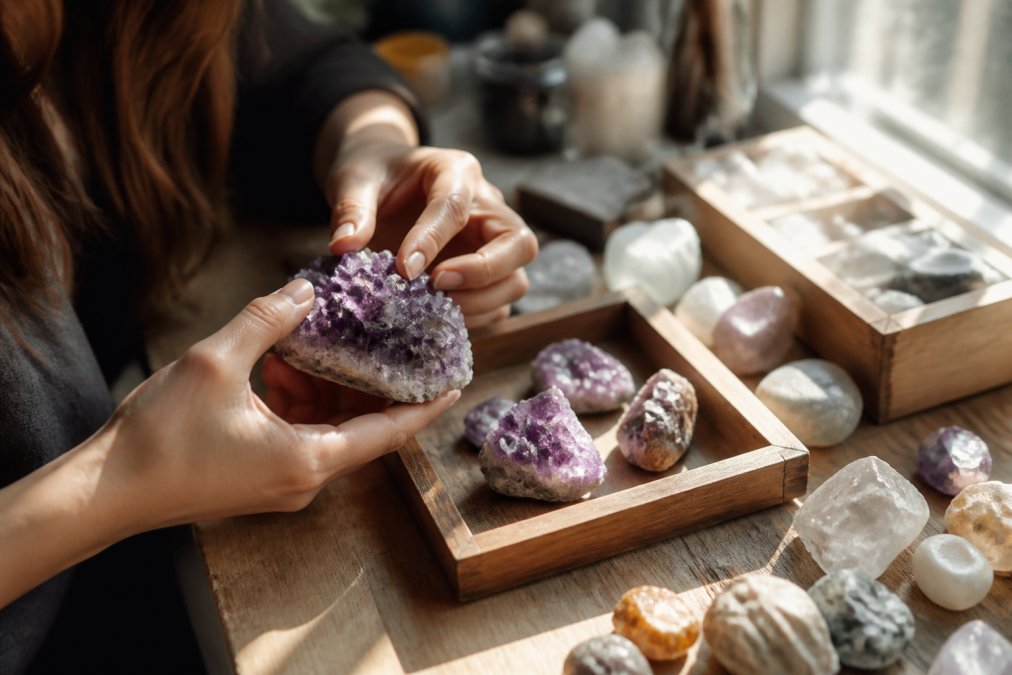
The difference shows up in the final product. Handcrafted crystals often display natural variations, subtle color shifts, included minerals, and minor imperfections that prove authenticity. Mass-produced stones are frequently treated to hide flaws or enhance color artificially. Some are coated with resin or dyed to meet market expectations. A handcrafted crystal might have a small inclusion that a factory would reject; that same inclusion is often a sign the stone is genuine and untreated.
The craftsmanship extends to how the stone is finished. Handcrafted crystals are typically polished with care, preserving the stone's natural geometry and energy. Mass-produced crystals are often tumbled aggressively to create a uniform shine, which can remove the stone's natural terminations and energetic points. For practitioners who work with crystal energy, that distinction matters.
How to Tell If Crystals Are Ethically Sourced
Ethical sourcing is one of the most common customer questions we hear, and it's one of the hardest to verify without direct relationships with miners and suppliers. Many companies claim ethical sourcing without offering real transparency. What does ethical actually mean?
True ethical sourcing means knowing where the crystal came from, who extracted it, and under what conditions. It means fair wages for miners, safe working conditions, minimal environmental damage, and respect for local communities where mining occurs. It means small-scale operations, not industrial extraction that destroys ecosystems.
Here's what to look for when evaluating a supplier's ethics claims:
-
Specific origin information. Ethical suppliers can tell you which mine or region the crystal came from. "Ethically sourced" without a location is marketing language, not evidence.
-
Direct relationships with miners. Ask whether the supplier works directly with miners or through middlemen. Direct relationships mean better oversight and fairer compensation.
-
Transparency about mining practices. Do they describe how the crystals are extracted? Are they small-scale hand-mined operations or large industrial mines? The scale matters enormously for environmental impact.
-
Certifications or partnerships. Some ethical suppliers partner with mining cooperatives or organizations that verify fair labor practices. Look for those partnerships.
-
Willingness to answer questions. Ethical suppliers welcome questions about sourcing. If a company deflects or gives vague answers, that's a red flag.
Handcrafted crystal suppliers typically have stronger relationships with their sources because they're buying smaller quantities and building long-term partnerships. Mass producers buy in bulk from intermediaries, which creates distance between the end consumer and the actual mining operation. That distance makes ethical verification nearly impossible.
When you buy from a small business like Spill The Tea Sis Apothecary, you're buying from someone who has personally vetted their suppliers. We know our crystal sources. We can tell you where stones come from and why we chose those particular suppliers. That accountability is part of what you're paying for.
The Energetic Properties and Emotional Connection
This is where handcrafted crystals reveal something mass production can't replicate: the human element.
Every crystal carries energy, whether you approach that from a scientific perspective (resonant frequencies, mineral composition) or a spiritual one (intention, consciousness). The question is whether that energy has been honored or diminished by the process it went through to reach you.
A handcrafted crystal has been touched by hands that cared about it. It's been selected with intention, handled with respect, and passed through a supply chain where people made conscious choices about its journey. That intentionality leaves an imprint. Many practitioners report that handcrafted crystals feel different, more alive, more responsive, more aligned with their personal energy.
Mass-produced crystals have been handled by machinery and indifferent hands. They've been treated with chemicals, potentially dyed or coated, and moved through a system designed for efficiency, not reverence. That doesn't mean they're useless, but it does mean the emotional and energetic connection is often weaker.
The emotional connection matters because intention is real. When you hold a crystal you know was sourced ethically, selected thoughtfully, and handled with care, you feel that. Your nervous system registers it. Your intuition responds to it. That's not superstition, it's the power of knowing your purchase aligns with your values and your spiritual practice.
Benefits of Buying Small Business Crystals
When you buy from a small business, you're not just buying a crystal. You're supporting a different model entirely.
Small businesses that specialize in handcrafted crystals typically have a genuine passion for the work. The owner knows the inventory personally. They've often visited the regions where crystals are sourced. They've built relationships with miners and artisans. That's not something that happens in a corporate supply chain.
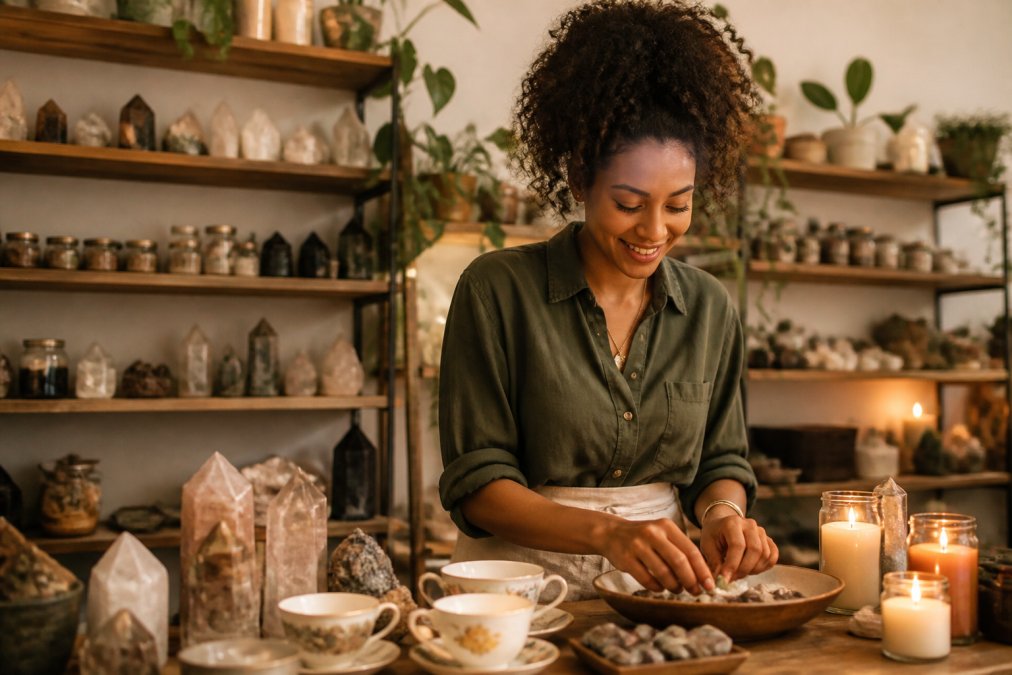
Supporting small business crystals means your money goes directly toward sustaining that model. A portion of every purchase supports ethical mining practices, fair wages for workers, and continued sourcing relationships that prioritize people over profit margins. When you buy mass-produced crystals, most of your money goes to corporate distribution networks and marketing budgets. With small business crystals, it goes to the people doing the actual work.
There's also a community element. Small businesses create spaces, physical or online, where people with shared values can gather. They host workshops, share knowledge, and build relationships with their customers. That sanctuary feeling, that sense of belonging, is something mass retailers can't manufacture. It's earned through consistent care and genuine connection.
Small business owners are also more likely to listen to customer feedback and adjust their offerings accordingly. If you ask a mass retailer about their sourcing practices, you'll get a corporate response. If you ask a small business owner, you'll get a real conversation. They'll tell you what they're working on, what challenges they face, and how they're trying to do better.
Durability, Longevity, and Care
Handcrafted crystals are built to last. When a stone is selected carefully and handled with respect, it maintains its integrity over time. The natural terminations remain intact. The color stays true. The energy stays strong.
Mass-produced crystals, particularly those that have been treated or tumbled aggressively, are more fragile. Coatings can chip or fade. Dyes can leach out over time, especially if the stone is exposed to water or sunlight. Synthetic or heavily treated stones may lose their luster or crack unexpectedly.
Care practices differ too. Handcrafted crystals typically come with guidance on how to maintain them, how to cleanse them, store them, and work with them over time. That guidance reflects the supplier's knowledge and respect for the stone. Mass-produced crystals often come with minimal care instructions or generic advice that doesn't account for the specific stone's needs.
The longevity of a handcrafted crystal means it becomes part of your practice for years or decades. You develop a relationship with it. You learn its properties through direct experience. You pass it on or integrate it into your personal collection as part of your spiritual journey. That's not possible with a crystal that degrades or loses its properties within months.
Understanding the Price Difference
This is the question that stops many people: why does handcrafted cost more?
The answer is straightforward: handcrafted crystals require more labor, more care, and more accountability at every stage. Someone is selecting each stone individually. Someone is verifying the sourcing. Someone is handling the crystal with intention rather than processing it through a machine. That labor has a cost.
Handcrafted crystals also come from smaller suppliers who can't achieve the economies of scale that mass producers rely on. A factory processing thousands of stones daily can spread costs across enormous volume. A small business selecting hundreds of stones monthly can't match that efficiency. Nor should they try, the efficiency is what creates the quality problems in the first place.
When you compare prices, you're comparing different things. A $5 mass-produced crystal and a $20 handcrafted crystal aren't the same product. One is a commodity. The other is a carefully selected tool for your practice. One is designed to be replaced. The other is designed to last.
Think of it like tea or coffee. You can buy mass-produced tea for $1 a box, or you can buy small-batch, ethically sourced loose leaf tea for $9, like our Practical Magic Tea Tin. The difference isn't just in flavor, it's in how the tea was grown, harvested, and handled. The same principle applies to crystals.

Many customers find that buying fewer handcrafted crystals and actually using them is more effective than accumulating dozens of mass-produced stones that sit unused. Quality over quantity isn't just a nice philosophy, it's practical. One well-chosen crystal that you connect with will serve your practice better than ten random stones.
For beginners especially, starting with handcrafted crystals from a trusted source makes sense. You'll learn faster, connect more deeply, and build a collection that actually supports your growth. Our Mystery Crystal Box is designed exactly for this, each box is intuitively selected to support your specific intentions, ensuring that what you receive is genuinely useful for your practice rather than random filler.

The choice between handcrafted and mass-produced crystals isn't really about the crystals at all. It's about what you're supporting and what kind of practice you want to build. Handcrafted crystals represent a commitment to quality, ethics, and intention. They're sourced thoughtfully, handled with care, and backed by real relationships and accountability. When you choose handcrafted, you're choosing to invest in your spiritual practice with the same intention you bring to everything else in your life. Shop with intention, and let your crystals reflect that commitment.
Frequently Asked Questions
What is the difference between mass-produced and handcrafted crystals?
Handcrafted crystals are individually selected and prepared with intention, often sourced directly from ethical suppliers and handled with care throughout the process. Mass-produced crystals are typically mined and processed at scale, with less attention to sourcing ethics or individual quality. Handcrafted pieces often retain stronger energetic properties because they haven't been subjected to industrial processing or handling by countless hands without intention.
How can you tell if a crystal has been ethically sourced?
Look for transparency in sourcing: small businesses like Spill The Tea Sis Apothecary can tell you where crystals come from and how they're sourced. Ethical suppliers avoid conflict minerals and work directly with small-scale miners rather than large industrial operations. Ask about supply chain transparency, labor conditions, and whether the business prioritizes artisanal sourcing over volume. Authentic ethical sourcing means the business can answer your questions without vague marketing language.
Why do handcrafted crystals often cost more than mass-produced ones?
Handcrafted crystals cost more because of ethical sourcing practices, quality control, and the labor involved in individual selection and preparation. Small businesses pay fair wages and invest in sustainable sourcing, unlike mass-production operations that prioritize volume over values. You're also paying for the intention and care infused into each piece, something that has real value for spiritual practice and personal connection.
Are handcrafted crystals actually more durable than mass-produced alternatives?
Yes. Handcrafted crystals are typically sourced from higher-quality material and handled with care to prevent damage during processing. Mass-produced crystals often come from lower-grade stock and endure rough industrial handling, which can create internal fractures or weaken their structure. With proper care, handcrafted pieces maintain their integrity and energetic properties for years, making them a worthwhile investment.
This article was written using GrandRanker